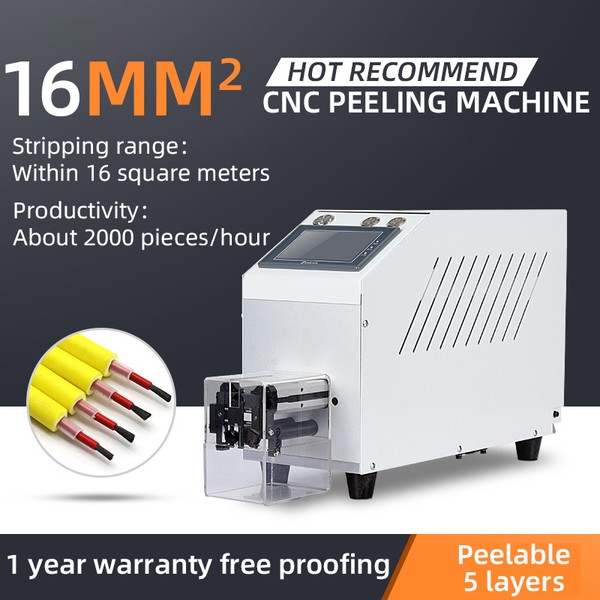
TR-2040D
TR-2040D Máquina semiautomática para pelar cables coaxiales y quitar el aislamiento de cables
- energía
- AC220V/50HZ,
Cotización bajo solicitud Con certificación CE

Cutting and stripping is the first operation on any harness line: the wire is measured, cut to length, and its insulation removed at one or both ends. This page is the entry point to the family, covering general-purpose machines for single-core and multi-core wire, from bench-top pneumatic units through programmable cut-strip models that hold cut-length tolerance to ± 0.4 %. Start here if you are replacing hand tools or adding your first automatic cut-and-strip stage. If the cable has a braid, a jacket or a gauge above 120 mm² (AWG 8-0000), go to the coaxial, jacket or busbar pages instead. Every machine is run-in tested before shipment.
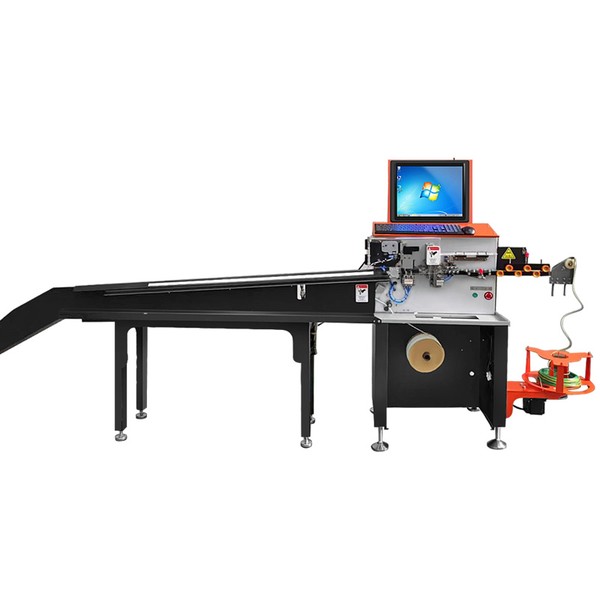
Wire identification is normally a separate step: a marker tube is printed, slid onto the wire, and only then cut and stripped. Combining the four operations removes two handlings and, more usefully, removes a sequencing error — a tube that is inserted after the terminal is crimped cannot be moved, and a mis-sequenced tube means the assembly is scrapped. Tube diameter and print content set the specification: character height, number of lines, and whether the marking must survive heat, abrasion or solvent. Whether it survives is settled on a sample rather than argued from a datasheet, so we run your tube and your print file before quoting.
1 modelo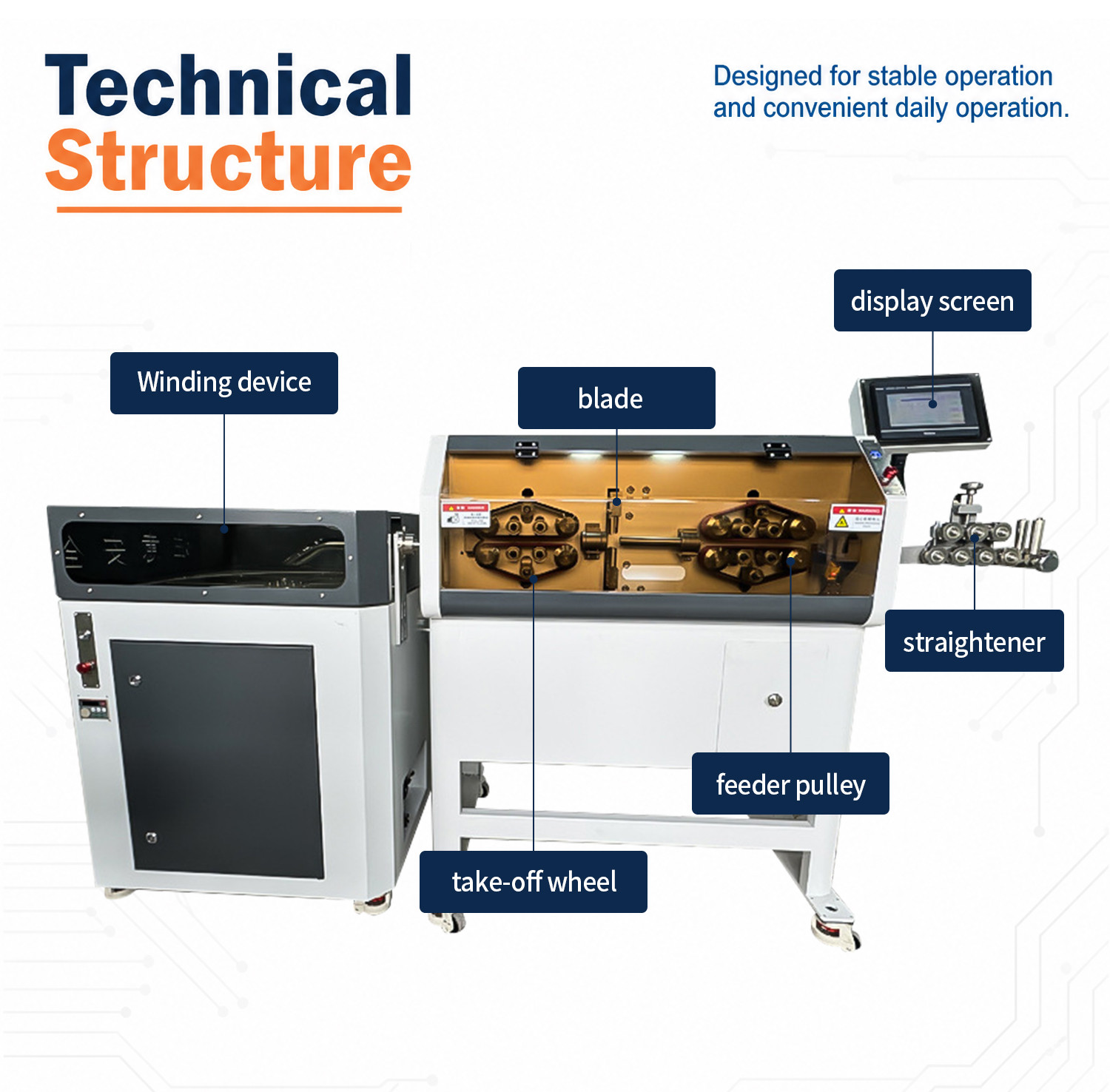
On a computerised machine, cut length, strip length and blade depth are set numerically and recalled per job rather than set by hand at the machine. That repeatability is the whole product: cut-length tolerance is held to ± 0.4 %, and the same setting repeats after a changeover without an operator re-adjusting a stop. This is the tier to specify when the drawing carries a cut-length band, when several wire types run on the same line, or when strip-length consistency is checked at incoming inspection. Below it sit pneumatic operator-fed machines, where tolerance depends on the operator. Above it, cut-and-strip is combined with crimping. Machines are run-in tested before shipment.
125 modelos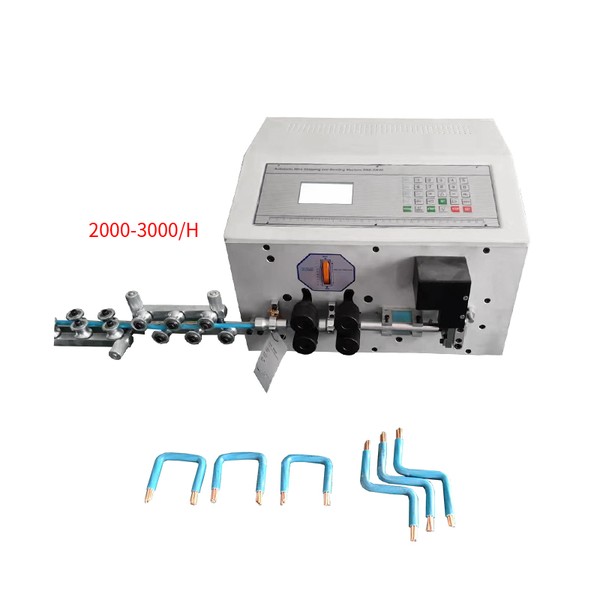
Stripping and bending are usually separate operations, and separating them adds one handling step and one chance to disturb the strands after they are exposed. These machines strip and then form the conductor to the geometry the assembly needs — a bend that reaches a terminal position, a loop that takes up slack, or a shape that holds the wire clear of a moving part. The operating range is defined by conductor cross-section and by the smallest bend radius the machine can hold without marking the insulation. Specify the finished shape on a drawing, not in words; bend geometry is confirmed against a sample before the tooling is made.
6 modelos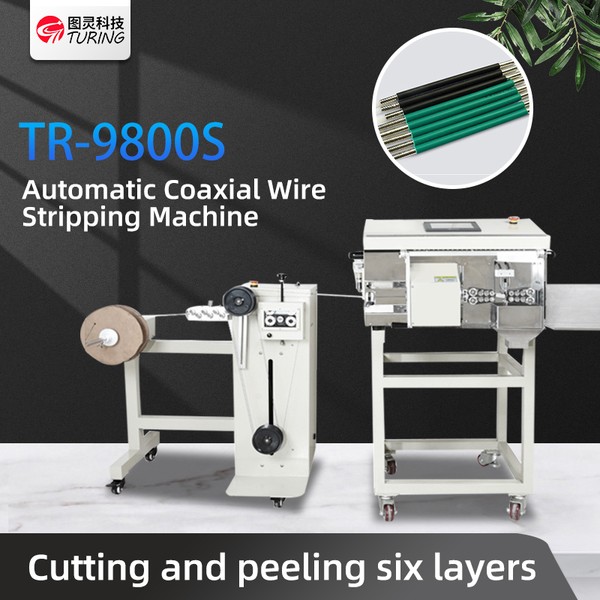
Coaxial and shielded cable cannot be stripped in one blade pass. The outer jacket, the braid, the dielectric and the centre conductor each need a different cut depth and a different length, and the sequence matters because cutting the braid to the wrong depth leaves shield fragments in the dielectric. This line runs those stages in one cycle, with depth and length set for each layer separately. Specify the cable construction — jacket material, braid type, dielectric diameter and conductor gauge — because the tooling is built around it, not around a generic cross-section. This line is also the destination for the semi-automatic coaxial strippers in the previous naming, which now share one page.
31 modelos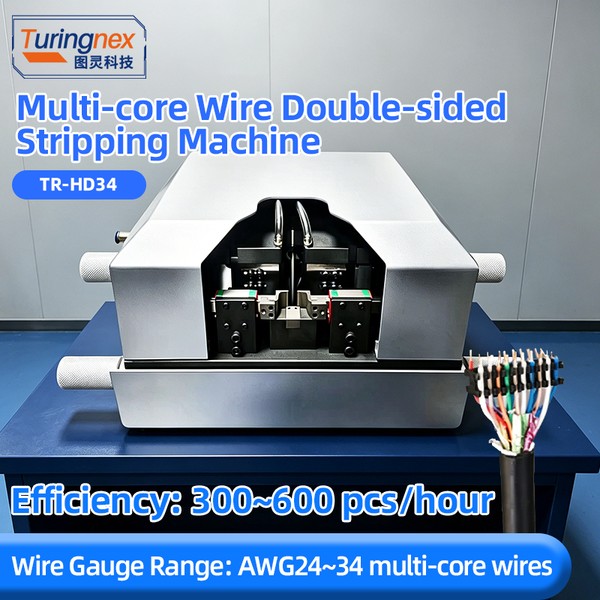
These machines are operator-fed and air-driven: the operator places the wire, the head closes and strips. There is no programmable cut length and no stored job, which is precisely why they are selected — for short runs, single-piece replacement, and mixed batches where setting up a programmable machine costs more than the job is worth. Two variables decide the specification: the conductor cross-section the head is sized for, and whether the machine must strip only or also cut. If your production repeats the same three or four wire types at volume, a computerised machine pays back on consistency alone. Every unit is run-in tested before shipment, and air supply requirements are confirmed for your plant.
41 modelos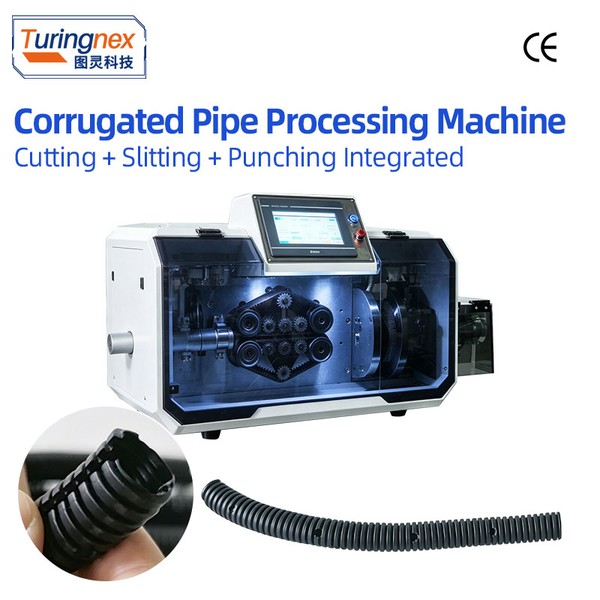
Sleeves, corrugated conduit, bellows and heat-shrink tube are cut on the same measuring principle as wire, against a different feed: the material is not round and self-supporting, so the cut is made with a rotary or guillotine action and the feed is supported to keep the length repeatable. Corrugated tube is the harder case because the cut must land in a valley rather than on a crest, and a cut on a crest leaves a burr that catches the wire. Specify the tube OD, the wall material and whether the tube is corrugated, and confirm your cut-length band — this is the one parameter customers most often find is tighter than expected.
33 modelos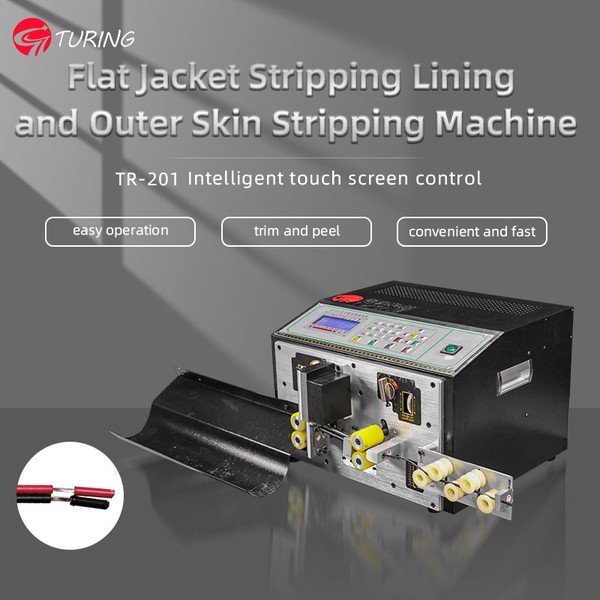
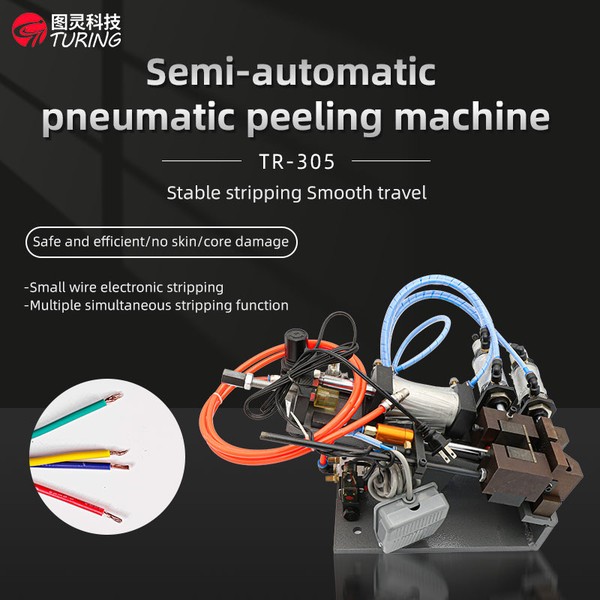
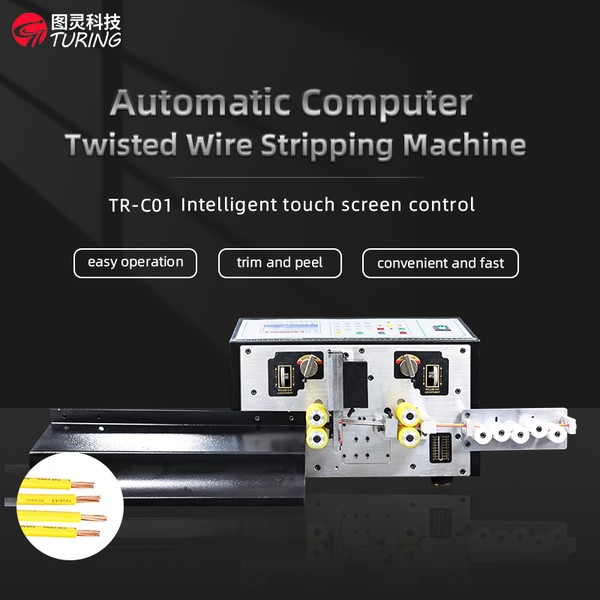
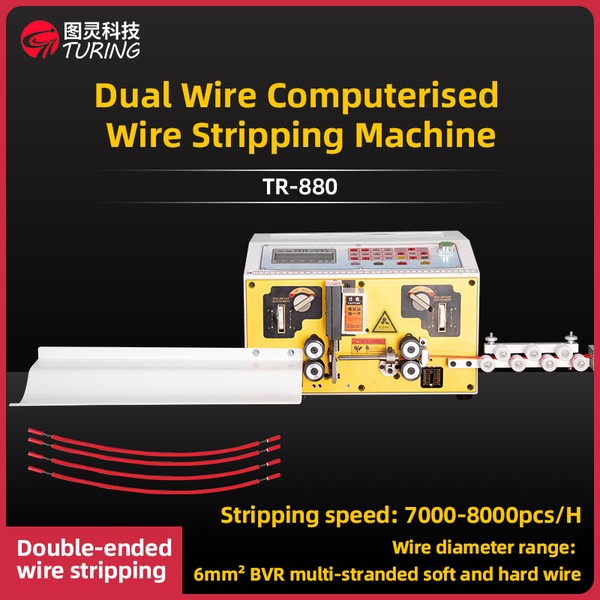
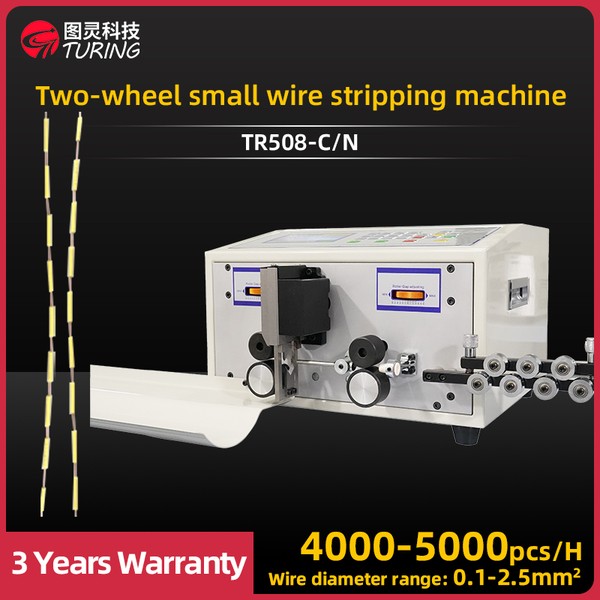
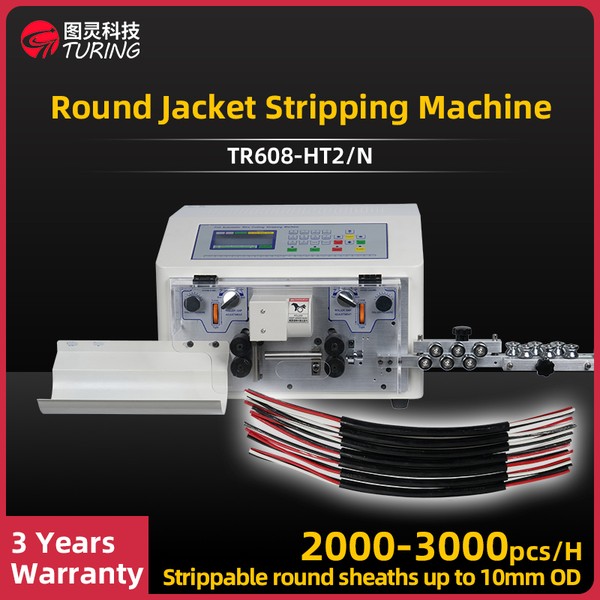
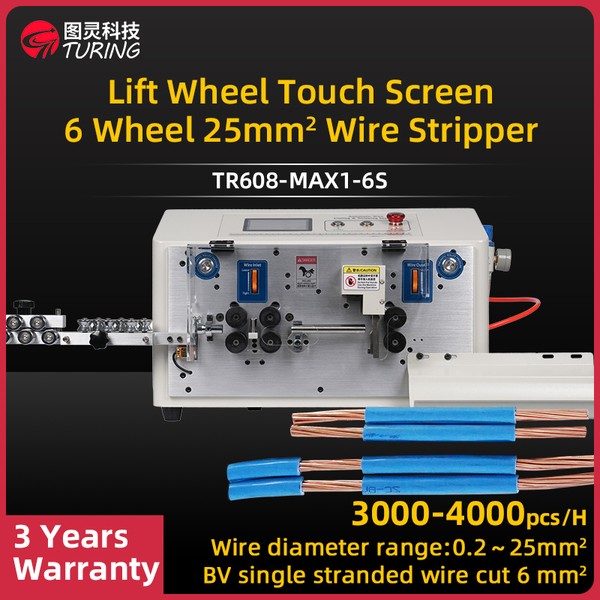
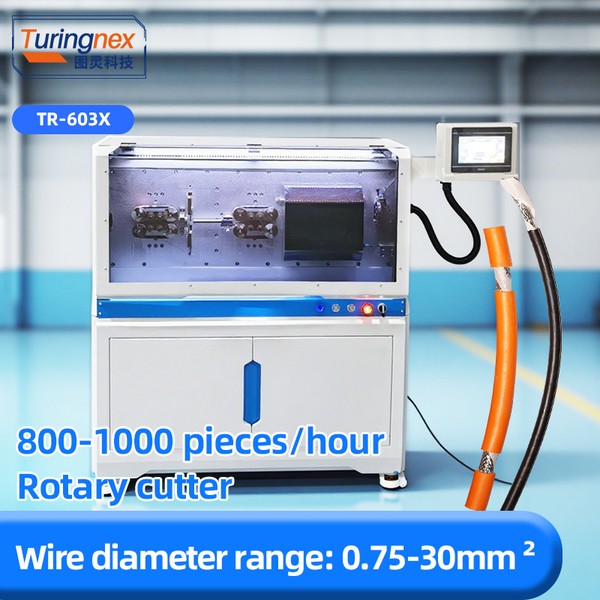
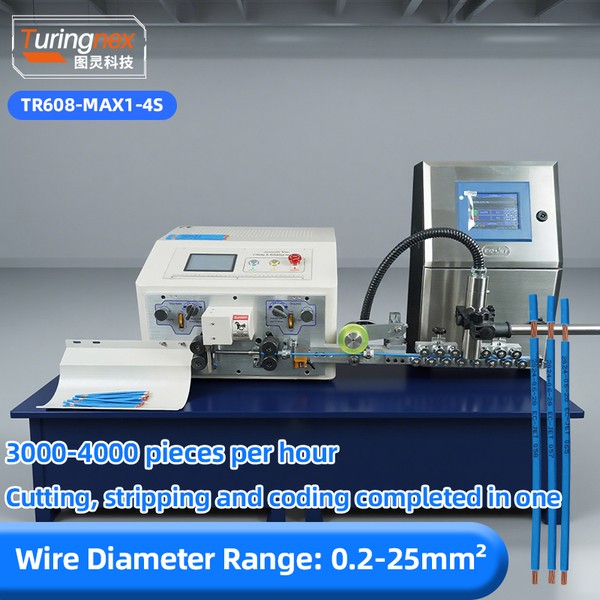
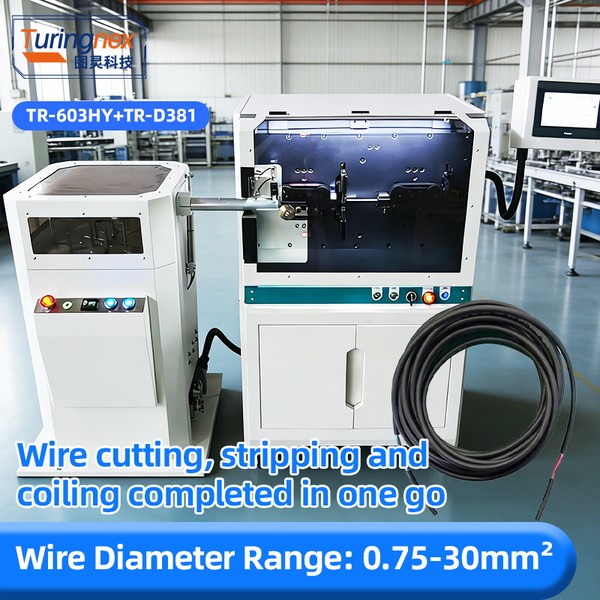
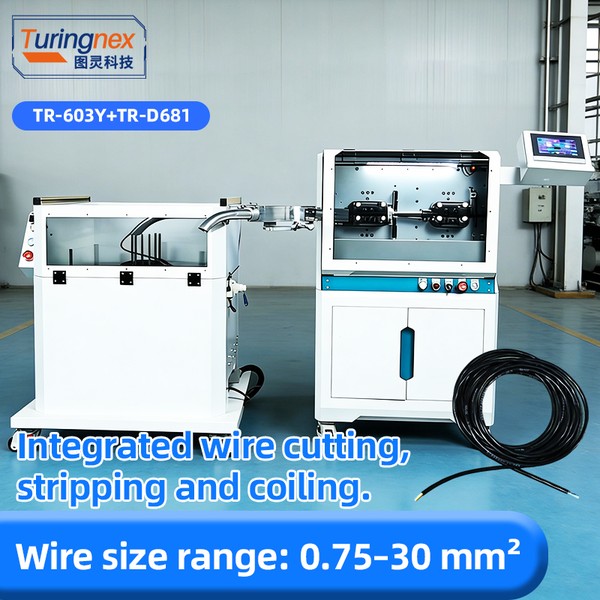
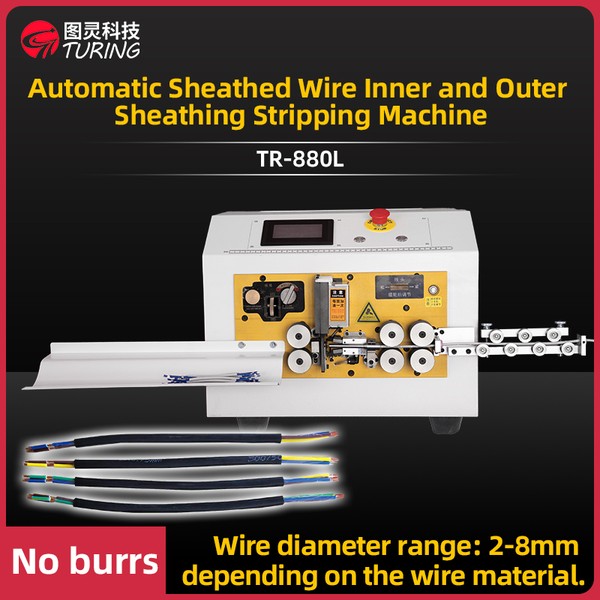
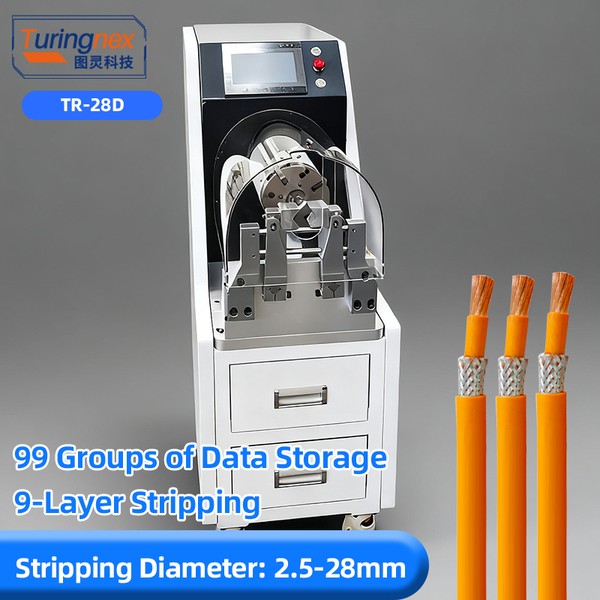
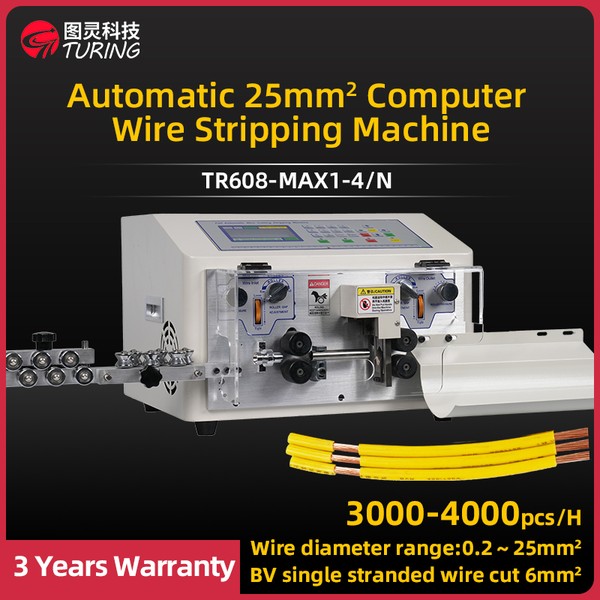
Máquina cortadora y peladora de cables/alambres es una decisión de compra real. Esto es lo que obtienes cuando haces un pedido directamente a la fábrica: capacidades verificadas, expuestas claramente.
Compre directamente de la fábrica de Dongguan a precio de fabricante, sin margen adicional de empresas comerciales.
Máquinas con certificación CE fabricadas en un taller con certificación ISO9001, con Alibaba Trade Assurance disponible previa solicitud.
Cada máquina pasa una prueba completa de rodaje y se graba un video del envío antes de salir del taller.
Cobertura de garantía en cada construcción, repuestos originales enviados a todo el mundo, soporte remoto incluido.
Envíe sus cables y terminales; realizamos una prueba de engarzado/pelado y compartimos el video antes de que decida.
Matrices y herramientas fabricadas según su plano final, para que la máquina produzca sus piezas desde el primer día.
| Modelo | energía | aplicación | característica | garantía | MOQ | Precio (FOB) | Acción |
|---|---|---|---|---|---|---|---|
TR-2040D TR-2040D Máquina semiautomática para pelar cables coaxiales y quitar el aislamiento de cables | AC220V/50HZ, | Pelado de cables | Rendimiento estable | 1año | 1 juego | Cotización bajo solicitud | Vista → |
TR-C01 TR-C01 Máquina peladora de cables dobles | AC220V/50HZ, | — | Rendimiento estable | 1año | 1 juego | Cotización bajo solicitud | Vista → |
TR-201 TR-201 Máquina semiautomática computarizada para pelar cables planos con funda | AC220V/50HZ, | — | Rendimiento estable | 1año | 1 juego | Cotización bajo solicitud | Vista → |
TR-305 Peladora neumática eléctrica de cables TR-305 | AC220V/50HZ, | — | — | — | 1 juego | Cotización bajo solicitud | Vista → |
TR-880 Máquina peladora de cables dobles TR-880 | AC220V/50HZ, | — | Rendimiento estable | 1año | 1 juego | Cotización bajo solicitud | Vista → |
TR-880L TR-880L Máquina automática para pelar el revestimiento interior y exterior de cables con núcleo revestido | AC220V/50HZ, | — | Rendimiento estable | 1año | 1 juego | Cotización bajo solicitud | Vista → |
Precios FOB indicativos. Las especificaciones finales y el plazo de entrega se confirman en la cotización.
Cada máquina se ensambla en nuestro taller de Dongguan y se pone en funcionamiento antes del envío. Secuencia de control de calidad: Raw material check → Machining → Assembly → 100% run-in test → Shipment video. Hay disponible un video de prueba con su propio material previa solicitud.
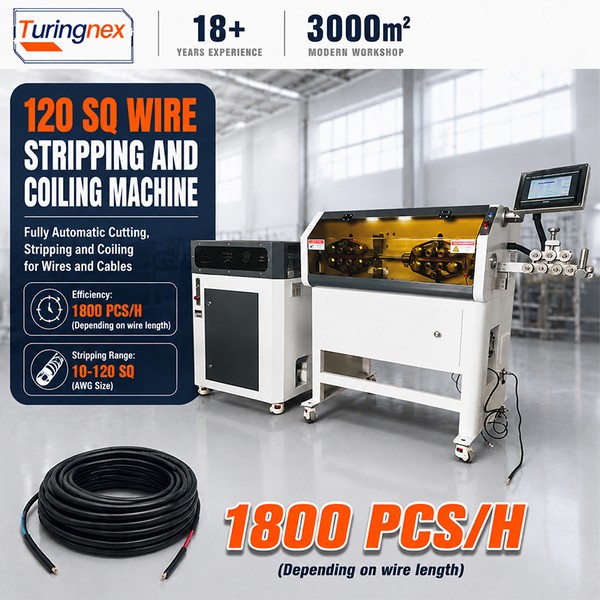
Solo publicamos cotizaciones verificadas, con la empresa, el país y el contacto identificado. Pídanos clientes de referencia en su mercado y los pondremos en contacto directamente.