
Machines de sertissage de bornes
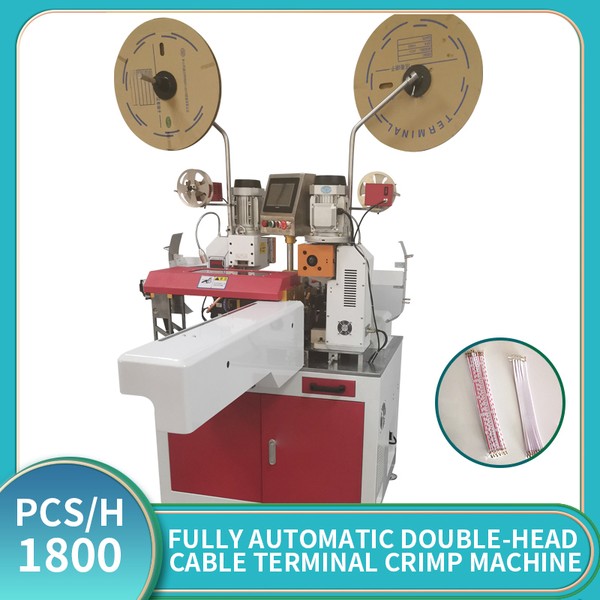
A terminal crimping machine deforms the terminal barrel around the stripped strands so the joint carries current and resists pull-out. Crimp quality is set by the applicator or die, the crimp height relative to the terminal's window, and the pull force the finished joint withstands — not by press force alone. This is the family entry point and covers both feeding methods and both automation tiers: loose-terminal presses for low volume, banded and reel feed for automatic work, single-head and double-head configurations. Dies and applicators are machined on our own CNC vertical machining centres, so proprietary terminal series can usually be tooled. Send your terminal and we crimp and measure it before you commit.
Premiers acheteursVous débutez dans le traitement des fils métalliques ? Commencez par consulter notre guide de sélection et profitez d’un test d’échantillon gratuit.
DistributeursCollaborez avec nous — OEM/ODM, marque blanche et distribution régionale.
Clients existantsPièces détachées, service et mises à niveau pour les machines déjà présentes sur votre ligne.
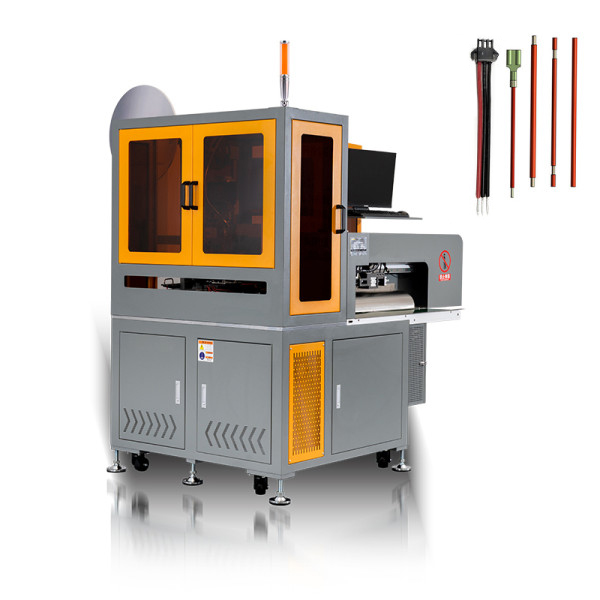
Machine de sertissage de terminaux entièrement automatique
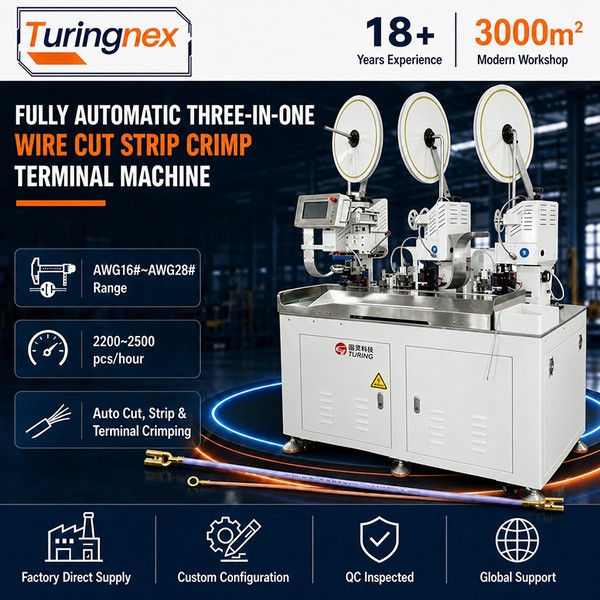
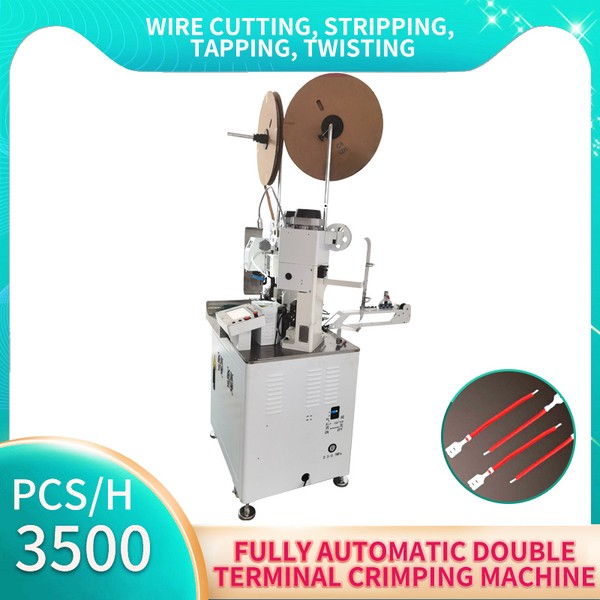
On a fully automatic machine the terminal feeds itself: cut, strip, crimp and often inspect happen in one cycle with no operator handling the terminal. Throughput is the visible difference, and the real one is consistency — a machine-fed terminal is presented at the same position every cycle, so crimp height varies with the die rather than with how the operator seated the terminal. On our three-in-one crimping platform, output runs 2,200–2,500 pcs/h on wire shorter than 300 mm. This tier is specified when volume justifies it and when the terminal is available banded or on reel; loose terminals do not feed automatically, which is the constraint most often discovered late.
26 modèles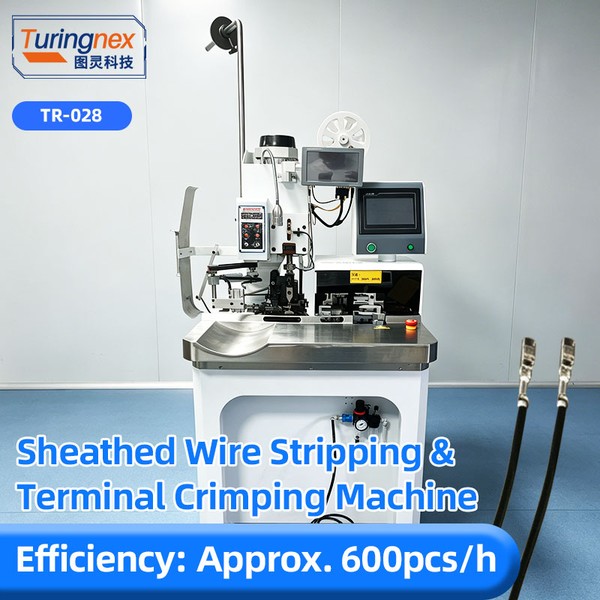
Machine à dénuder les fils et à sertir les bornes
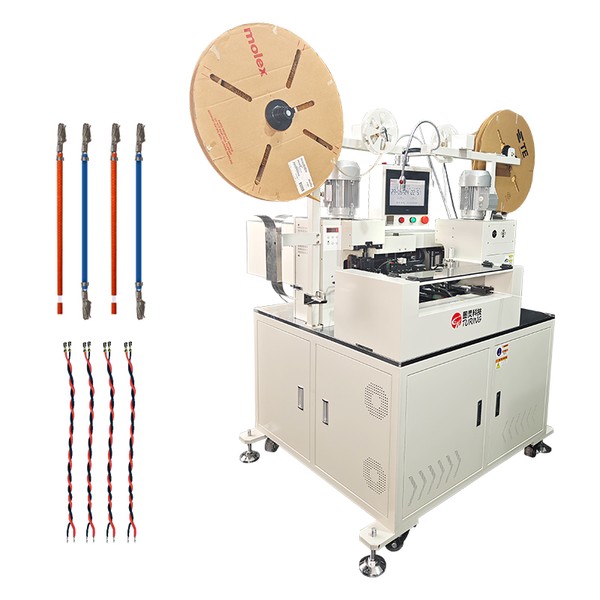
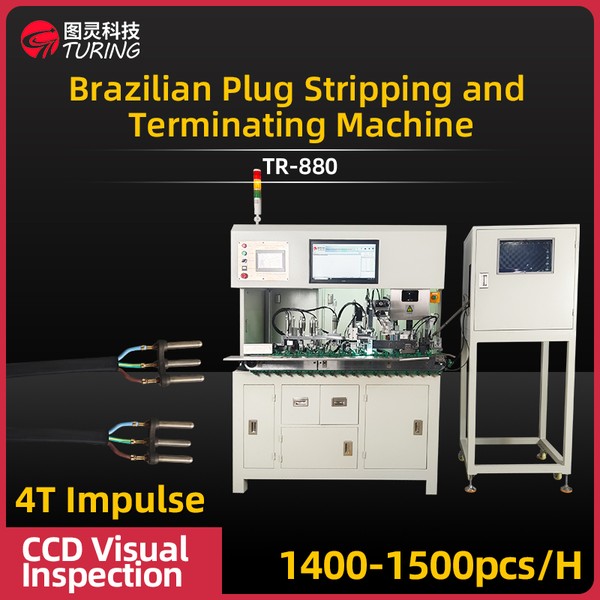
This is the combined machine: the wire is stripped and the terminal applied without the prepared end leaving the machine. The gain is one handling step per wire, and the second gain is that a freshly stripped end is never set down, so strands cannot splay or pick up contamination between the two operations. Selection is defined by the two ends of the machine rather than by the middle: the strip head sets the cross-section range, and the press plus applicator set the terminal series. Single-head and double-head versions exist; the double-head is chosen when both ends are terminated and the wire is long enough to be indexed end to end.
17 modèlesSemi-Automatic Terminal Crimping Machine
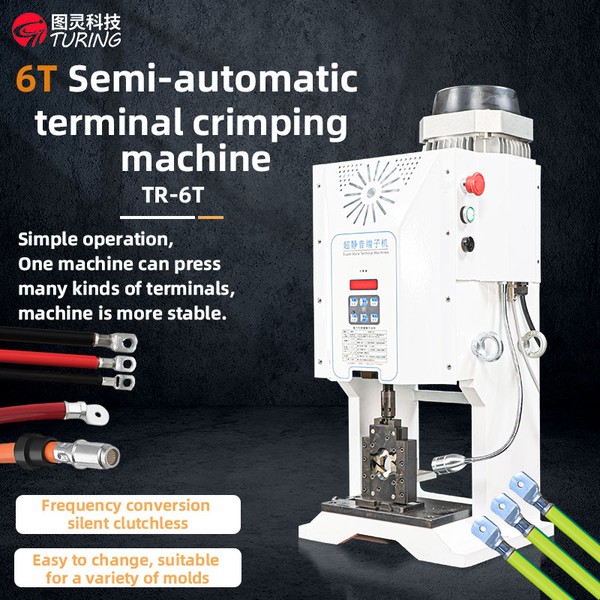
An operator-fed press is the tier where crimp quality stops depending on how hard someone squeezed a hand tool. The terminal is placed by hand, the press closes, and the operator moves the next wire — which is exactly why this tier belongs to low volume, frequent terminal changes, and jobs where setting up an automatic feed costs more than the batch is worth. Two variants are on this page and they are chosen for different reasons: mute-terminal presses are specified where the press runs all shift and the shop floor has a noise limit, and bulk-terminal presses where terminals arrive loose in quantity. Confirm the terminal series before ordering, because the applicator defines the joint, not the press frame.
23 modèles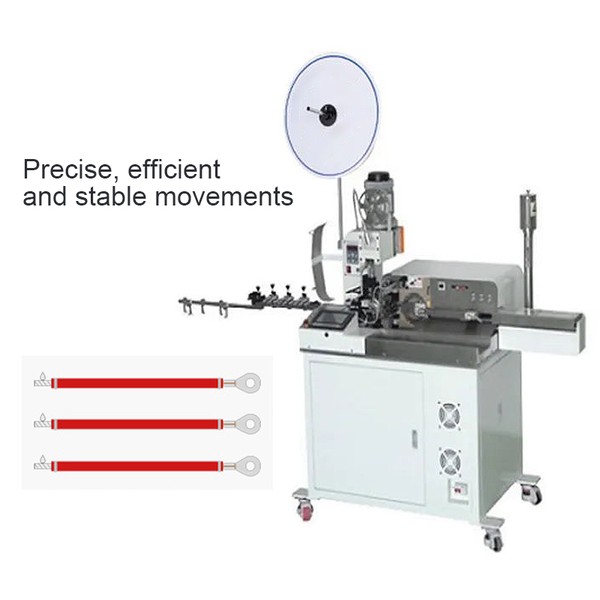
Machine à sertir les bornes pour boîtes à tremper
Some joints must survive more than a crimp. Where a terminated wire goes on to be soldered, resistance-welded, or clamped under a screw, the crimped end is dip-tinned so the strands are locked together and the joint can be reflowed without the strands opening. These machines crimp and dip in one sequence, which avoids re-orienting the wire between operations and keeps flux off the terminal. The variables that matter — solder alloy, flux, and bath temperature — follow your downstream process rather than the machine. If the wires must be tinned but no terminal is fitted, the standalone tin dipping machines are the correct page.
13 modèles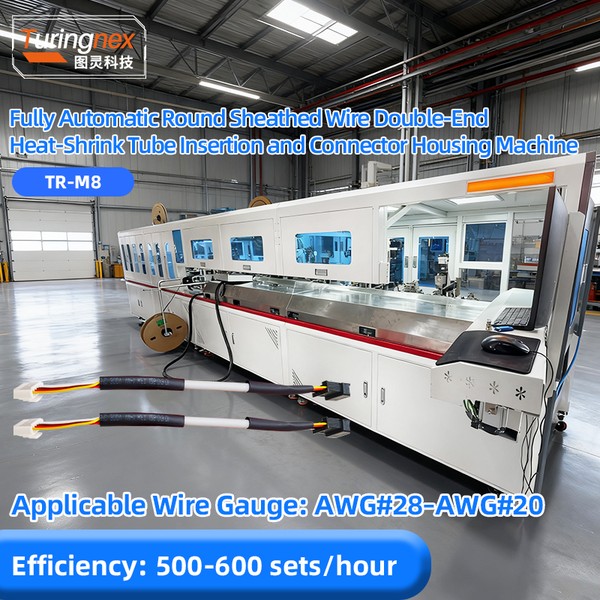
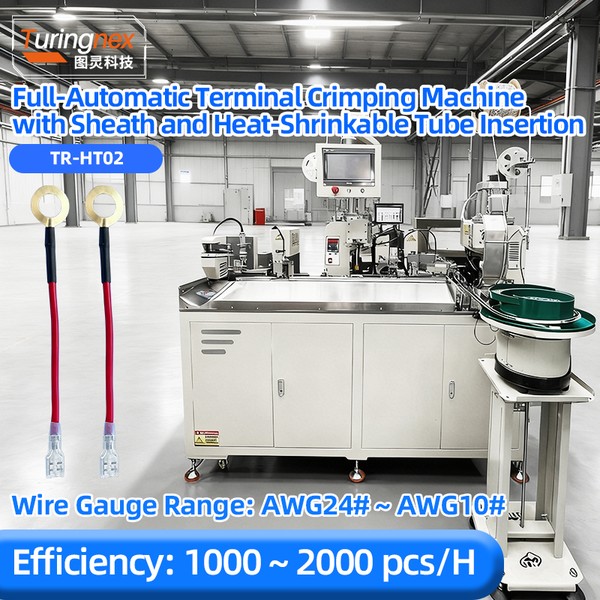
Machine à sertir les bornes à coque en plastique
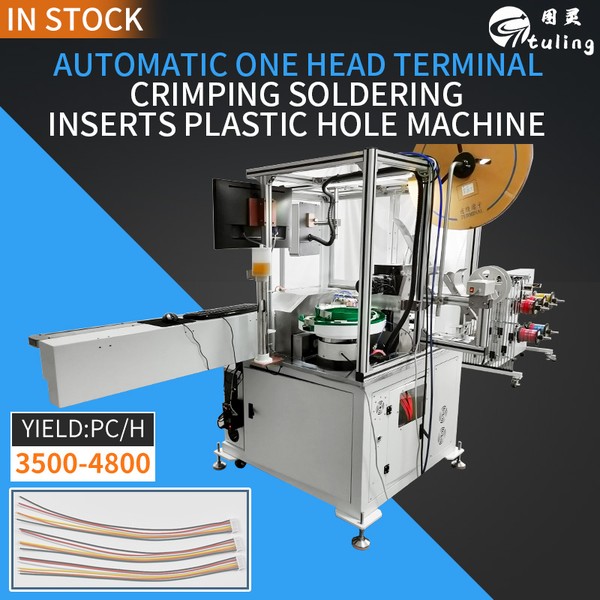
After the crimp, many harnesses require the terminal to be seated into a plastic shell or housing. Doing it in the same machine removes a station and, more importantly, removes the window in which a correctly crimped terminal can be seated at the wrong depth or in the wrong cavity. Machines on this page crimp and insert the shell in one cycle, with insertion depth and orientation controlled by tooling. Specify the housing part number and the cavity layout — the machine is built around the housing, and a change of housing is a change of tooling. This page also absorbs the auto-insert shell machines offered under an earlier naming convention, which were the same operation.
17 modèles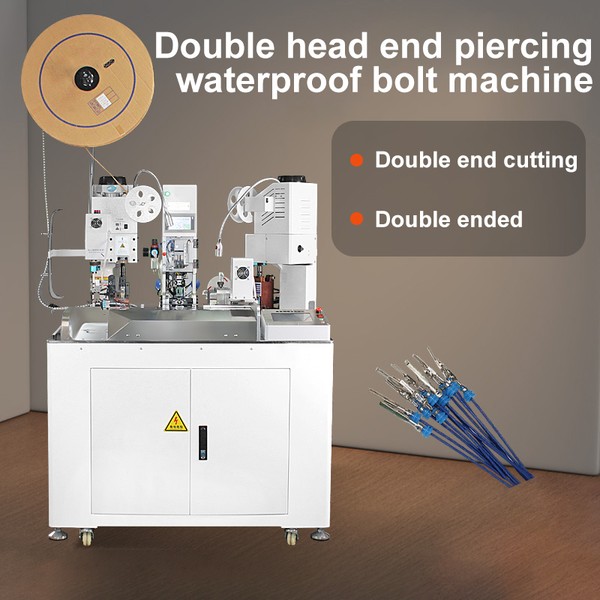
Machine à sertir les bornes à insérer pour prises étanches
A sealed connector has to keep water out of the contact area, and that depends on a rubber plug or seal being compressed correctly in the connector cavity — which in turn depends on it being placed on the wire in the right order relative to the crimp. Fit it after the crimp and it cannot pass the terminal; fit it in the wrong position and the seal does not compress. Machines on this page place the plug or seal and crimp in one controlled cycle. The specification inputs are the seal part number, the wire insulation diameter that the seal grips, and the connector cavity. Sealing performance is verified on your wire and seal before shipment.
7 modèles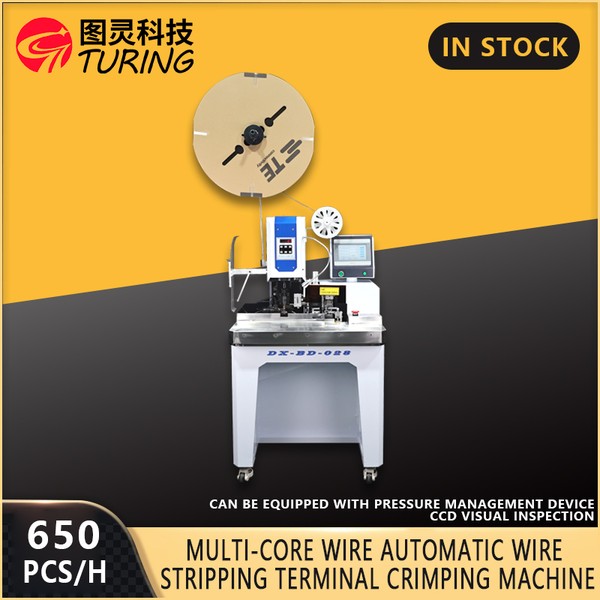
Machine à sertir les bornes pour fils gainés
Sheathed and round cable carry an outer jacket that must be prepared before any crimp is possible, and the preparation is what defines these machines: the jacket is stripped to a set length, any filler is cleared, and the conductor is stripped and crimped in the same setup. Machines on this page handle the jacket inside and outside the core, and the family is specified by overall cable diameter rather than by conductor cross-section — a distinction worth stating on an enquiry, because a machine sized for conductor gauge will not accept the jacket. Multiple cores, screened cable and filler construction each change the tooling. Sample cable is run before shipment.
6 modèles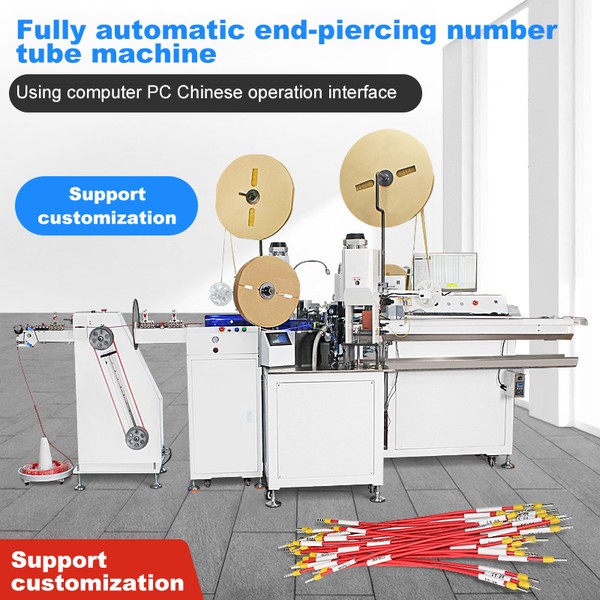
Machine à sertir les embouts tubulaires d’insertion
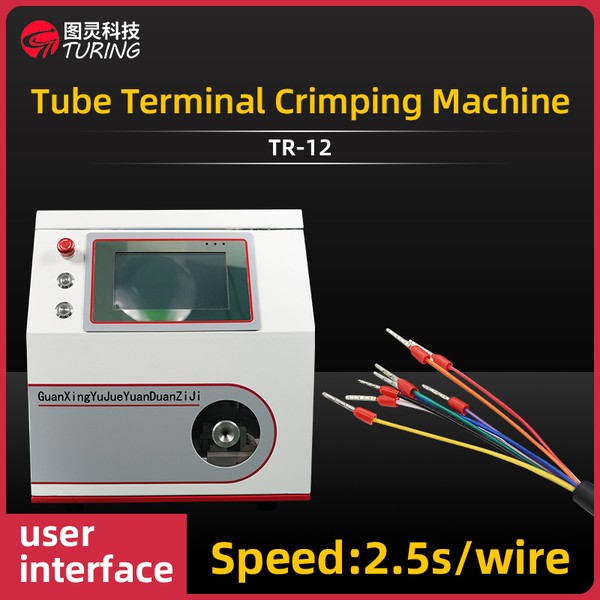
A number tube or marker sleeve has to be on the wire before the terminal is crimped: once the terminal is on, the tube cannot pass over it. Machines on this page insert the tube and crimp in the same cycle, which removes a handling step and eliminates the sequencing error that turns a completed wire into scrap. Two inputs define the machine — the tube inner diameter, which is set by the wire and the terminal barrel, and the crimp application itself. Print content belongs to the printing page if the tube must also be marked. Where the tube is a heat-shrink sleeve rather than a marker, the heat shrink insertion pages are the correct starting point.
20 modèles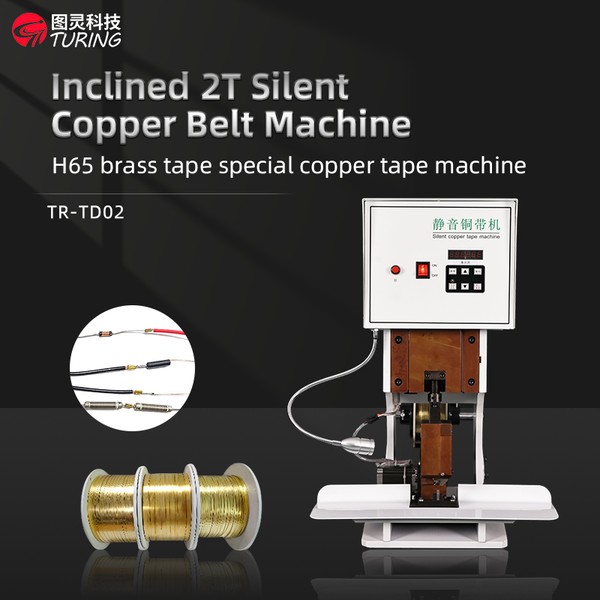
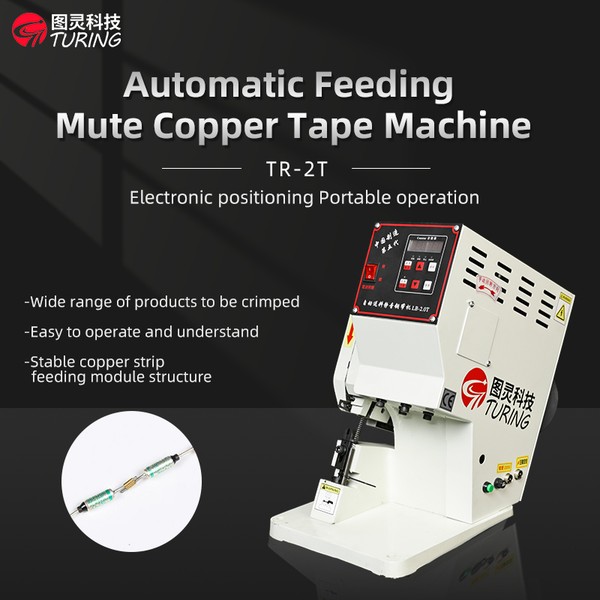
Machine semi-automatique de sertissage de bandes de cuivre
Not every crimp joins a wire to a terminal. Copper strip and copper tape are crimped onto conductors and shields to create a low-resistance bond over a length rather than at a point, which is used in shielding terminations, busbar connections and battery tab work. The material being crimped is flat, so the tooling is a die set rather than a terminal applicator, and the quality measure is contact resistance and pull strength over the bonded length. Give us the copper width, its gauge, the conductor arrangement and the required bond length. Because the tooling is made for the joint geometry, a sample of your strip and conductor is what we quote from.
11 modèles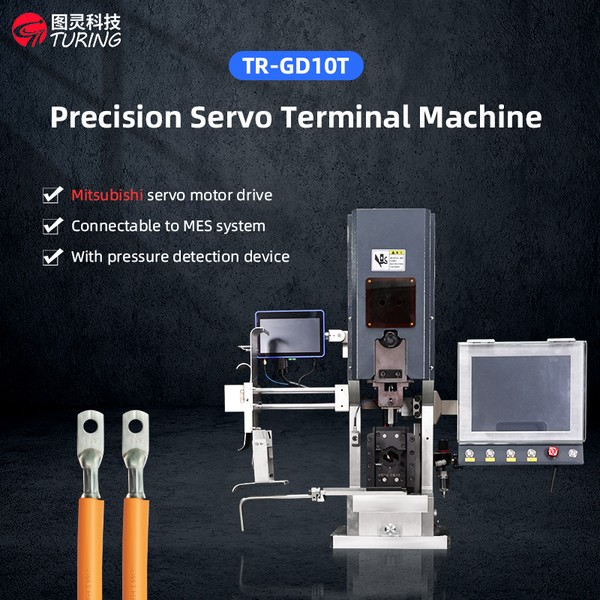
Machine à sertir les bornes servo pour nouvelles énergies
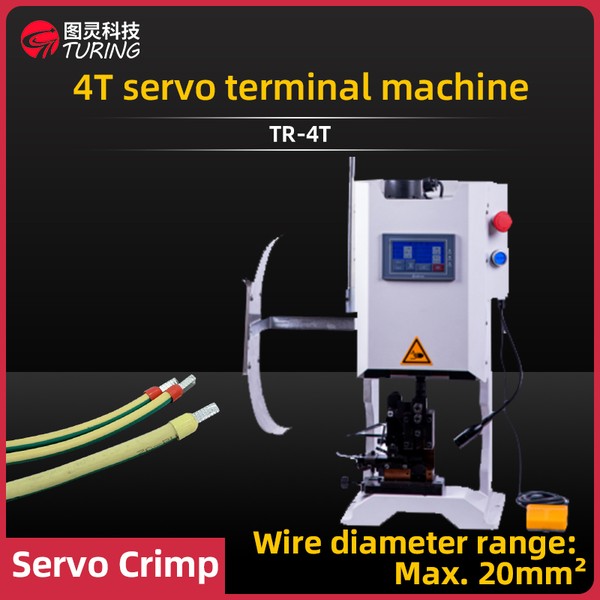
High-voltage and EV harnesses are crimped on larger conductors and in thicker insulation than 12 V harnesses, and they are inspected to a tighter standard because a marginal joint fails as heat rather than as an open circuit. Servo terminal crimping machines drive the stroke directly instead of deriving force from supply-air pressure, so crimp height and force repeat across a shift rather than drifting with the air line. This is the reason the servo tier is specified on EV work, more than any difference in cycle time. The sizing inputs are the conductor cross-section, the terminal series, and whether a shield or seal is applied. We machine the applicators in-house.
15 modèles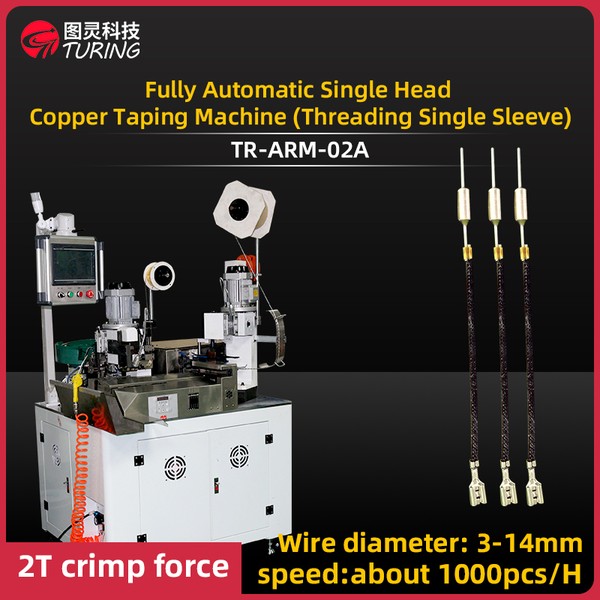
Machine entièrement automatique pour ruban de cuivre
Copper tape is used to bond a shield or a conductor over a defined length, and an automatic machine does four things without an operator: feed the tape, cut it to the required length, position it, and bond it. Automation matters here for a specific reason — bond length and tape tension decide contact resistance, and both vary when the tape is laid by hand. Sizing runs on the copper width and its gauge, the bond length, and the substrate, which may be braid, foil or a solid conductor. Tapes differ in how they feed, so we ask for your tape roll and run it on the machine before the order is confirmed.
5 modèles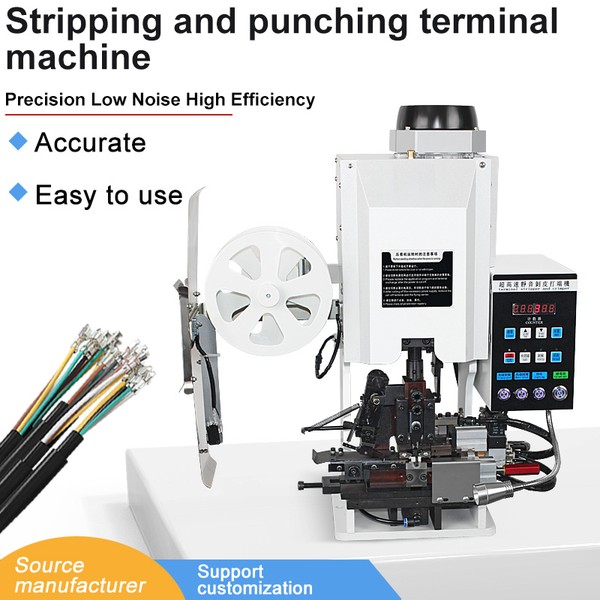
sertissage de la gaine du câble
A jacketed cable needs more preparation than a single-core wire: the outer jacket is scored and pulled back, any filler and foil are removed, and the conductor is stripped before the terminal goes on. Doing strip and crimp in one pass on this machine keeps the prepared end from being handled twice, which matters most on cable where the jacket is the mechanical support and pulling it back disturbs the lay of the inner cores. The selection inputs are jacket diameter, core count and terminal series. Machines are configured for the cable in front of us rather than chosen from a range card, so a length of your cable is what we quote from.
4 modèles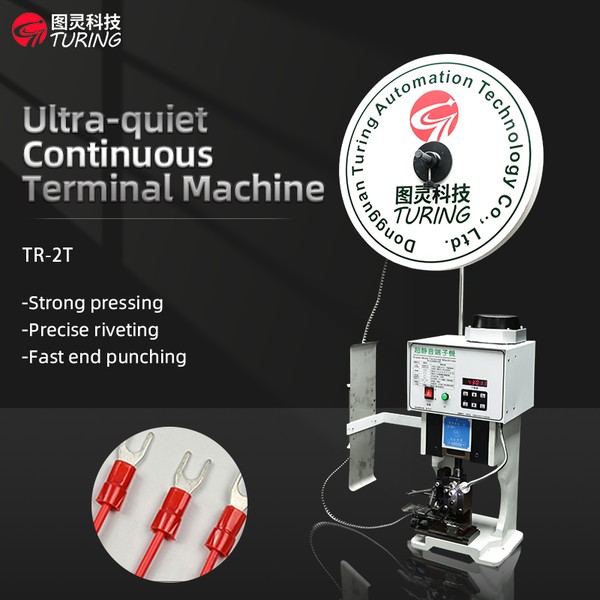
sertissage de la borne du servomoteur
The argument for a servo press is repeatability, and it is worth stating precisely: a pneumatic press converts supply-air pressure into force, so the force varies with the pressure available at that moment in the shift. A servo press drives the ram to a programmed position with a programmed force profile, and holds it. For terminals near the edge of their crimp-height window, or for joints that are inspected by cross-section rather than by pull test, that difference decides acceptance. These machines use that architecture in single-head and double-head forms. Confirm the terminal series and the crimp-height window from your specification; both are needed before tooling is quoted.
5 modèlesFully Automatic
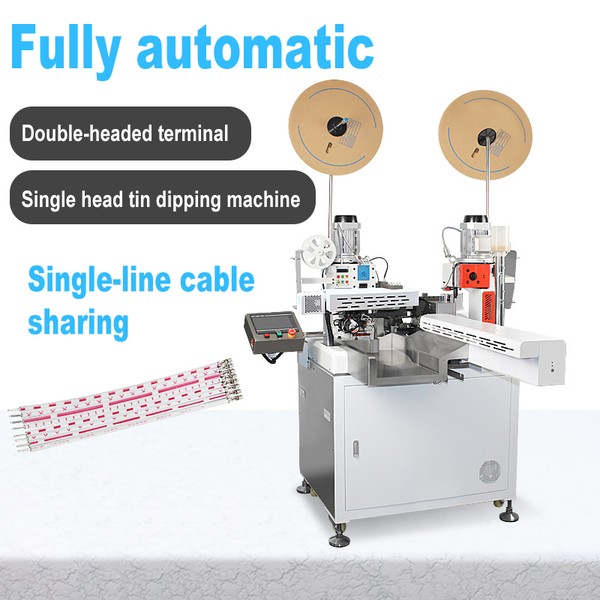
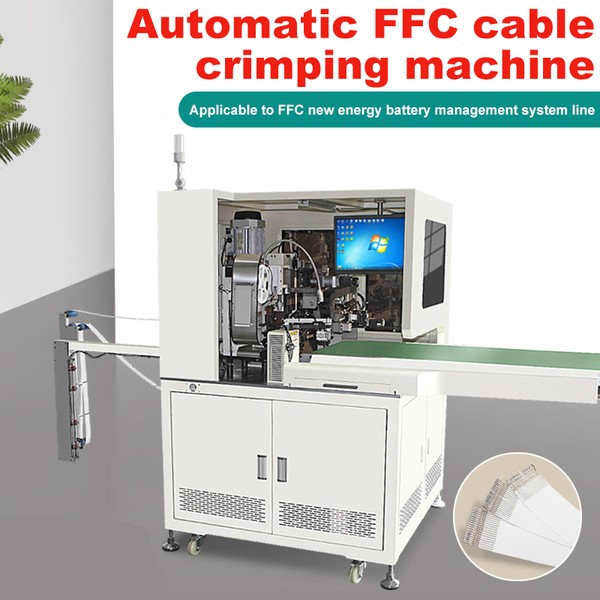
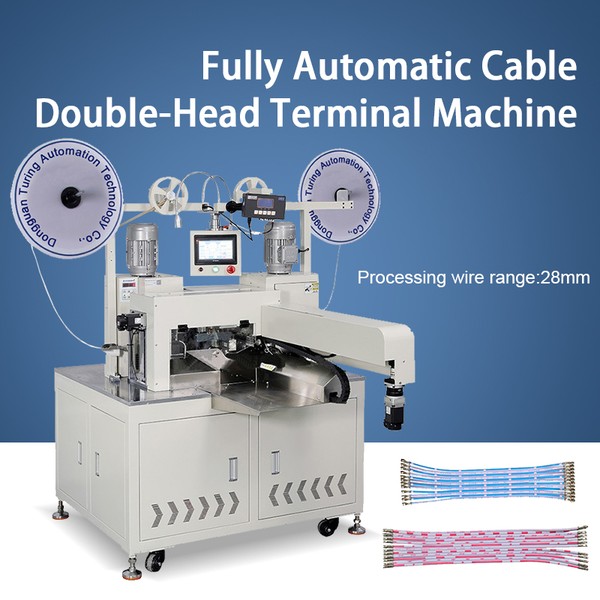
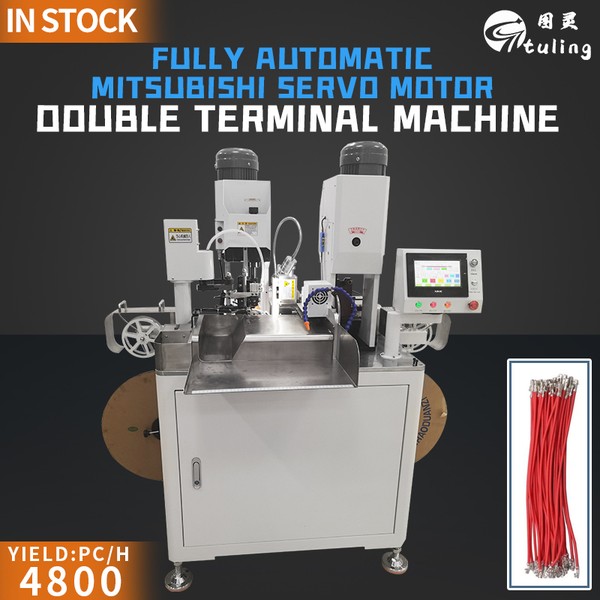
Semi-Automatic
Modèles dans cette gamme
Pourquoi choisir Turingnex pour Machine à sertir les terminaux
Machine à sertir les terminaux Il s’agit d’une véritable décision d’achat. Voici ce que vous obtenez lorsque vous commandez directement auprès de l’usine — des capacités vérifiées, présentées clairement.
Directement de l’usine, sans intermédiaire
Achetez directement auprès de l’usine de Dongguan au prix fabricant — sans majoration de société de négoce.
Atelier certifié CE et ISO9001
Machines certifiées CE fabriquées dans un atelier ISO9001, avec la garantie commerciale Alibaba disponible sur demande.
100 % rodage avant expédition
Chaque machine passe un test complet de rodage et une vidéo de l’expédition est enregistrée avant qu’elle ne quitte l’atelier.
QC: Raw material check → Machining → Assembly → 100% run-in test → Shipment video
Garantie de 12 mois et pièces de rechange
Garantie couvrant chaque construction, pièces de rechange authentiques expédiées dans le monde entier, assistance à distance incluse.
Test gratuit sur votre matériau
Envoyez votre fil et vos terminaux — nous effectuerons un test de sertissage/dénudage et partagerons la vidéo avant que vous ne décidiez.
Matrices sur mesure selon votre dessin
Matrices et outillage fabriqués selon votre plan final, afin que la machine produise vos pièces dès le premier jour.
Comparaison des modèles
| Modèle | puissance | application | fonctionnalité | garantie | MOQ | Prix (FOB) | Action |
|---|---|---|---|---|---|---|---|
TR-TC03 TR-TC03 Machine automatique de sertissage de cosses de câbles à double tête | AC220V/50HZ, 300W | Industrie de la fabrication de câbles | Performances stables | 1 an | 1 set | Devis sur demande | Voir → |
TR-TC05 TR-TC05 Machine automatique de sertissage de bornes à double tête avec moteur pas à pas | AC220V/50HZ, 300W | Industrie de la fabrication de câbles | Performances stables | 1 an | 1 set | Devis sur demande | Voir → |
TR-TC06 Fully Automatic Cutting Stripping Tapping Terminal Crimping Machine | AC220V/50HZ, 300W | Industrie de la fabrication de câbles | Performances stables | 1 an | 1 set | Devis sur demande | Voir → |
TR-PX1 TR-PX1 Machine automatique haute vitesse de sertissage de terminaux de câbles à double tête | AC220V/50HZ, | Machine à bornes à deux extrémités | Performances stables | 1 an | 1 set | Devis sur demande | Voir → |
TR-01S TR-01S Machine automatique de sertissage de bornes à cinq fils à double tête | AC220V/50HZ, | Machine à bornes à cinq fils à double tête | Performances stables | 1 an | 1 set | Devis sur demande | Voir → |
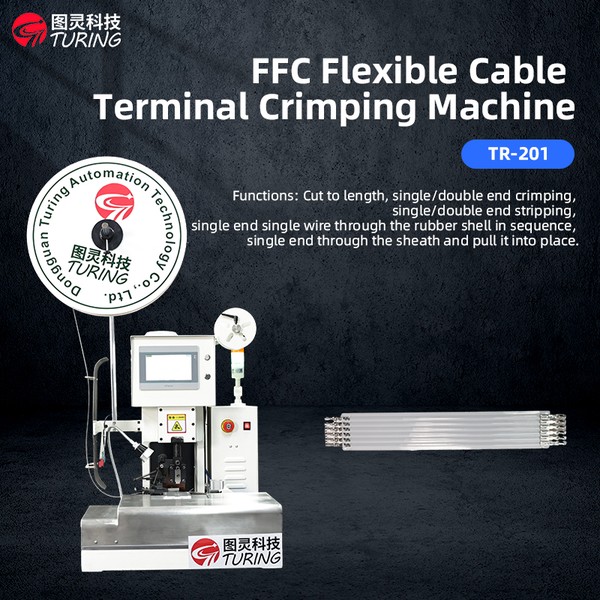
TR-06 TR-06 Machine à sertir les terminaux de câbles FFC entièrement automatique | AC220V/50HZ, | Coquille d’insertion pour sertissage de terminaux à double extrémité, étamage par trempage | Performances stables | 1 an | 1 set | Devis sur demande | Voir → |
Prix FOB indicatifs. Les spécifications finales et le délai de livraison sont confirmés lors de l’établissement du devis.
Vous ne savez pas quel modèle choisir ?
Construit et testé dans notre atelier
Chaque machine est assemblée dans notre atelier de Dongguan et testée avant expédition. Séquence de contrôle qualité : Raw material check → Machining → Assembly → 100% run-in test → Shipment video. Une vidéo de test sur votre propre matériau est disponible sur demande.
Machine à sertir les terminaux en production
Ce que disent les acheteurs
Références clients
Nous publions uniquement des devis vérifiés — avec le nom de l’entreprise, le pays et le nom du contact. Demandez-nous les coordonnées de clients de référence sur votre marché et nous vous mettrons directement en contact.