
Sealed and waterproof connectors (IP-rated harnesses for automotive, appliances and outdoor equipment) need more than a good crimp: after crimping, the terminal must be inserted into a waterproof plug, a protective tube, or a plastic shell — in the right orientation, to the right depth, without damaging the seal. Done by hand, this step quietly eats your labor cost. Done with the right machine, it becomes a stable, repeatable process. This guide covers the three most common insertion families and how to choose between them.
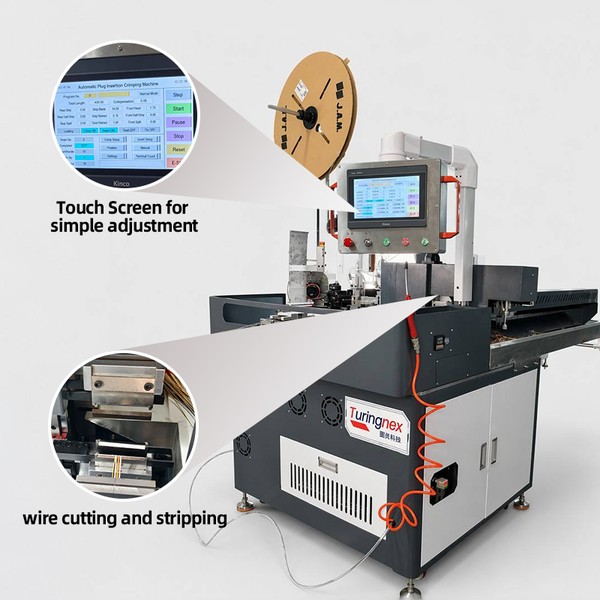
1. Know your part: which insertion step are you automating?
| Process | Typical part | Machine family in our catalogue |
|---|---|---|
| Insert terminal into waterproof plug/seal | Automotive connectors with rubber seals | Inserting waterproof plug terminal crimping machine |
| Insert terminal into protective tube | Wires with insulation tube over the crimp | Inserting tube terminal crimping machine |
| Insert terminal into plastic shell/housing | Appliance and connector housings | Plastic shell terminal crimping machine |
Some machines combine crimping and insertion in one cycle; others insert into parts that were crimped separately. The right choice depends on whether you buy pre-crimped terminals or run from reel.
2. Single-function insertion machines
A dedicated insertion machine feeds the pre-crimped wire and pushes the terminal into the plug/tube/shell with controlled force and depth.
Choose when:
- Your crimping is already handled elsewhere (different floor, different machines)
- Insertion orientation is simple (single position)
- You need flexibility for many part variants
Watch for: orientation sensing, insertion depth control, and how gently the machine handles the seal — a damaged seal fails the IP test even with a perfect crimp.
3. Integrated crimp-and-insert lines
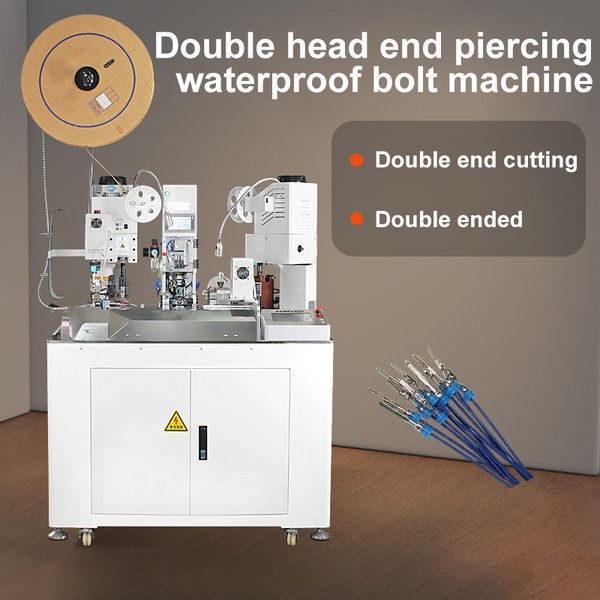
If you run from terminal reels and produce sealed leads in volume, an integrated machine — crimp, then insert into plug or shell in one sequence — removes an entire material-handling step. Families like auto insert shell crimp, auto insert waterproof seal crimp and auto insert tube crimp cover the three variants.
Choose when:
- Volume justifies a dedicated setup per part family
- Part variants are limited enough that changeover is manageable
- You want one operator to supervise instead of two benches
4. Decision framework
- Count your part variants. Above ~5–8 plug/shell variants with short runs, prefer flexible single-function machines. Fewer variants and long runs favor integrated lines.
- Measure your bottleneck. If crimping is already faster than insertion, an insertion machine (or integrated line) attacks the real constraint.
- Check orientation complexity. Multi-hole plugs (e.g., single-head multi-hole waterproof plugs, as in the TR-FSS01 class of fully automatic waterproof plug crimping machines) need position control that simple insertion jigs cannot give.
- Include your rework and scrap. Mis-inserted terminals are expensive to extract; machines with depth sensing reduce this cost.
5. Specification checklist for your RFQ
- Plug/tube/shell dimensions and material (seal hardness matters)
- Number of holes/positions per part
- Wire length range and whether the lead is single- or double-ended
- Reel-fed terminals or pre-crimped wire input
- Insertion depth and force requirements
- Changeover time and tooling cost per part variant
- Reject handling: what happens on a failed insertion?
6. Common mistakes to avoid
- Buying a machine before sending samples — seals and shells vary in tolerance; always test with your actual parts
- Ignoring orientation — parts that look symmetric often are not; confirm the machine detects orientation automatically
- Forgetting the crimp–insert tolerance chain — if your crimp position varies, insertion depth control gets harder; fix crimp process first
- Under-specifying the seal — machine force settings that work for one seal hardness can tear another
FAQ
Q: Can I use the same machine for plugs, tubes and shells? A: Usually not without changing feeders and tooling — the three part families differ in geometry. Choose the family that matches your dominant part type, and keep flexibility for the rest via tooling.
Q: My terminals are pre-crimped by another supplier. Which machine do I need? A: A single-function insertion machine that takes pre-crimped wire input — you do not need a crimp module. Specify "pre-crimped wire input" in the RFQ so the supplier configures the right feeding system.
Q: How do I verify insertion quality? A: Confirm insertion depth and, for seals, visual/force checks. If your customer IP-tests finished connectors, run a sample batch through the machine and verify pass rate before accepting the machine.