
Wire Processing Machines & Cable Equipment — Factory Direct | Turingnex


CE CertifiedMachinery Directive conformity for EU markets
ISO9001Quality management system, in-house assembly
RoHS CompliantMaterials and electronics compliance
100% Run-in TestedEvery machine tested before shipment
Product Categories
All Products Shop by Machine Type
Fifteen process-focused lines, one factory — pick a category to compare models, specs and lead times.
Terminal Crimping Machine
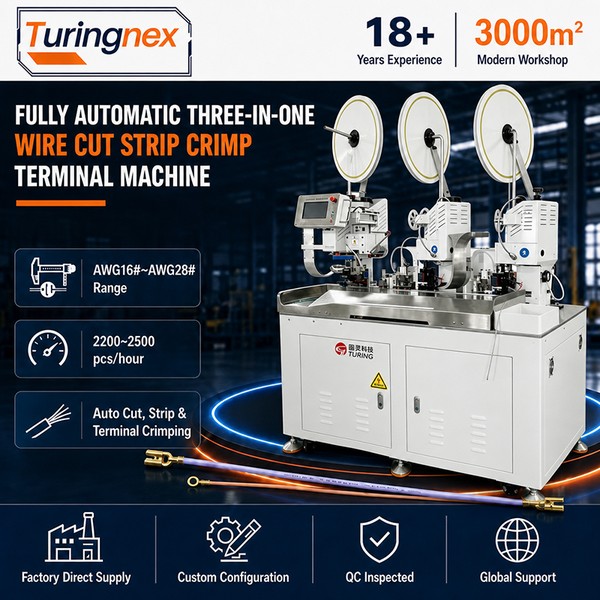
A terminal crimping machine deforms the terminal barrel around the stripped strands so the joint carries current and resists pull-out. Crimp quality is set by the applicator or die, the crimp height relative to the terminal's window, and the pull force the finished joint withstands — not by press force alone. This is the family entry point and covers both feeding methods and both automation tiers: loose-terminal presses for low volume, banded and reel feed for automatic work, single-head and double-head configurations. Dies and applicators are machined on our own CNC vertical machining centres, so proprietary terminal series can usually be tooled. Send your terminal and we crimp and measure it before you commit.
185 models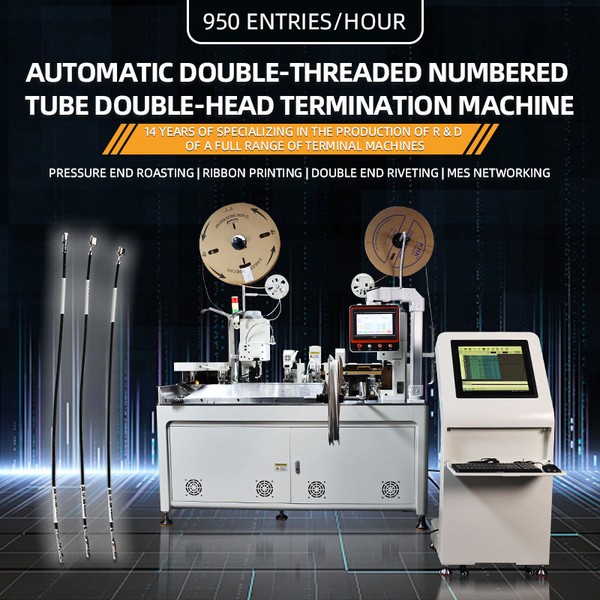
Fully auto crimp solder seal
A splice in a harsh environment may need three things at once: a mechanical crimp to carry the load, solder to make the electrical joint permanent, and a seal to keep moisture out of the strands. Doing them on one machine avoids re-heating a joint that has already been crimped, which is where these assemblies most often fail. The process steps are sequenced and the heat input is controlled, because the solder stage sits next to insulation that must not be damaged. Specify the splice type, the conductor cross-section and the environmental requirement. This is a joint-specific machine: the tooling follows the splice, and a sample splice is run before shipment.
5 models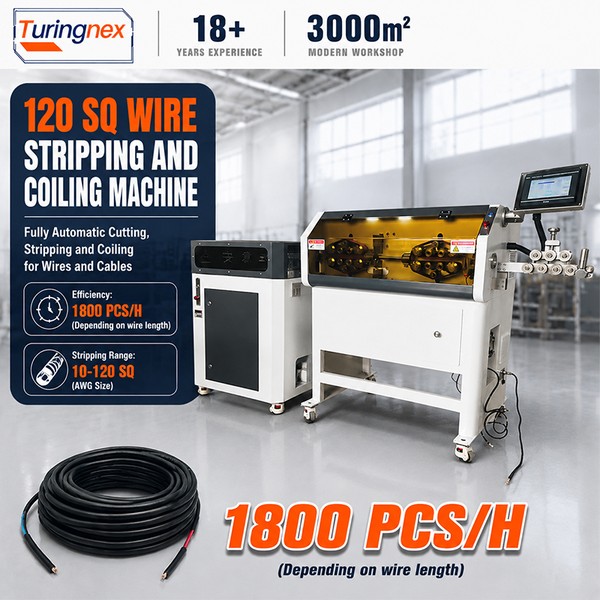
Cable/Wire Cutting and Stripping Machine
Cutting and stripping is the first operation on any harness line: the wire is measured, cut to length, and its insulation removed at one or both ends. This page is the entry point to the family, covering general-purpose machines for single-core and multi-core wire, from bench-top pneumatic units through programmable cut-strip models that hold cut-length tolerance to ± 0.4 %. Start here if you are replacing hand tools or adding your first automatic cut-and-strip stage. If the cable has a braid, a jacket or a gauge above 120 mm² (AWG 8-0000), go to the coaxial, jacket or busbar pages instead. Every machine is run-in tested before shipment.
252 models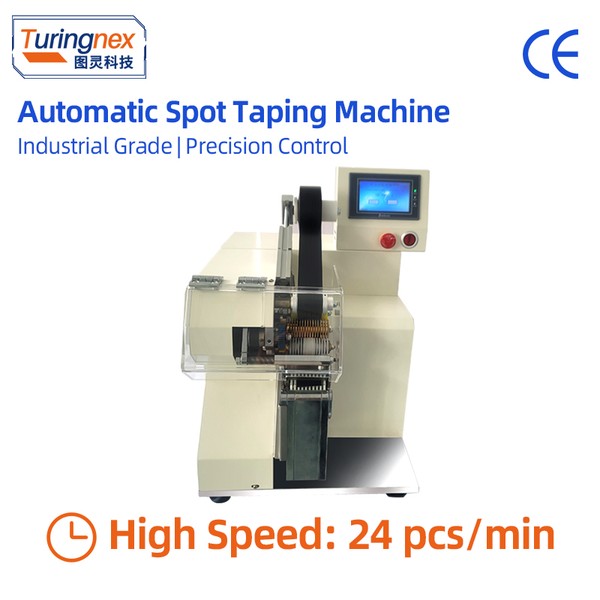
Tape Wrapping and Bundling Machine
Taping and bundling is the stage that turns a set of terminated wires into a harness: tape fixes the branches along their length, and a tie closes the bundle so it holds its shape. It is the operation most often still done by hand, and the one where labour cost concentrates on a harness line. This page opens the family and covers taping and bundling heads from handheld units through bench-top machines to in-line stations. The first specification to fix is the wrap pattern, because full wrap, point wrap and spiral are different heads and the pattern is set by the harness drawing rather than by preference. Pitch consistency is the quality figure worth asking for.
80 models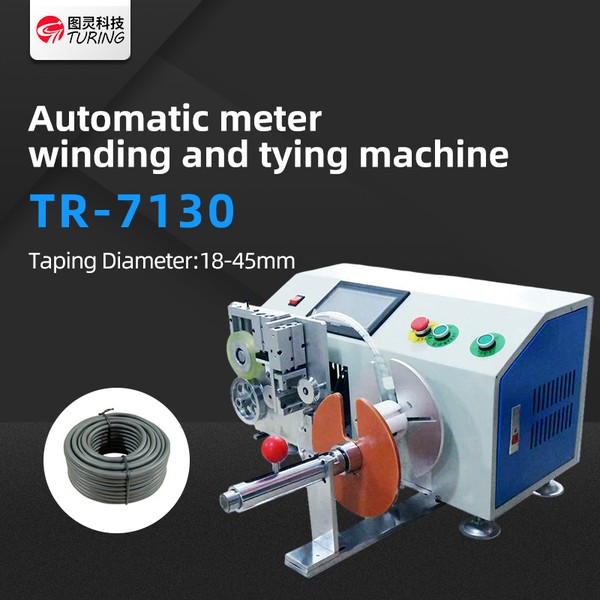
Cable Winding and Bundling Machine
Winding and tying takes a finished cable and turns it into a shippable coil: the cable is wound into a defined shape — circle, small circle, or figure-of-eight — and secured with a tie at fixed points. Figure-of-eight is used where a plain coil would introduce a twist that the cable must not carry. The machine is sized by coil outer diameter, cable diameter and coil weight, and the tie count per coil. Winding speed is almost never the constraint; what matters is that every coil comes out the same shape, because a coil that varies is a packaging problem at the customer's end. Desktop and upright versions are available. This line also covers cutting, winding and tying in one machine.
25 models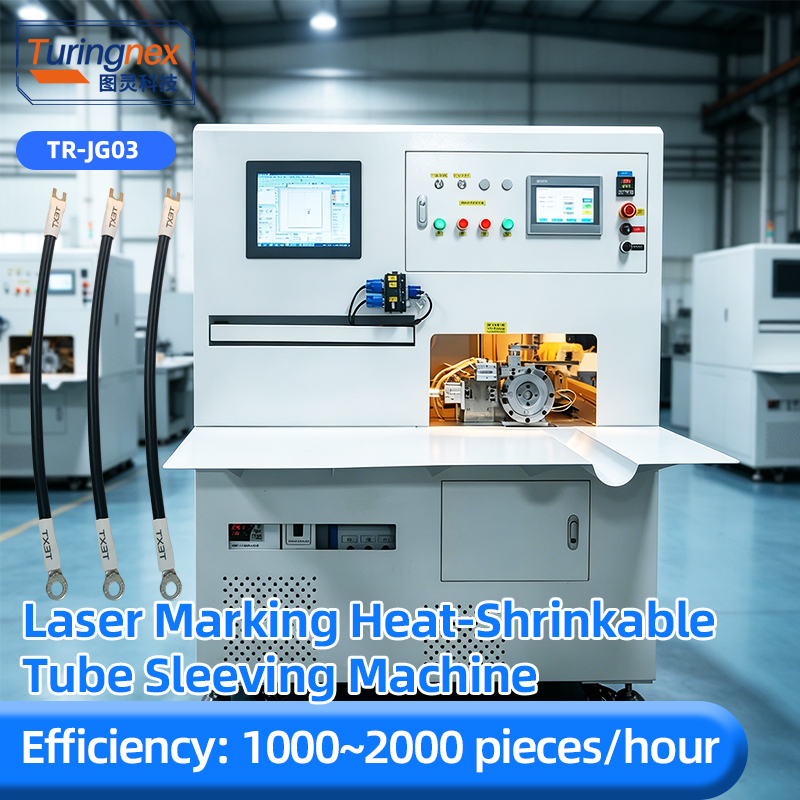
Inserting Heat Shrink Tube Baking Machine
Inserting the sleeve and shrinking it are two operations, and between them the sleeve sits loose on the splice — where it can be displaced, dropped, or fitted on the wrong side of a connector. Machines on this page insert and bake in one cycle so the sleeve is never a loose part in the process. This matters most on short splices where the sleeve has little to grip before shrinking. The specification inputs are the tube inner diameter and shrink ratio, the sleeve length, and the splice geometry. Insulation that sits inside the shrinking zone has to be checked against the dwell temperature, because overheating it is a defect that appears weeks after shipment, not during assembly.
13 models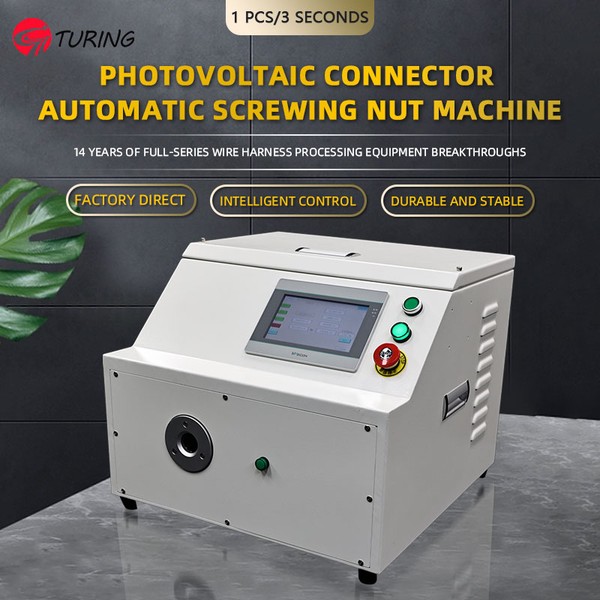
Connector Nut Screwing Machine
Tightening a connector nut or a cable gland is a fastening operation, not a termination: the joint is already made and what remains is torque. Doing it by hand produces a torque spread that shows up later as either a loose seal or a cracked housing, and the machine exists to hold one torque across a shift. The variables are the thread size, the torque required and the access geometry around the connector — the last is usually what decides the tooling, because a nut inside a moulded housing has less clearance than the drawing suggests. Where the assembly also needs waterproofing, the sequence of nut and seal relative to the crimp has to be fixed first.
8 models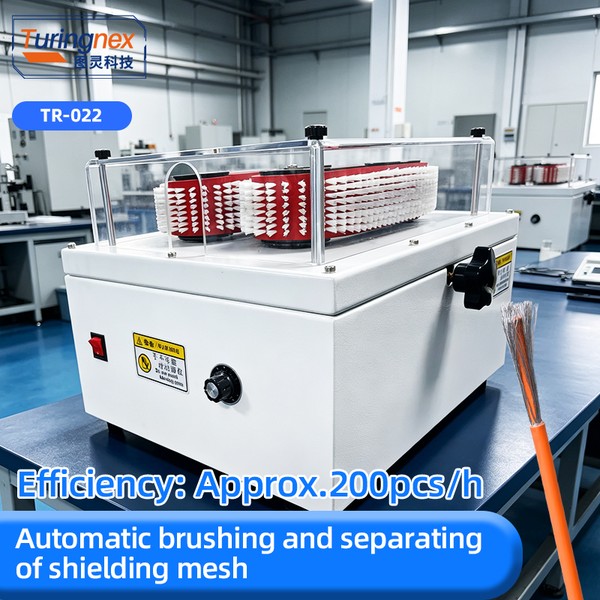
Others
Turing is one of the leading China Mold and Accessories manufacturer and supplier, over the years, we have established good relationship with our customers for wholesale Others business
73 models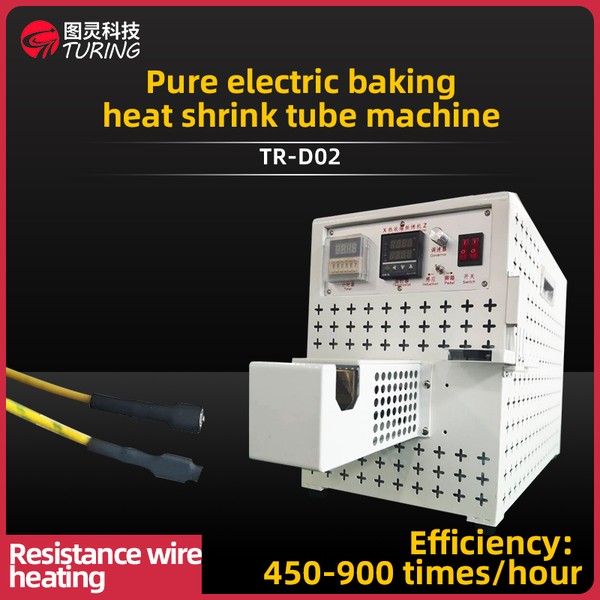
Heat Shrink Baking Machine
Heat shrink baking shrinks a sleeve onto a splice or terminal so it seals the joint and relieves strain. The variable that decides quality is not the oven temperature by itself but the combination of set temperature, dwell time and airflow: a sleeve can look fully shrunk on the surface while the adhesive at the splice has never reached its activation temperature. Ovens come in enclosed, semi-closed, overhead and infrared forms, and the harness geometry usually picks the form — a long assembly that cannot be placed inside a chamber needs an overhead or infrared head. Confirm the tubing specification first; the machine holds a temperature, it does not choose one.
23 models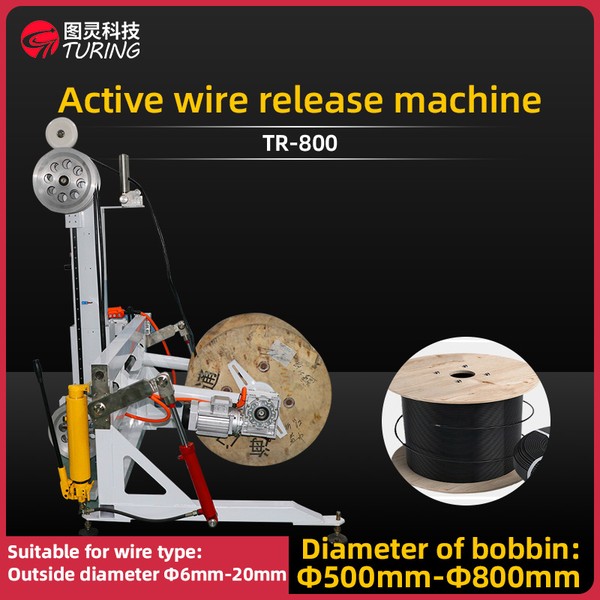
Pay-off rack
Every machine upstream in the line depends on how the wire arrives at it. A pay-off stand holds the reel and releases the wire at controlled tension; without that control the wire either drags and stretches or feeds slack and tangles, and both show up as length errors at the cutting machine rather than as a problem at the stand. The range covers passive release frames and powered unwinding reels for heavier or larger-diameter cable. The sizing inputs are reel size and weight, wire diameter and the line speed the stand must support. The English naming of this line is being re-verified; give us the reel specification on your enquiry and we will size the stand to it.
5 models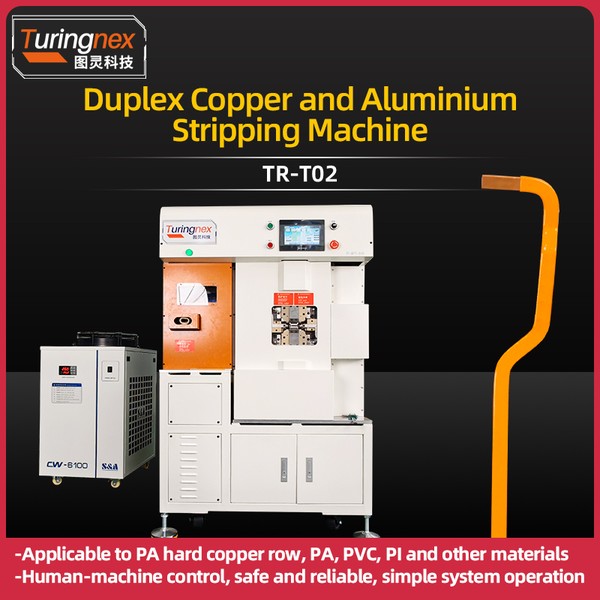
Copper busbar peeling machine
Busbar and heavy solid conductor are the heavy-gauge end of the family. The insulation is a coating or a wound sleeve rather than an extruded jacket, and the conductor is solid, so the cut is a peeling action against a rigid body instead of a blade closing on strands. Two facts decide the machine: the bar cross-section and whether it is flat, round or formed, and the insulation type, because a coating that adheres to copper behaves differently from a sleeved bar. This is a small, specialised product line whose English name is currently being re-verified against search demand; describe your application on the enquiry and we will confirm which configuration applies.
3 models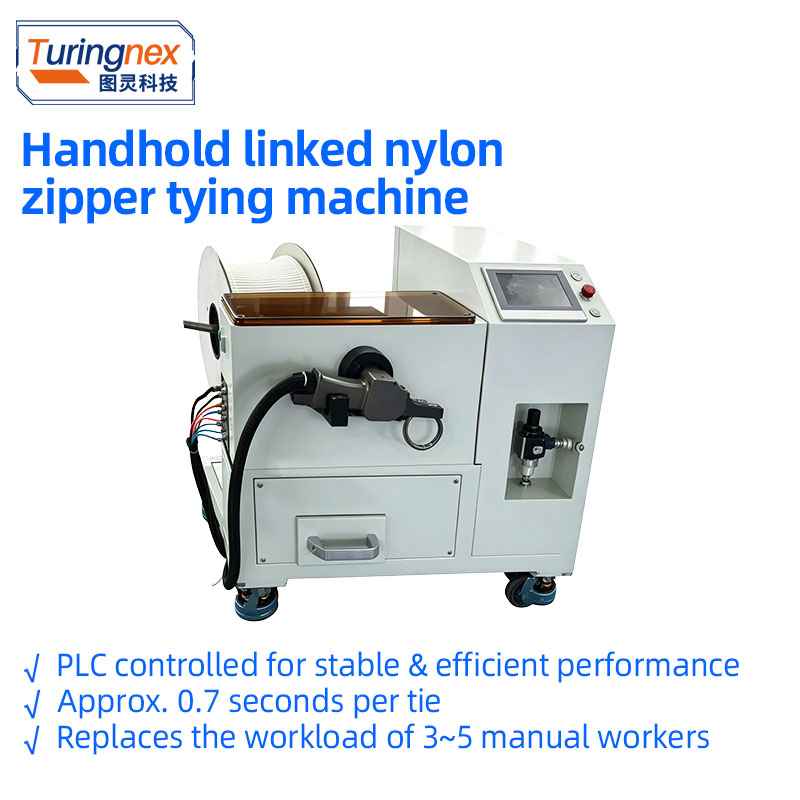
Nylon Cable Tie Bundling Machine
A nylon cable tie is the cheapest way to close a bundle, which is why it is still applied by hand on most lines — and why the machine earns its place: it tightens every tie to the same tension and cuts the tail flush, so the finished bundle neither crushes the wires nor leaves a tail that cuts the installer. The range covers handheld units that follow the operator along a long branch, and desktop units for short repeated branches. The sizing inputs are tie width and length, bundle diameter, and the loop tension your wiring can tolerate. Our handheld unit takes 3.6 × 200 mm ties and runs on 0.2 kW at AC 220 V. Tie material and length are confirmed against your bundle before ordering.
17 models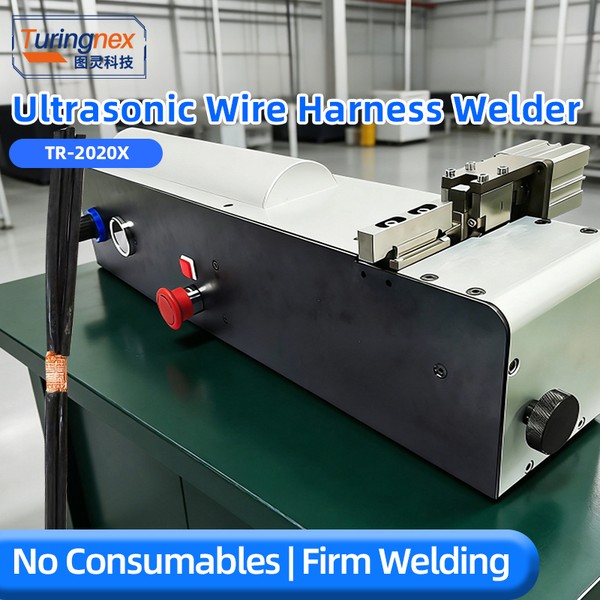
Welding Machine
Ultrasonic welding joins stranded copper to stranded copper, or wire to a terminal or busbar, without solder, flux or filler metal. A sonotrode presses the strands together while oscillating at ultrasonic frequency, and the strands bond to each other in the solid state. The result is a joint with no third metal in it and no heat-affected zone, which is why it appears where a crimped splice would introduce a dissimilar material or where the joint will see thermal cycling. Weld quality is judged on two measurements together — pull force and cross-section — because a joint can pass pull test while the section shows an incomplete bond. Tooling follows the joint geometry.
11 models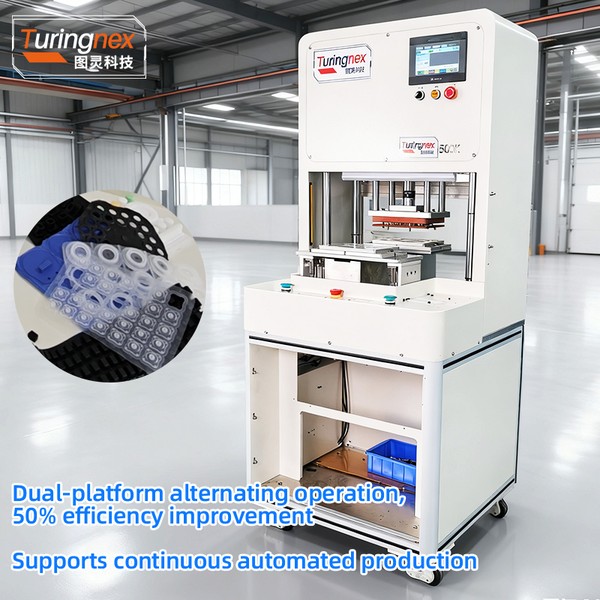
Cutting and Punching Machine
Flat cable, insulating paper, tape and formed insulation components are cut to length and punched in the same pass — a hole, a notch or a locating feature that a guillotine alone cannot produce. The process is closer to a press operation than to wire cutting: the sizing inputs are the material thickness, the tooling geometry and the total force the punch needs, and the cut quality is judged on burr height rather than on length tolerance. If your part is cut only and carries no hole or notch, the tape cutting machines are the better match. Tooling is made to your drawing, and a first-article sample is run before shipment.
1 model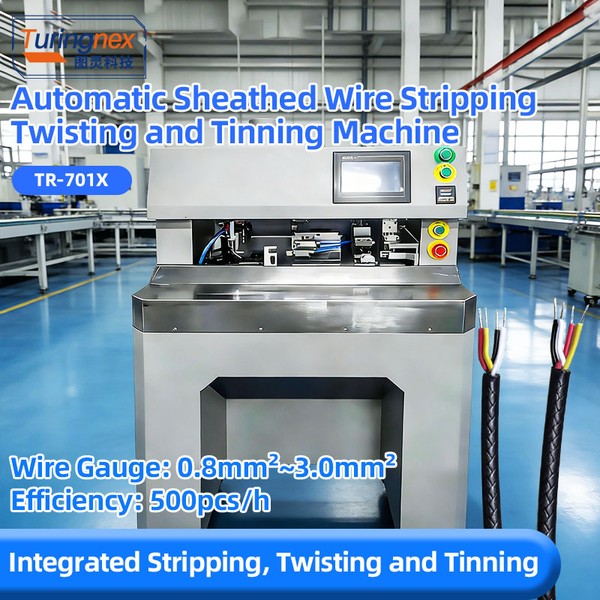
Tin Dipping Machine
Hot-dip tinning closes a stranded end: the wire is fluxed and dipped in molten solder so the strands are locked together. It is used ahead of screw clamps and soldered joints, where bare strands would spread and unwind under torque, and on multi-core cable where the ends must be held together to be inserted. The process variables belong to your downstream process, not to the machine — solder alloy, flux type and bath temperature are set by what happens to the joint afterwards. The range covers standalone tinning machines and multi-core and double-head versions. Note the distinction from crimp-and-dip machines: those apply a terminal as well, these do not.
2 models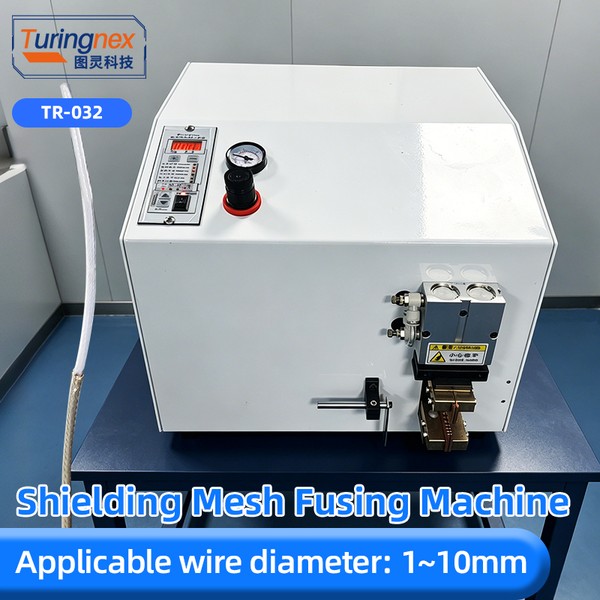
Shielded Mesh Brushing, Turning & Cutting Machine
A shielded cable carries a braided mesh that has to be separated from the dielectric, brushed or combed to remove stray strands, turned back or cut to length, and dressed so it can be terminated without shorting the conductor. Done by hand this is slow and it is where shield fragments end up inside the joint. Machines on this page perform those mesh operations in a controlled cycle with consistent length. The specification inputs are the braid construction — material, coverage percentage, wire diameter — and the cable construction beneath it, because brushing depth is set relative to the dielectric and over-brushing damages it. We run a length of your cable before shipment.
6 models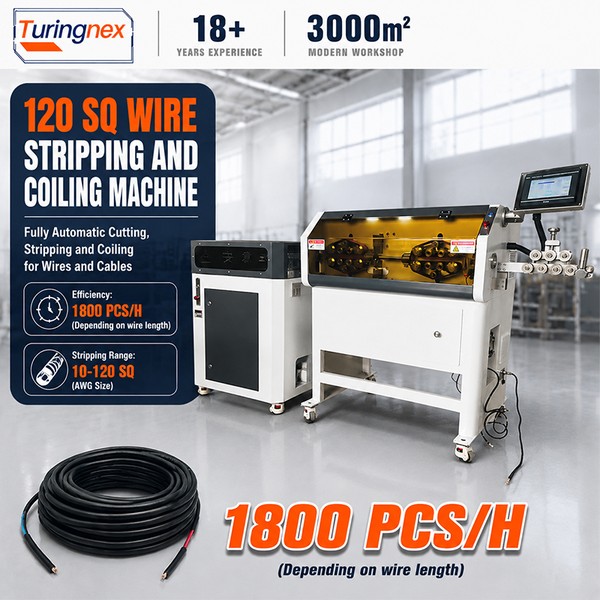
Fully‑automatic welding & housing‑inserting machine
Welding a splice and then inserting it into a housing are normally two stations, and the gap between them is where the strands get disturbed: a welded bundle handled as a loose part can be spread or bent before the housing locks it. This machine welds and inserts in one automatic cycle, so the joint goes from the anvil straight into the housing without being picked up. Specifying it needs three things: the bundle cross-section, the weld area, and the housing part number with its cavity layout. Because the tooling follows both the splice and the housing, a change in either is a tooling change. A sample bundle and housing are run before shipment.
1 model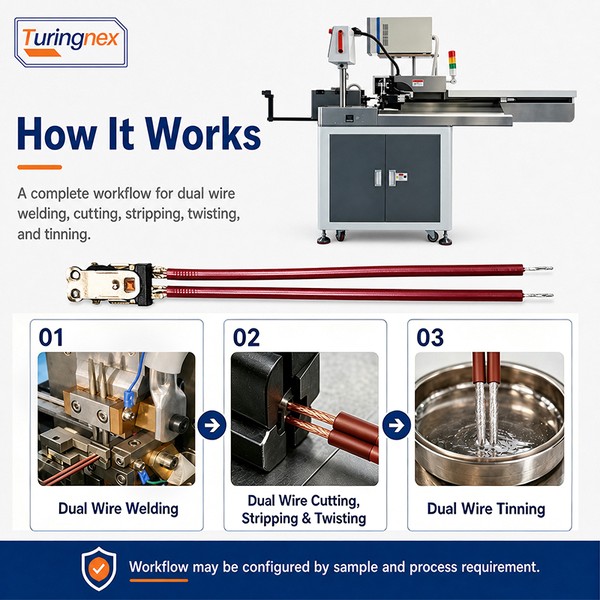
Protector Welding Machine
A thermal protector has to be welded into a harness without heating the bimetal inside it, which is what makes this a distinct machine rather than a general welder: the weld is made by ultrasonic energy precisely because it does not conduct heat into the part. Operation runs at 850 pcs/h on AWG16#–AWG26# copper wire, with vibratory bowl feeding and multi-stage inspection rejection, so a part that fails the check is removed from the flow rather than passing to the next station. The specification inputs are the protector part number, the wire gauge and the required weld area. Because the component is the constraint, we weld your protector and your wire and return a cross-section before the order is confirmed.
3 modelsFlagship Machines
Our Most-Requested Wire Processing Machines.
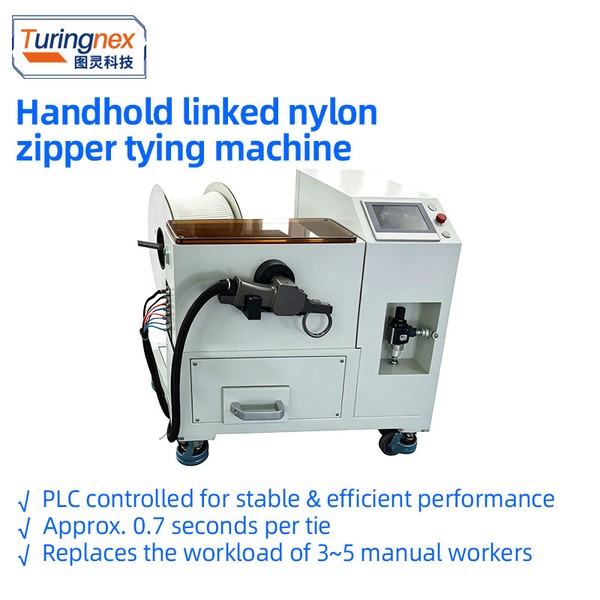
TR-LD200
Handheld Linked Nylon Cable Tie Machine
- Tie size
- 3.6 x 200 mm
- Motor power
- 0.2 kW
- Power supply
- AC 220V, 50/60Hz
Best for high-volume bundling of 3.6 x 200 mm linked nylon cable ties — auto feed cuts manual tie-loading labor, and digital tightness control keeps every bundle uniform.
Quote on request CE Certified
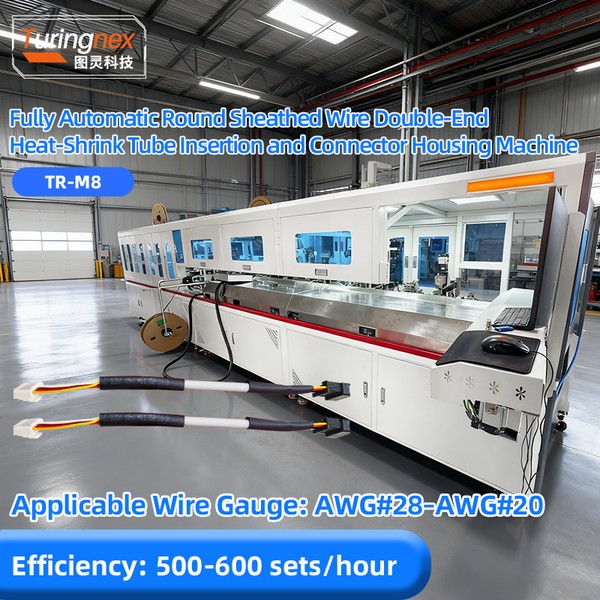
Why Turingnex
Why Buyers Choose the Factory
Four measurable reasons — every claim below is a documented capability, not marketing copy.
Precision You Can Measure
Servo-driven blades hold strip length down to 0.1 mm — clean, nick-free and repeatable batch after batch.
Proven Production Speed
Real specs — throughput, wire range and cycle rates on every datasheet, and each machine is 100% run-in tested before shipment.
Custom Tooling
Dies and applicators built to your terminal drawing — JIS/ISO tooling, fit confirmed before the machine ships.
Global After-Sales
12-month warranty, genuine spare parts worldwide and remote support with a 24-hour reply.
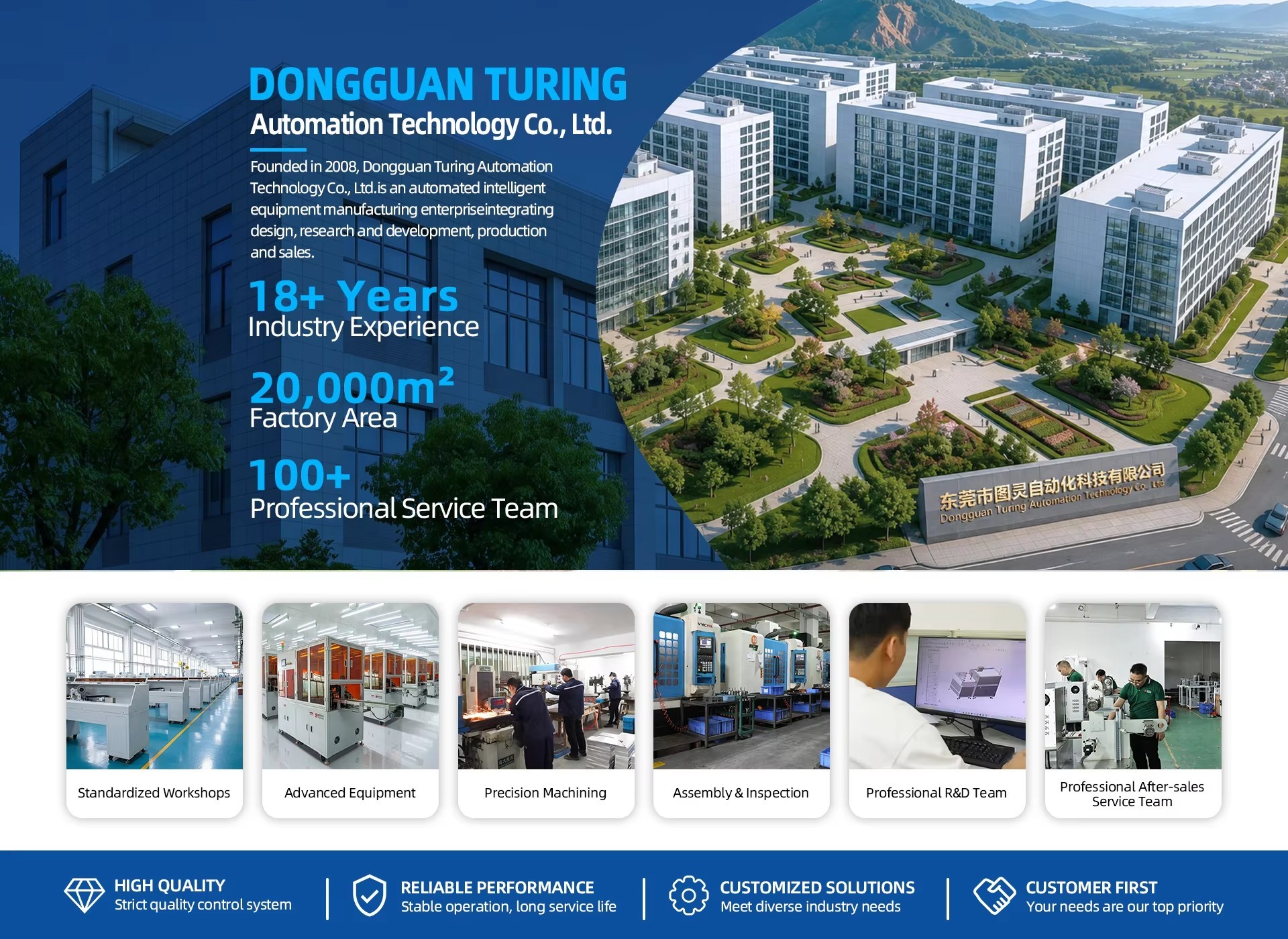
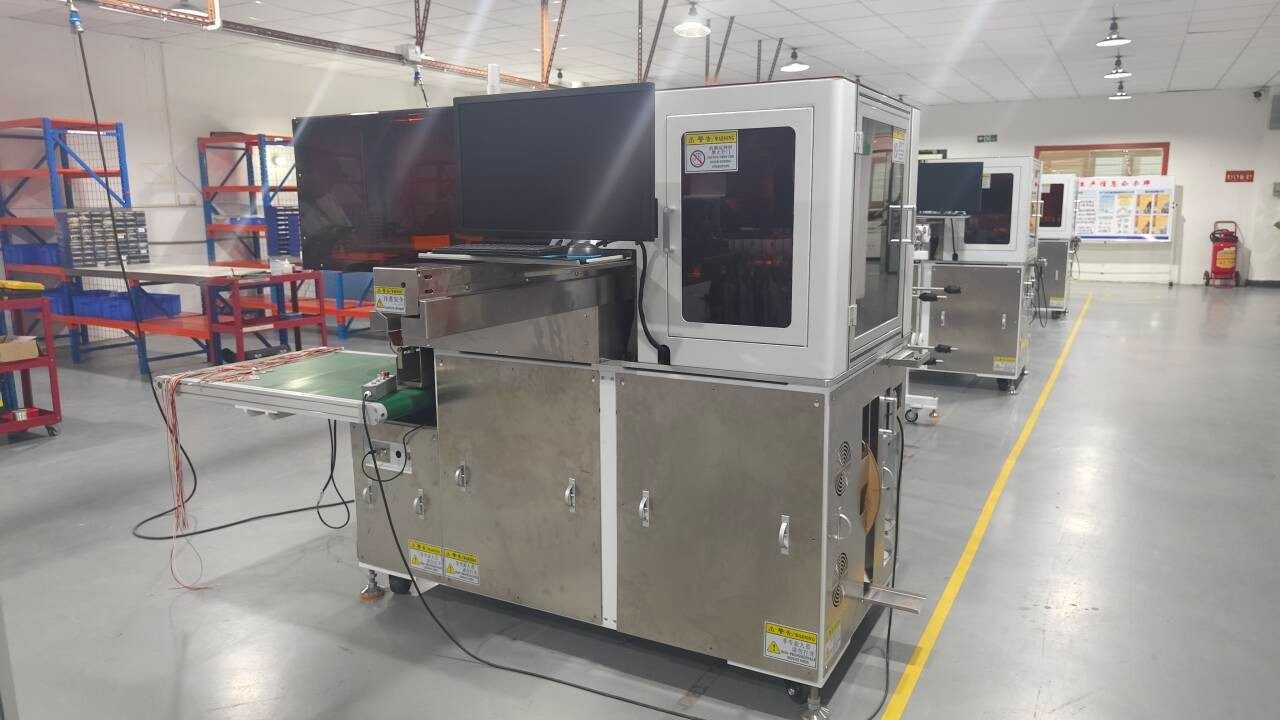 Assembled & QC'd at our Qingxi plant
Our Factory · Dongguan
We Are the Factory — Not a Trading Company
Turingnex is the maker: in-house design, R&D, assembly, run-in testing and QC — no middlemen, no resellers.
Est. 2008 · 18 years in wire-processing machinery
20,000㎡Factory area, Dongguan
10,000+Machines installed worldwide
50+Export countries
98%On-time delivery
- Raw material check
- Machining
- Assembly
- 100% run-in test
- Shipment video
Applications
Industries We Serve
Wire-processing automation for harness assembly across eight end industries — machines sized and tooled for the application.
Automotive
New Energy & EV
Home Appliance
Aerospace & Defense
Medical Devices
ICT & Communication
Industrial Control
Consumer Electronics
Industry equipment guides:Automotive Wire Harness Home Appliance Wiring New Energy Cable Cable Processing
Explore by Application, Product or Technology
Three Ways to Find Your Line
Start from the industry you serve, the machine you need, or the process you want to perfect — every path leads to the right configuration.
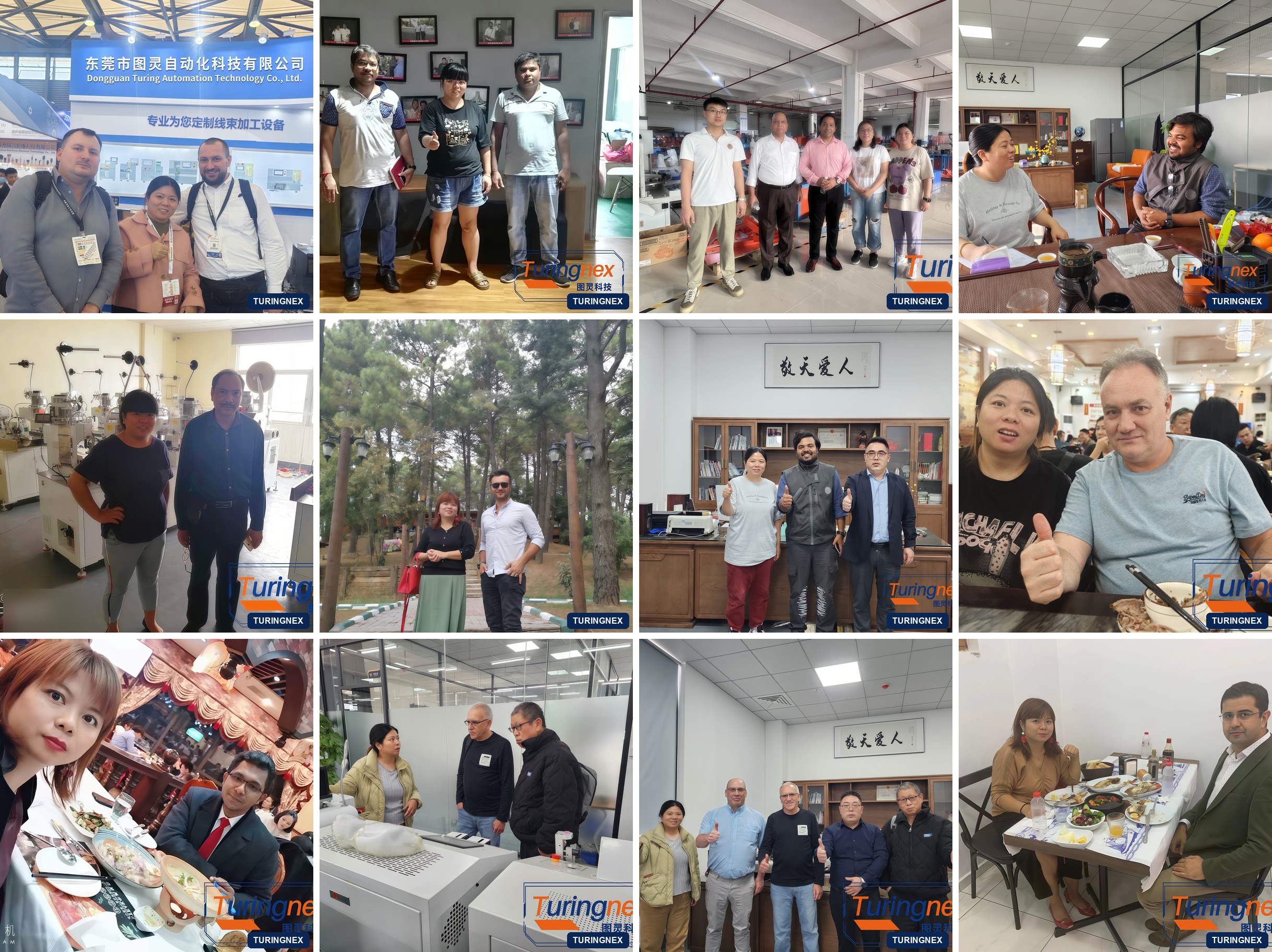
Our Customers
Real Customers, Real Lines
Twelve real moments from exhibitions, factory visits and meetings with customers in many countries. The machines you see on this site run on real production lines — every machine we ship is built, tested and installed for a real customer.
Customer names, case data and quotes are shared with written permission — no placeholder testimonials on this site.
Customer Case
Working With Harness Shops Worldwide
Photos taken on customer production floors.
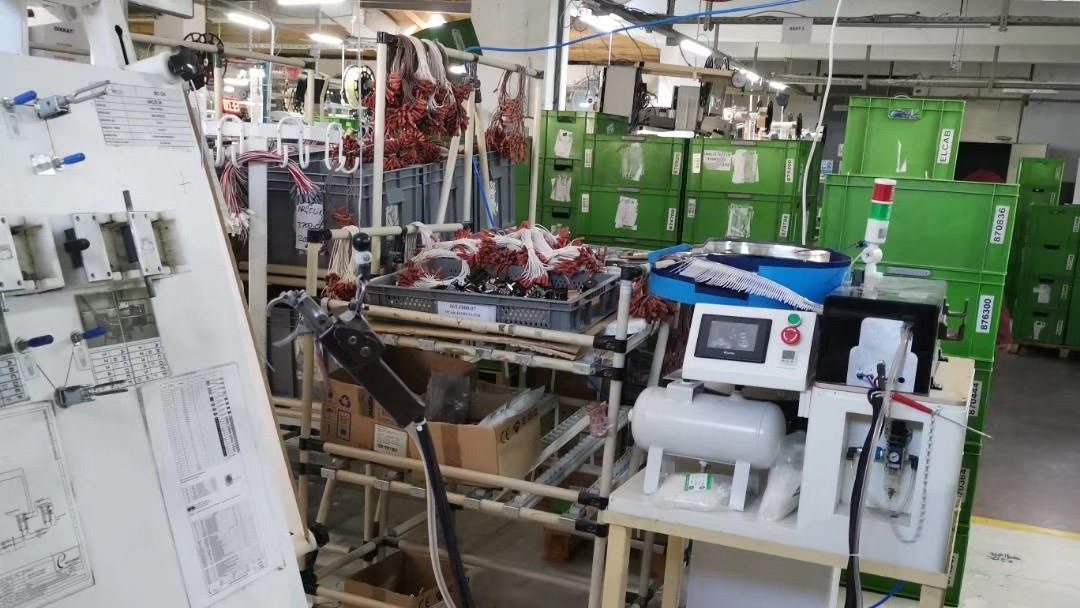
Wire Harness & Cable Assembly
Elcab · Turkey
Elcab manufactures wire harnesses and cable assemblies in Turkey. These photos are from their production floor, where a Turingnex handheld nylon cable tie machine runs with the hand tool fed from a benchtop unit.
Handheld Nylon Cable Tie MachineIndustries
Lines We Equip — By Industry
The applications we equip, and the process steps that usually need a machine. Ask us for references in your market.
Automotive Wire Harness
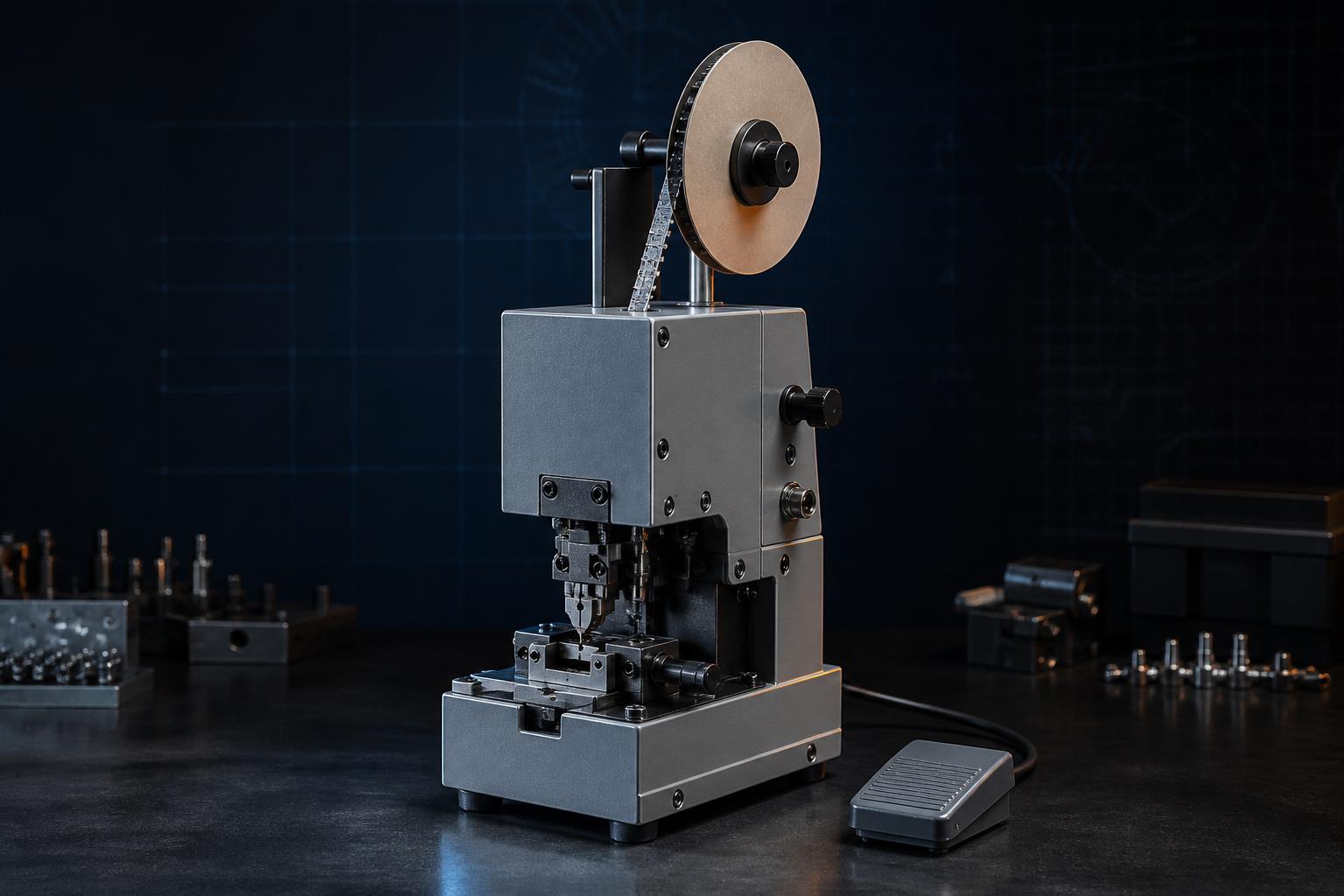
High-mix terminal crimping with traceability
High-mix terminals across vehicle models, where crimp traceability and audit records matter.
Home Appliance Wiring
Frequent changeovers, consistent crimp quality
Small-batch runs with frequent changeovers between wire gauges.
New Energy Cable
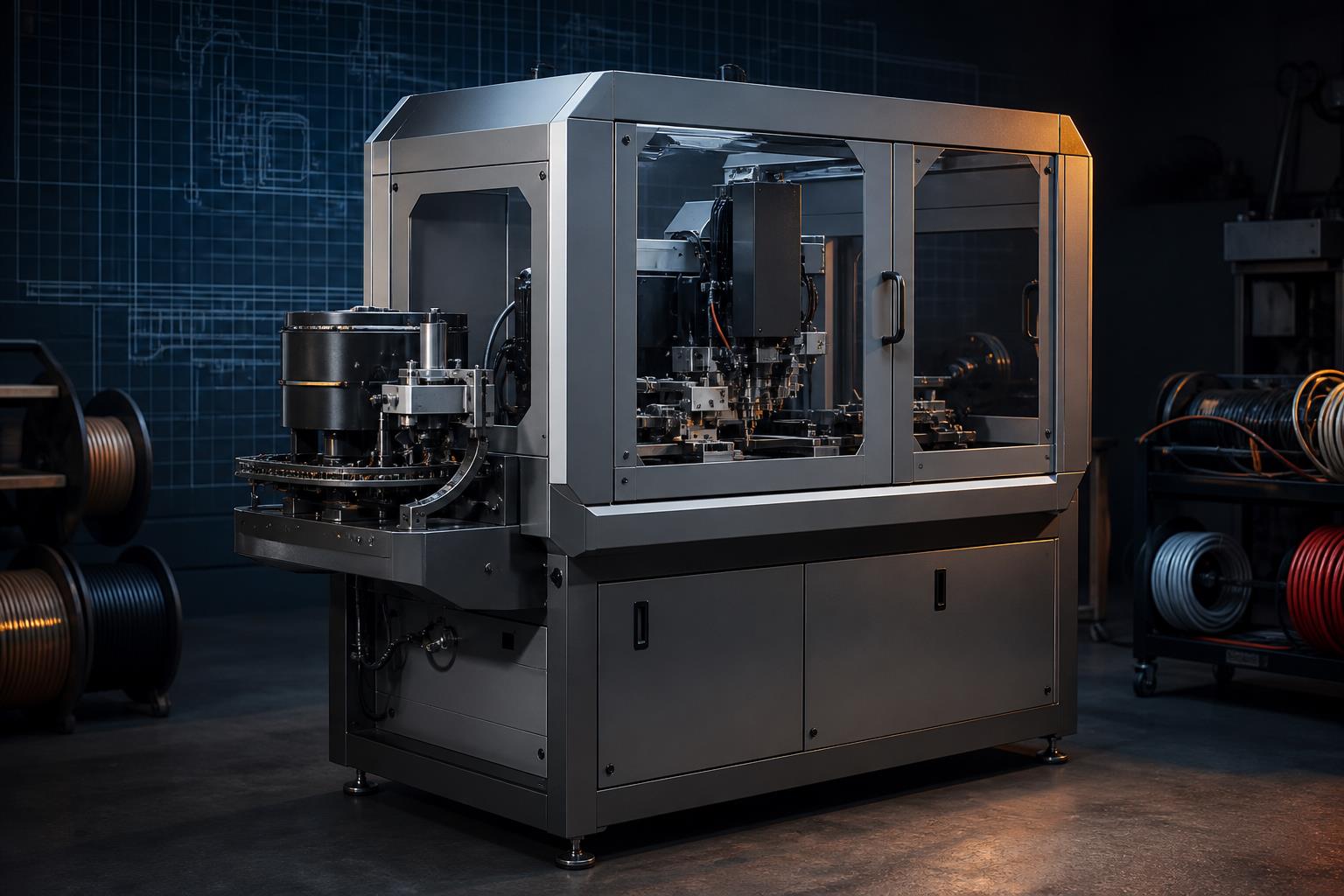
Large cross-section HV cable processing
Large cross-section HV cable: strip quality and insulation integrity.
Cable Processing
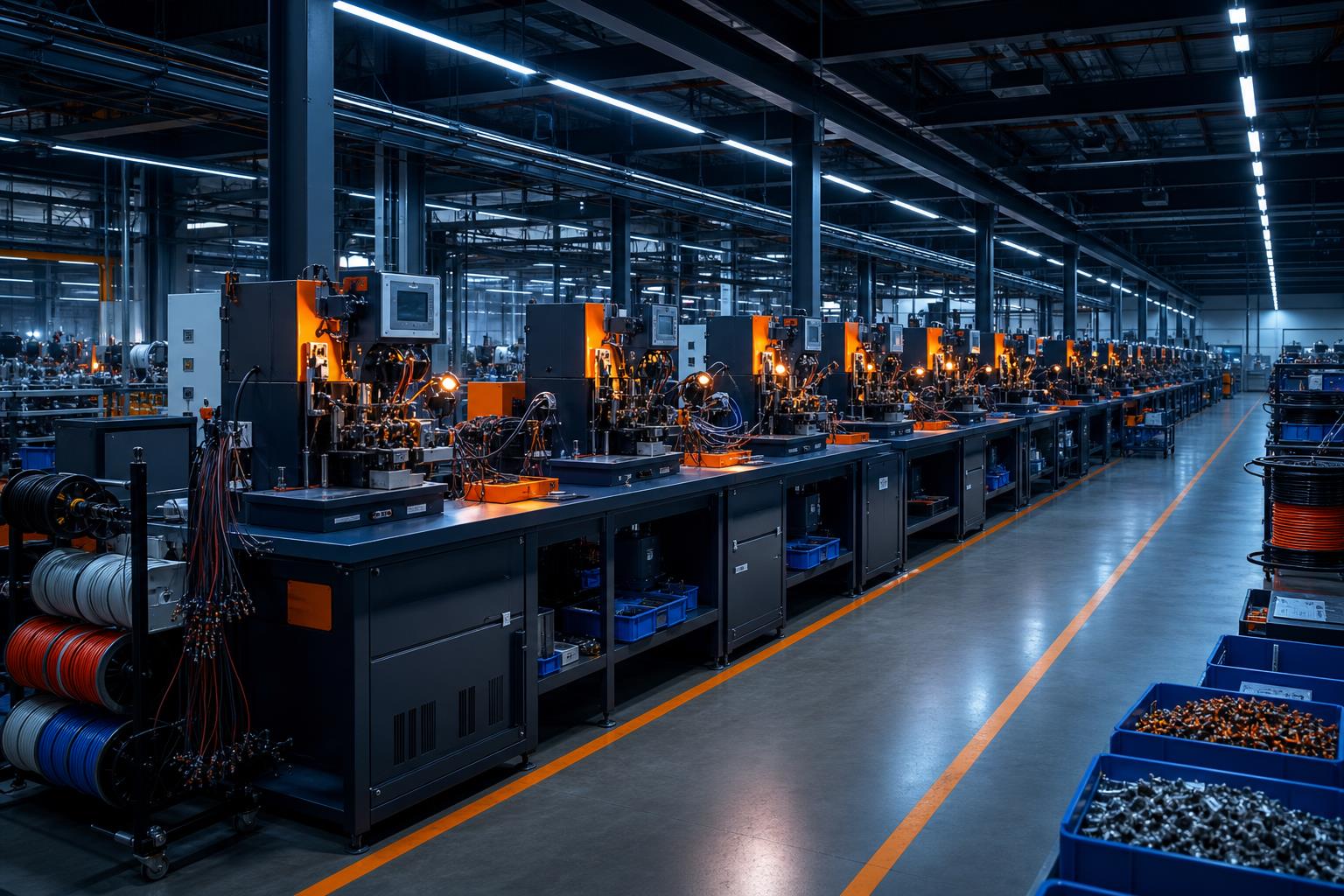
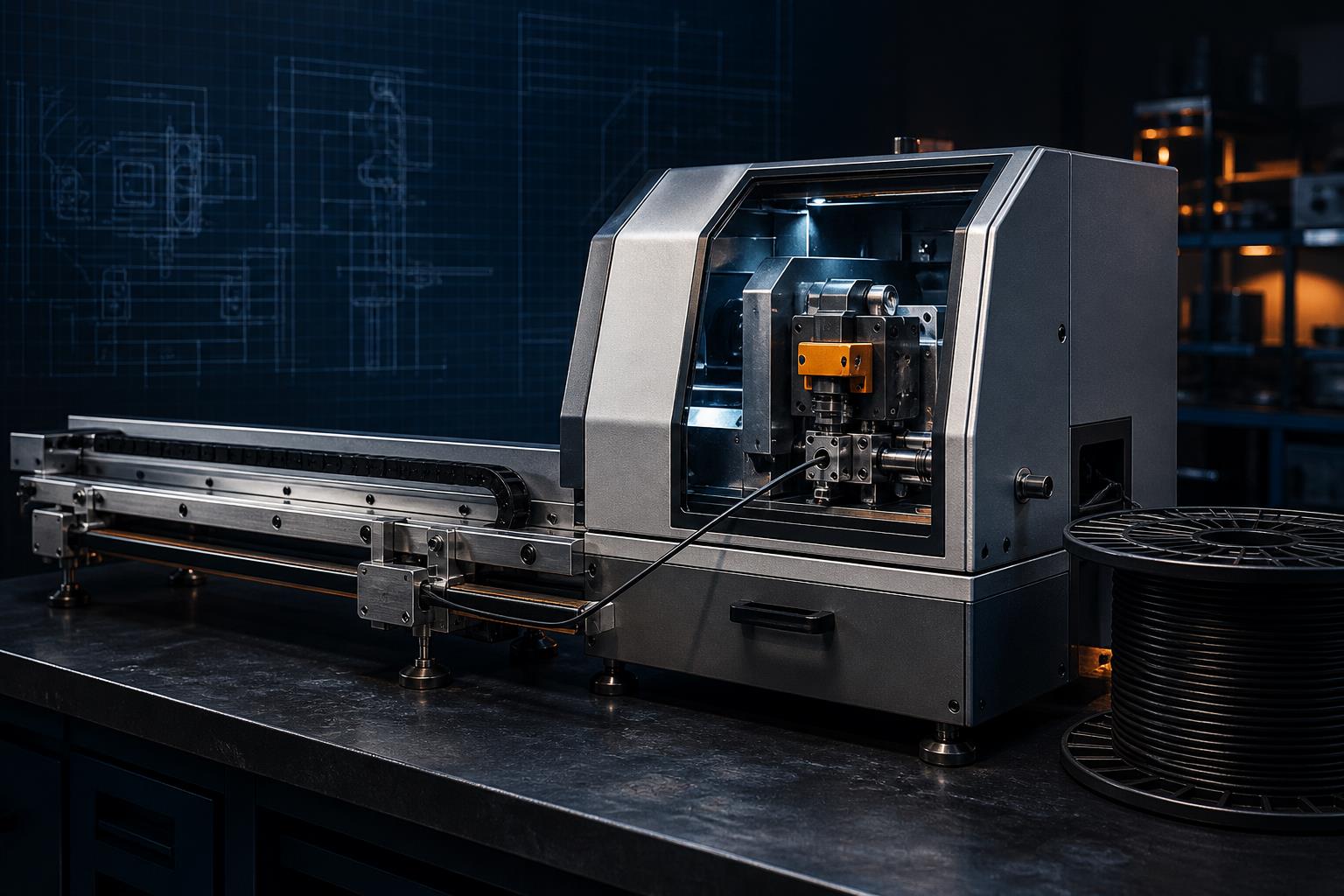
Multi-process cut, strip, crimp, test lines
Multi-process lines — cut, strip, crimp, test — with dies and spare parts held in stock.
Service & support journeyFrom first call to after-sales — tap to expand
Your Trusted Partner
From First Call to Production
One engineer walks your project from material sample to commissioned line — no call centres, no hand-offs.
1
Consultation
Share your wire range, terminals and target output — one engineer, not a call centre.
2
Sample Testing
Send your material. We run a free crimp/strip test and return a video before you commit.
3
Configuration & Quote
Exact parameters, price and lead time confirmed in writing within 24 hours.
4
Commissioning & After-Sales
Setup guidance, spare parts and remote support after delivery.
After-Sales & Support
Contact Support Bought. Installed. Supported.
Warranty, spare parts, commissioning and remote help — the machine keeps earning after the invoice.
Warranty & Spare Parts
Guarantee coverage on every machine build, with genuine spare parts shipped worldwide.
On-site Commissioning
Engineer-assisted setup on arrival, with operator training included in your order.
Remote Technical Support
Video-call diagnostics and setup walk-throughs — no waiting on email chains.
Documentation & Training
Operator manuals, datasheets and video tutorials in clear, technical English.
Resource Hub
Read the Guide Guides Before You Buy
Selection frameworks, maintenance know-how and industry trends — written for harness shops, not search engines.
Wire Stripping Machines by Family: From Bench to Auto
Pneumatic bench strippers, computer single- and two-end strippers, big-wire strip-and-coil: match the family to your wire range, batch and finish.
Read guide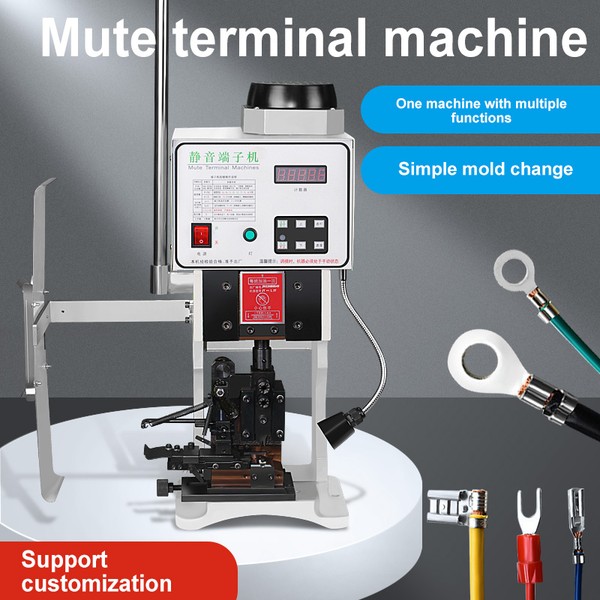
Crimping Machine Maintenance: Daily to Monthly Checks
Crimp quality drifts before it fails. A simple daily-weekly-monthly routine for bench presses and automatic machines keeps crimp height stable.
Read guide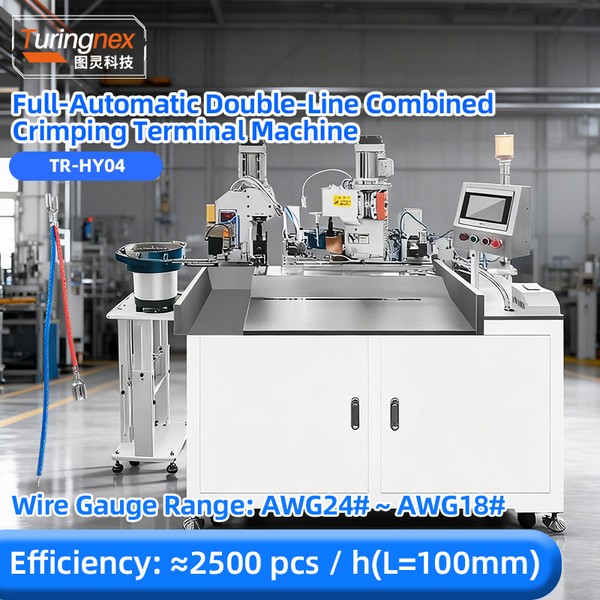
Wire Processing Automation in 2026: What Machines Add
Feeding, dual-mode welding, servo force data and insertion integration are the four trends changing harness lines - what to expect from machines.
Read guideFAQ
See All FAQs Quick Answers Before You Ask
MOQ, lead time, payment, shipping and tooling — the questions every buyer asks first.
MOQ is 1 machine for standard models — you can trial a single unit on one line before scaling. Custom dies are ordered by piece.
Common standard models are in stock and can ship right away; customised (non-standard) machines are built to order in 7–15 days. Dies and lead time are confirmed in the quotation.
Standard terms are T/T — 30% deposit to start production and 70% balance before shipment. L/C and Alibaba Trade Assurance are also accepted.
Our factory holds CE certification and ISO9001 quality management, and orders can be protected by Alibaba Trade Assurance. Certificates are available on request.
Yes. Send your wire and terminals and we will arrange a free crimp test or trial — you verify quality before committing.
Request a Quote
Tell Us What You Need to Process
Send your wire range, terminals and target output. One engineer replies with quotation, tooling and lead time.
- Quotation within 24 hours (Mon–Sat)
- Free crimp test on your own material
- Direct from the factory — no middlemen
Finance & Trade-in available — T/T, Western Union & MoneyGram accepted; used-machine trade-in credit toward a new line.See payment & trade-in terms