
Thermal protectors and NTC sensors carry a contradiction: the joint must be electrically reliable, but the component being joined is a temperature switch — too much heat during assembly and you change its calibration before it ever reaches the customer. That is why the joining method matters as much as the machine: welding, crimping and soldering each put different heat and mechanical stress into the joint, and each suits a different protector design and production volume.
Three ways to make a protector lead joint
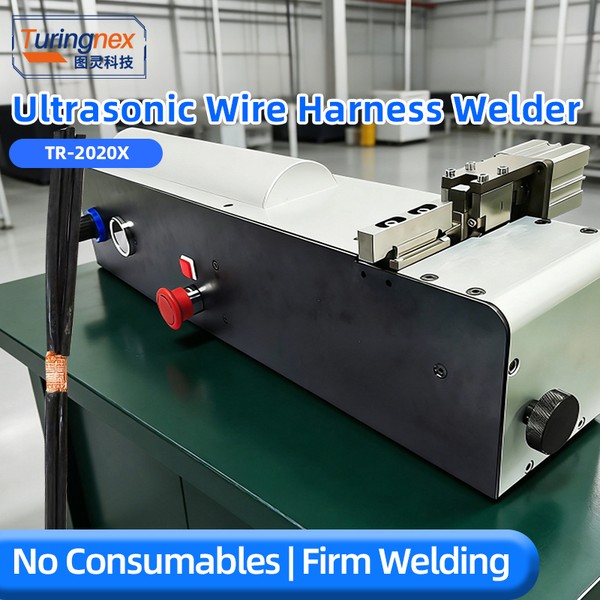
Welding (ultrasonic or resistance). Ultrasonic welding scrubs two conductors together under pressure until they fuse in the solid state — no filler, no external heat source, and minimal heat-affected zone. Because the heat is generated exactly at the joint interface, the protector body stays cool. This makes ultrasonic welding the preferred joint for small lead wires where calibration drift is the top fear. Desktop ultrasonic machines such as the TR-206Z desktop wire-harness welder (PLC/touch-screen controlled) fit a bench production cell; the TR-2020X ultrasonic welding machine steps up to 3,000/5,000 W at 20 kHz for larger conductor bundles.
Crimping. A cold mechanical joint — no heat at all — with excellent process speed and the lowest energy cost. The trade-off is that crimping needs the right die profile for the wire and terminal combination, and loose/banded terminals must be fed and positioned. For protector leads that terminate into a blade or a tab, a cold-crimp press (the mute press family or a 2T bulk tube machine like the TR-SZ02) makes a joint that is fast, cheap and heat-free.
Soldering / tin dipping. Solder joints are familiar, inspectable and tolerant of odd geometries, and dipping-tin also tins the wire end for corrosion resistance. The cost is heat: solder temperatures can travel up the lead unless the process is fast and localised, and hand soldering is slow and operator-dependent. Machines tame it: the TR-059 high-frequency soldering machine applies heat locally under PLC control; the TR-708S semi-automatic soldering machine and the TR-407S multifunctional soldering machine with stripping put flux, heat and feed into one sequence.
Decision factors
| Factor | Favours welding | Favours crimping | Favours soldering/tin |
|---|---|---|---|
| Heat sensitivity of protector | Strong (ultrasonic = cold joint) | Strong (no heat) | Weakest — heat must be controlled |
| Joint geometry | Wire-to-wire, wire-to-tab | Wire-to-terminal | Odd shapes, terminals, tinning |
| Volume | High (fast cycle) | Highest (press speed) | Low-mid (per-joint time) |
| Skill dependence | Low | Low | Medium-high unless automated |
| Audit evidence | Process repeatable | Crimp height/pull data | Visual + process control needed |
When the process family wins
- Ultrasonic welding is the answer when protectors are heat-sensitive, leads are small, and you run steady volume: the TR-206Z desktop unit covers low-to-mid volume, the TR-2020X (3/5 kW, 20 kHz) covers heavier bundles — and both produce the same joint every cycle, which is what protector customers audit.
- Crimping wins when the joint is wire-to-terminal and the design tolerates a cold mechanical connection: it is the fastest and cheapest joint per piece, and heat never enters the equation at all.
- Tin dipping and soldering remain necessary for tinned leads, shield drain wires and complex joints — and the automatic route is a machine that cuts, strips and dips in sequence, like the TR-N01 automatic double-head tin-dipping, wire-cutting and welding machine, rather than a hand-soldering bench.
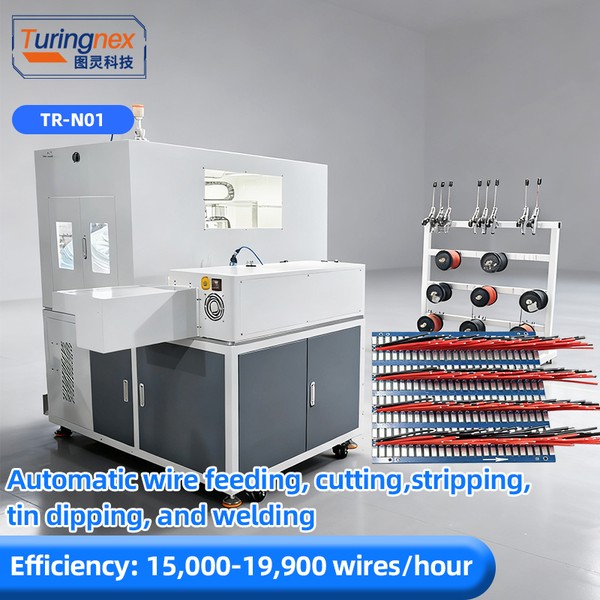
Automatic double-head tin-dipping, cutting & welding
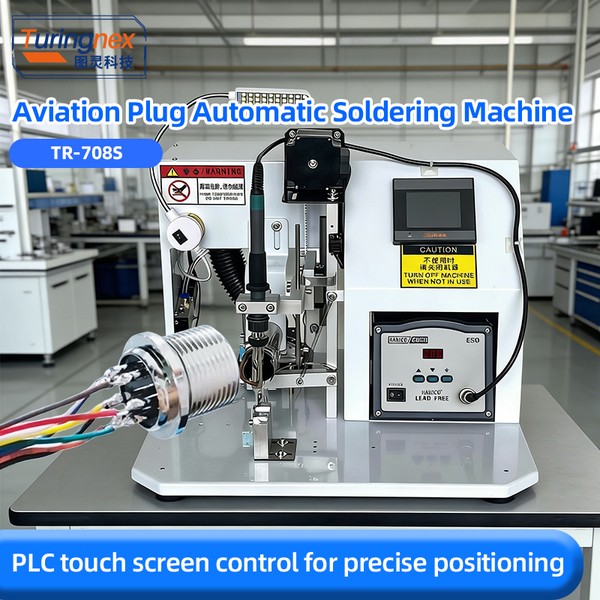
Semi-automatic soldering machine
Practical guidance for a protector line
1. Check the protector's data sheet heat limit before choosing: if the limit is tight, ultrasonic welding or crimping — not soldering — is your starting point. 2. For mixed work (crimp some leads, weld others, dip a third type), stage the machines as separate cells rather than forcing one process to do everything; the TR-JC02 crimping-plus-tin-dipping machine is one example of a combined bench cell where a part genuinely needs both. 3. Verify the joint the same way for every process — pull or shear test on a sample per lot, visual per shift — so the audit pack is uniform whatever the joint type.
Choosing the joint first, and the machine second, is what separates protector lines that pass calibration audits from lines that discover the problem at the customer's test bench. Send us your protector type, lead construction and heat limit — we will recommend the joint and the machine class, with sample joints and test results before you commit.