
Walk into almost any crimping shop and ask why output is below the machine's nameplate. The answer is rarely "the machine is slow." It is usually one of seven bottlenecks hiding upstream or downstream of the press. Each has a diagnosis and a fix — and most fixes are machine-class decisions, not operator effort.
1. Feeding: the reel vs the operator's hands
On operator-fed bench presses, the feed rate of the operator's hands sets the line speed. If your volume has grown past a few thousand terminals a day per station, the fix is mechanical feeding. Automatic bulk machines such as the TR-SZ03 bulk tubular terminal machine (AWG 12-24, 2,000-3,000 pcs/h) or a vibratory-bowl semi-automatic like the TR-1604 vibration-plate bulk terminal crimping machine (20 kN crimp force, around 120 cycles/h) remove hands from the feeding cycle entirely — the first bottleneck to break in almost every shop.
2. Double handling between ends
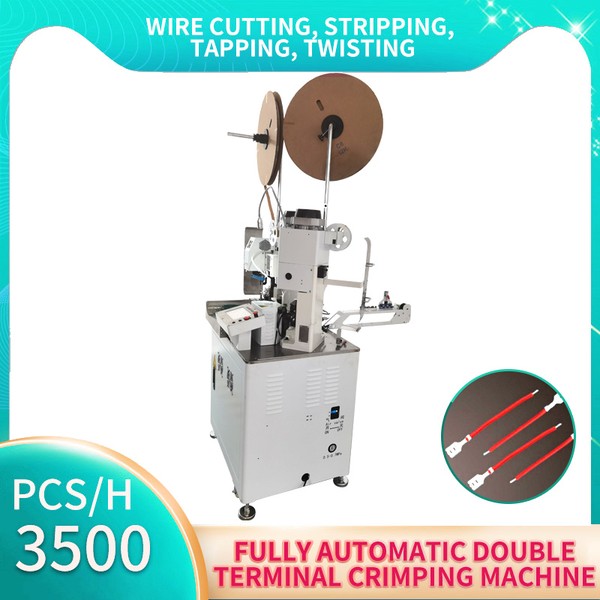
Single-end processing means every lead visits a machine twice, and every re-handling is a queue, a mix-up risk and a second chance for damage. Double-head automatic machines process both ends in one cycle. A stepper-driven TR-TC05 double-head terminal crimping machine (about 3,500 pcs/h) or a pre-insulated double-head line such as the TR-DS05 typically cuts lead time per batch by 30-40% for double-ended parts.
3. Changeover: time between jobs, not within jobs
Changeover is invisible cost — nothing is produced, but operators and wages still tick. If you run more than a handful of terminal/wire combinations per week, setup time often exceeds run time. Two fixes belong together: quick-change tooling on the press, and batching jobs by wire size so dies stay set longer. Bench machines with simple die swaps (the TR-JD22 or TR-ZD26 mute presses, 1.5-8T classes) change over in minutes; automatic lines need the same discipline applied to their feeder and crimp heads.
4. Die condition and crimp-height drift
A worn die or a drifted crimp height shows up as rejects at the pull-test station, but the machine keeps running happily until then. The fix is process control, not inspection: monitor crimp height or force at the machine. Servo-driven presses hold position and force cycle after cycle; the TR-SZ03 class with 2 t rated force and the new-energy servo family are built around this. If your rejects spike at the start of every shift, check die condition and set-up verification before blaming the operator.
5. Terminal quality: bad strip, bad crimp
Stripping nicks, insulation left in the barrel, and inconsistent terminal feed all create rejects that pass through the machine and surface at test. The root cause is often upstream — blade condition, wire tension, or the terminal itself. Running stripping and crimping in one controlled sequence (the three-in-one logic of the TR-HY03, rated 2,200-2,500 pcs/h with ±0.4% cut tolerance) removes the in-between handling where stripped wire gets bent, frayed or mis-fed.
6. Buffering: starving the machine
An automatic line that waits for a loaded reel, a full scrap bin or a pulled operator is an expensive idle. Small-batch shops under-buffer; high-volume shops over-staff. The practical rule: keep at least 30 minutes of consumable buffer per automatic line and a clear signal when it runs low, so the machine's next stop is a planned one.
7. Manpower: one operator per machine vs one per line
The final bottleneck is organisational. A shop that assigns one operator per semi-automatic press and calls it "full automation" is paying bench wages for line output. Moving to a TR-TC05 double-head or a TR-HY03 three-in-one line changes the ratio to one or two operators per line — and the same headcount that ran three benches can run two automatic lines with better quality data.
A quick bottleneck audit for your floor
| Symptom | Likely bottleneck | Fix |
|---|---|---|
| Machines idle while operators busy | Feeding / double handling | Bulk or double-head automation (TR-SZ03, TR-TC05) |
| Long gaps between jobs | Changeover | Quick-change dies + batch sequencing |
| Rejects at start of shift | Die/height drift | Crimp-height checks, servo control |
| Line stops for material | Buffering | Consumable buffer + signals |
| Output per headcount flat | Manpower model | One line per operator, not one bench per operator |
Measure each for one week, fix the worst first, and re-measure. In most shops the order above — feed, both ends, changeover, process control — delivers the first 30-50% of the gain, and it costs less than buying the next machine prematurely.