
Tape is the quiet hero of wire harness production. It protects, insulates, bundles and identifies cables — and it is applied in more ways than most buyers expect. Full wrapping spirals tape along the whole length; single-point wrapping fixes tape at one spot; bundling groups several wires into a cable; and copper tape adds shielding. Each needs a different machine. Buying the wrong family means paying for capability you cannot use — or, worse, hand-wrapping what a machine should do. This guide maps the process families and the decision criteria.
1. Understand the four families
| Process | What it does | Typical use | Machine family |
|---|---|---|---|
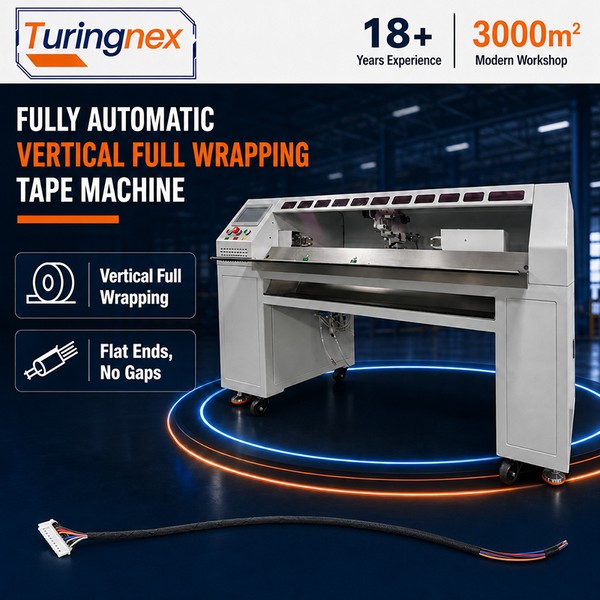
| Full/continuous wrap | Spiral tape along the full cable length | Harness protection, abrasion resistance, cosmetic finish | Full tape wrapping machines |
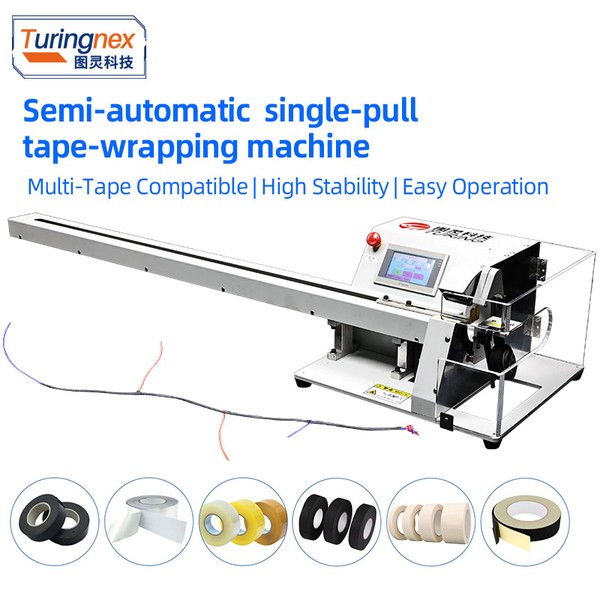
| Single-point wrap | Tape applied at one location | Bundling point, breakout point, label anchor | Single point tape wrapping machines |
| Bundling/winding | Group several wires into one cable, with or without tape | Cable assemblies, looms | Cable winding and bundling machines, tape bundling machines |
| Copper/foil tape | Shield wrap with conductive tape | EMC/EMI shielding of signal cables | Copper strip tape wrapping machines |
If you are not sure which process your part needs, photograph the finished assembly and trace the tape pattern: continuous spiral, single band, or grouped bundle. The pattern tells you the machine family.
2. Key specification points: tape, lay and speed
Whichever family fits, these parameters define the machine you need:
- Tape width and type — PVC, cloth, non-woven, copper foil; each feeds differently
- Lay/pitch control — overlap percentage must be adjustable (full-wrap machines let you set overlap for tight or open spiral)
- Cable diameter range — the working range must cover your smallest and largest bundle
- Tension control — too tight distorts the tape and can crush foam/insulation; too loose leaves wrinkles
- Output speed — usually expressed in wrapping length or pieces per hour; match to your line rate
3. Choosing by volume and variants
- Low volume, many variants: a manually loaded wrapping machine with quick diameter changeover is enough. Speed matters less than setup ease.
- Medium volume, few variants: semi-automatic machines that pull the cable through automatically remove the boring part of the job.
- High volume, dedicated product: an in-line or fully automatic wrapping station fed by your production line pays for itself fastest.
4. Copper tape and shielding: a specialist case
Shielded cables for data, audio and EMC-sensitive applications need copper or foil tape with controlled overlap and low resistance across the wrap. This is not the same as cosmetic PVC wrapping:
- Conductive tape needs precise tension to avoid tearing the foil
- Overlap and contact quality affect shielding performance
- Some applications require a drain wire to be laid under the tape — confirm the machine can handle it
If shielding is your application, review the copper strip tape wrapping machine family rather than adapting a PVC wrapper.
5. Bundling vs. wrapping — a common confusion
Bundling machines first group wires (feeding several spools into one cable) and may apply tape or a spiral binder afterwards. Wrapping machines assume the bundle already exists and apply tape to it. If your process starts from separate reels and ends with a taped cable, you need a bundling line; if you receive finished bundles and only add tape, a wrapping machine is enough. Buying a wrapper when you need a bundler — or vice versa — is the most expensive mistake in this category.
6. RFQ checklist
- Cable/bundle diameter range (smallest to largest, with a sample)
- Tape width, material and roll core size
- Wrap pattern required (full spiral / single point / banding) and overlap %
- Whether wires arrive pre-bundled or must be grouped from reels
- Required output per hour
- Floor space and power supply
- Sample parts for a machine trial
FAQ
Q: Can one machine do both full wrap and single-point wrap? A: Rarely in the same configuration — the motions and controls differ. Pick your dominant pattern; for occasional secondary patterns, a manual jig or hand wrap is usually acceptable.
Q: What tape types can wrapping machines handle? A: Most handle PVC, cloth and non-woven tapes in a defined width range. Copper/foil and specialty tapes need compatible feeders — confirm before ordering.
Q: How do I measure wrapping quality? A: Check overlap consistency along the length, edge alignment, and absence of wrinkles or gaps. For shielded applications, measure wrap resistance/continuity per your specification.