
Round sheathed cables power the sensors, appliances and automotive branches that modern harness shops live on — and their processing has followed a clear automation path: from a single wire stripped and crimped at a bench, to several cores processed in one cycle, to a double-head automatic machine, and finally to one integrated cell that strips, threads tube, bakes, crimps and inserts the shell. This roadmap explains each step with the machine that represents it — TR-BD02, TR-HT04, TR-DM07 and TR-M9 — and helps you choose the step your volume and quality requirements justify.
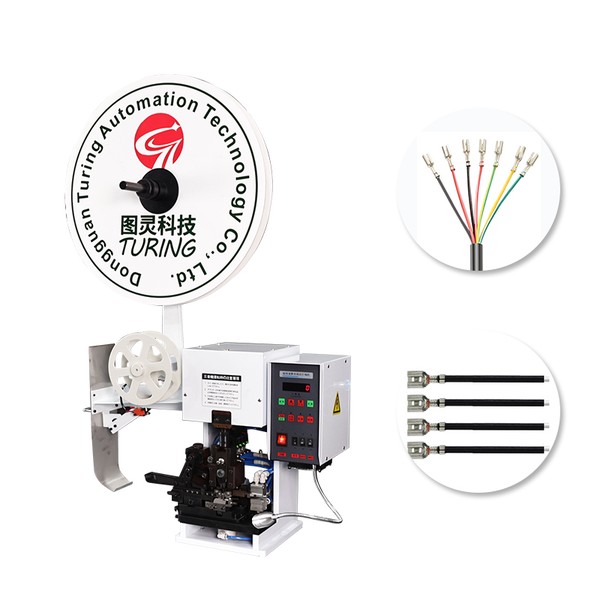
Stage 1 — the single-wire starting point: TR-BD02
Every upgrade path starts where most shops start: one wire, one operator, one cycle. The TR-BD02 semi-automatic wire stripping and terminal crimping machine strips and crimps a single wire per cycle on a pneumatic bench press. Setup between wire sizes is a die and blade change, which makes it the natural machine for a shop that is still mixing many jobs and low volumes.
Why it is still the right first machine: lowest entry cost, full operator control, instant changeover. Its limit: output scales with the operator, not with the machine.
Stage 2 — multi-wire: several cores in one cycle: TR-HT04
The first real automation step is processing several cores at once. The TR-HT04 multi-core wire automatic wire stripping and terminal crimping machine takes multi-core cable and strips and crimps the cores in one automatic sequence — the machine class that turns a bench operation into a station producing multiple finished ends per cycle.
Why upgrade: output leaves the operator's hands-per-minute limit, and every core is processed with the same stroke settings, so consistency stops depending on who is at the bench.
Stage 3 — double-head automatic with heat-shrink tube: TR-DM07
Round sheathed wire adds two requirements the earlier stages do not cover: both ends of the jacket cable need processing, and the joint needs a heat-shrink tube threaded over it before crimping. The TR-DM07 automatic double-head round jacket cable machine does exactly that — it strips and cuts both heads of the sheathed wire, threads the heat-shrink tube and crimps the terminals, with servo and stepper drives holding repeatability.
Why upgrade: one operator supervises what previously took a line of steps, both ends are processed consistently, and the tube is positioned by the machine rather than by hand — the difference between a sleeve that protects every joint and one that protects most of them. On typical 5-pin, 150 mm leads the machine runs around 1,000 pcs/h (product page for range data).
Stage 4 — the integrated cell: TR-M9
The end of this roadmap is the machine that closes the whole chain: strip the jacket and cores, cut to length, thread the heat-shrink tube, bake it, crimp the terminals and insert the colour-sorted cores into the plastic housing — in one integrated process. The TR-M9 automatic double-end crimping machine for round sheathed wire with heat-shrink tube and housing insertion adds CCD vision inspection (core colour errors, stripping defects, terminal appearance, housing seating, missing parts), automatic separation of defective parts, and crimp-force monitoring on its 2-ton crimp unit, holding qualified output at a controlled defect level.
Why upgrade: with 500-550 finished sets per hour (up to 1,000 mm leads) and every joint verified in-process, one M9 replaces the manual transfers where sheathed-wire defects actually live — between stations and inside the closed shell.
The four steps at a glance
| Stage | Machine | What it automates | Automation level |
|---|---|---|---|
| 1 · Single wire | TR-BD02 | One wire: strip + crimp per cycle | Semi-automatic bench |
| 2 · Multi-core | TR-HT04 | Multi-core cable: strip + crimp cores in one sequence | Automatic station |
| 3 · Double-head + tube | TR-DM07 | Both heads: strip, cut, thread heat-shrink tube, crimp | Fully automatic |
| 4 · Integrated cell | TR-M9 | Strip, cut, thread tube, bake, crimp, insert shell + CCD | Fully automatic cell |
Choosing your step: three production profiles
Profile A — mixed low volume (under a few thousand joints/day). Stay at stage 1-2: TR-BD02 for flexibility on single wires, TR-HT04 when multi-core jobs repeat. The upgrade that pays first is not the biggest machine — it is removing the step where your scrap actually appears.
Profile B — steady sheathed-wire volume, shell step elsewhere. Stage 3 (TR-DM07) removes the preparation bottleneck: automatic double-head stripping and tube threading at around 1,000 pcs/h frees operators for shell insertion and testing. Keep shell insertion on a separate station until shell volume justifies integration.
Profile C — high volume, one product family, audited quality. Stage 4 (TR-M9) pays for itself through in-process CCD verification and reduced handling: fewer operators, consistent colour order inside every shell, and force/vision records per batch for customer audits. See our guide to the full sheathed-wire process chain for the machines behind each process step.
The trend behind the roadmap: integration is the cost lever
The industry direction is not "a faster press" — it is integration: fewer stations, fewer transfers, and verification inside the process. Three economics drive it:
1. Labour. Each manual transfer is paid twice — once for the handling, once for the defects it causes. Integrated cells cut both. 2. Consistency. Stroke settings and CCD checks apply identically to every cycle, so colour order, strip length and crimp force stop varying with the operator. Consistency is what automotive and appliance auditors invoice. 3. Data. Force monitoring and vision results give you per-batch evidence — the difference between "we check samples" and "we can show you the checks".
Machines that hold these three levers — like the TR-M9 integrated cell — are where the upgrade path ends for round sheathed wire, and every step before it (TR-BD02 → TR-HT04 → TR-DM07) is a fully rational stopping point on the way there.
Single-wire strip + crimp (bench starting point)
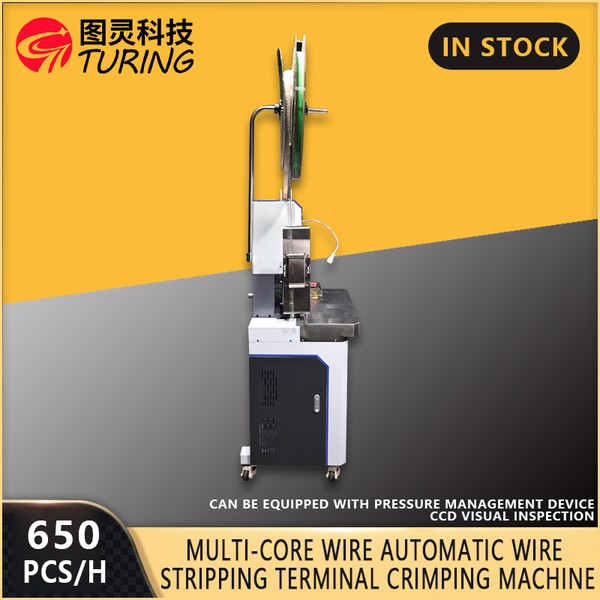
Multi-core strip + crimp in one sequence
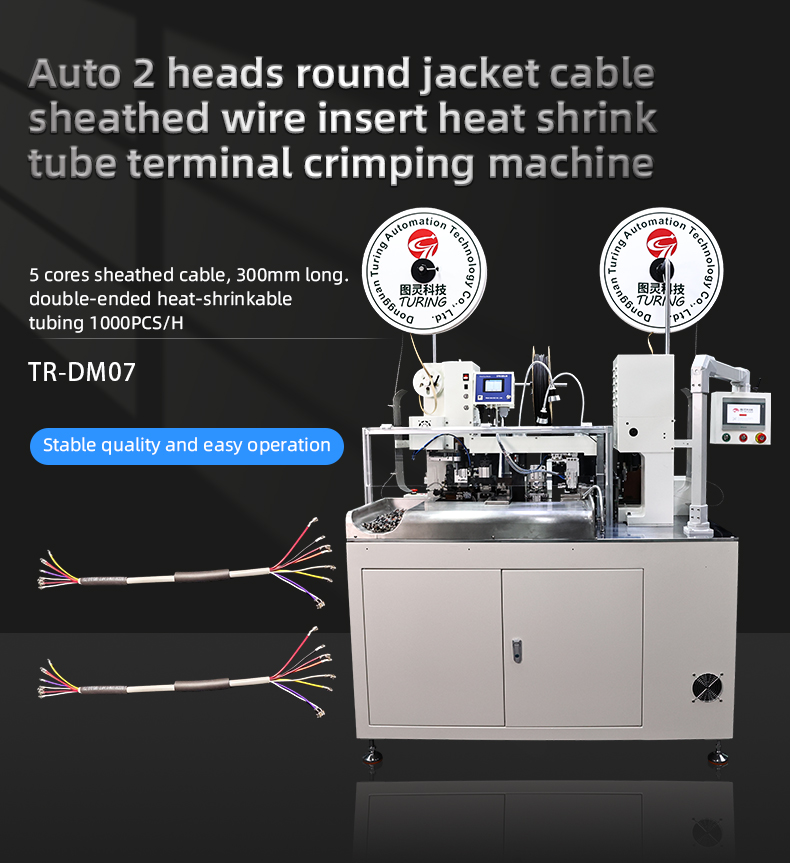
Double-head auto: strip, cut, thread tube, crimp
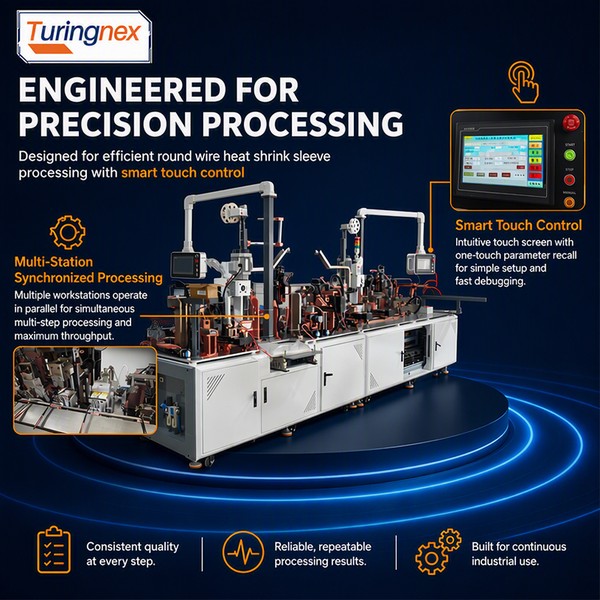
Integrated cell: strip, tube, bake, crimp, insert shell
FAQ
Do I have to buy the whole path to benefit? No — each stage is a working machine on its own. Upgrade when the bottleneck moves: labour cost, scrap rate or customer audits.
Can the integrated cell handle different wire sizes? TR-M9 processes round sheathed wire around AWG 28-20 (check actual dimensions) with 2P-10P universal housings and heat-shrink tube up to 12 mm OD; cutting length is customisable up to 1,500 mm. Confirm against your samples before purchase.
What is the difference between TR-DM07 and TR-M9? TR-DM07 prepares both heads automatically — strip, cut, thread tube and crimp — for lines that keep shell insertion separate. TR-M9 adds the baking, colour-sorted shell insertion and CCD verification in one integrated process, for the highest volume and quality requirements.
Bottom line
Sheathed-wire automation is a four-step path: single-wire bench work (TR-BD02), multi-core stations (TR-HT04), automatic double-head preparation with heat-shrink tube (TR-DM07), and finally the integrated vision-verified cell (TR-M9). Choose the step your volume, scrap rate and audit requirements justify — and upgrade when the next bottleneck becomes more expensive than the machine. Send us your sample cable, housing drawing and target output; we will tell you which stage fits today, and which stage your growth will need next.