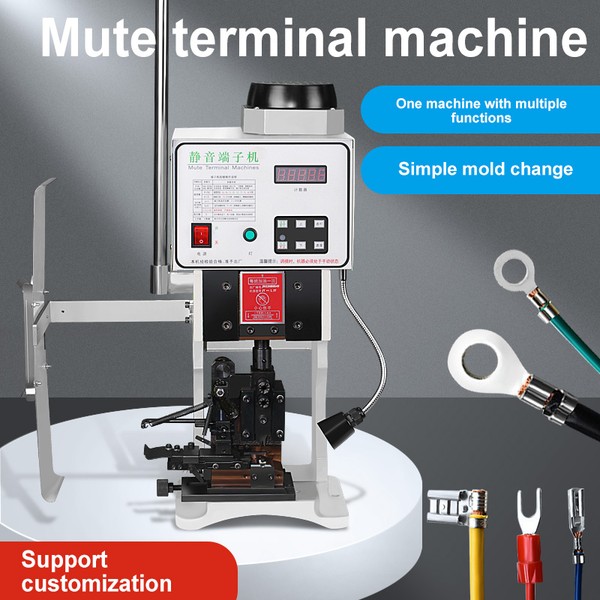
Crimping Machine Maintenance: Daily to Monthly Checks
Crimp quality drifts before it fails. A simple daily-weekly-monthly routine for bench presses and automatic machines keeps crimp height stable.
Read guide
Every guide is organised by machine type — pick the machine you are buying or running, and find the guides written for it. Selection logic, specs to compare, and shop-floor know-how.
Semi-auto, fully automatic and servo crimping — how to match output, quality and investment to your harness volume.
Crimp quality drifts before it fails. A simple daily-weekly-monthly routine for bench presses and automatic machines keeps crimp height stable.
Read guide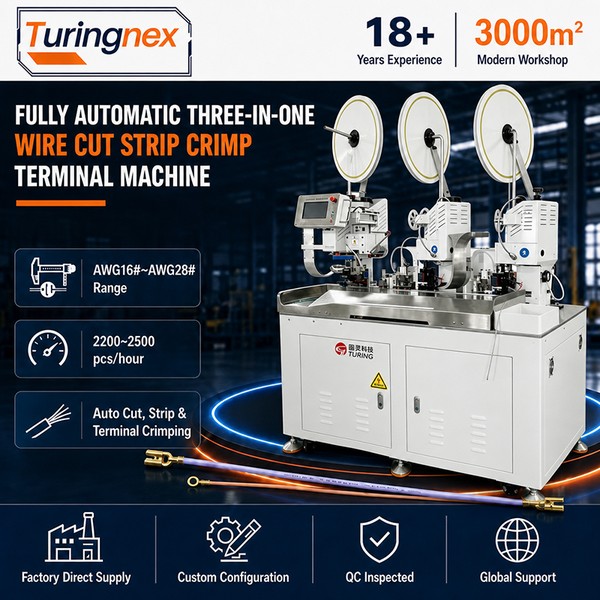
Semi-auto bench, fully automatic three-in-one and servo presses serve different jobs. Map your terminal range, volume and QC needs to the right family.
Read guide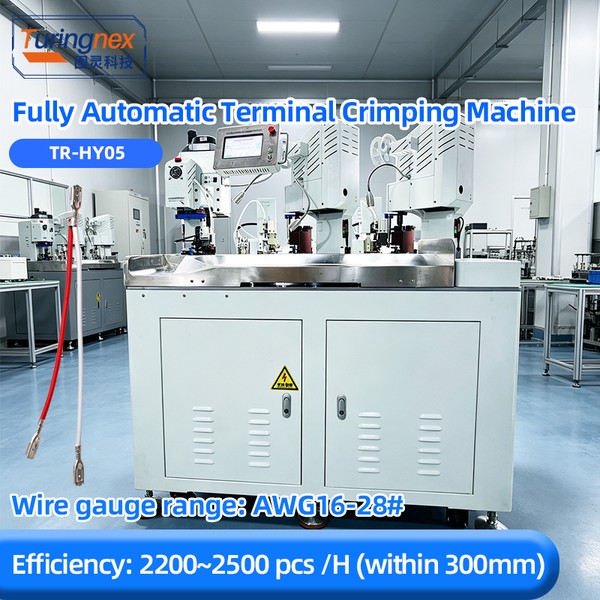
Semi-automatic or fully automatic crimping? Compare output, labor, investment and payback with a decision framework built for harness shops.
Read guide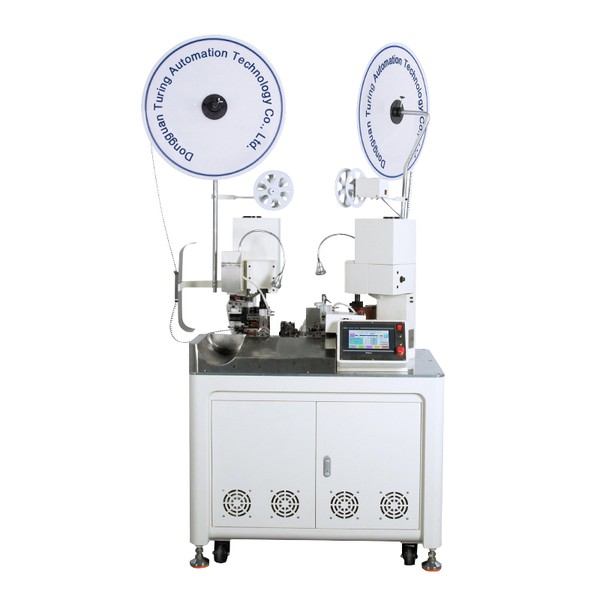
Loose tubular terminals and banded pre-insulated terminals demand different machines. Choose by terminal form, wire range, output and automation level.
Read guide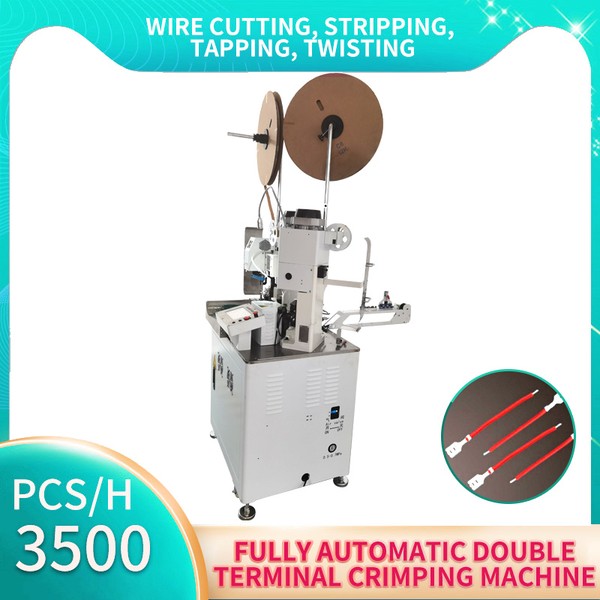
Feeding, changeover, dies, terminal quality, rejects and manpower each cap your crimping output. Diagnose the seven bottlenecks and the machine fixes for each.
Read guide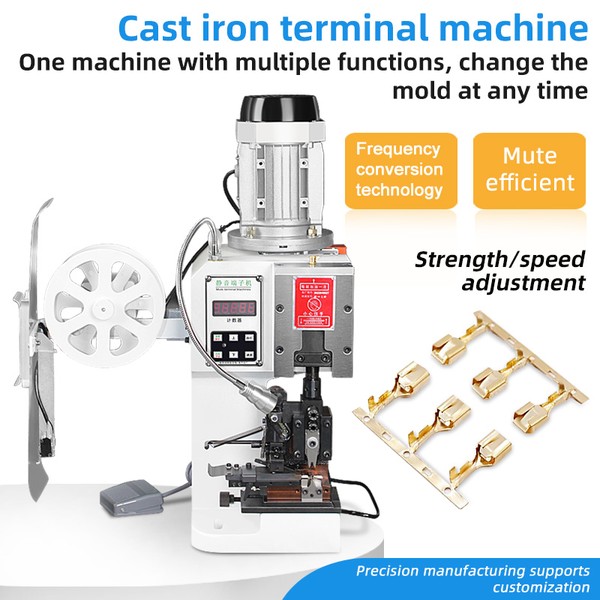
Material waste, rejects, die life, operator time and changeover all flow into cost per crimp. See the five leaks and the machine choices that close them.
Read guide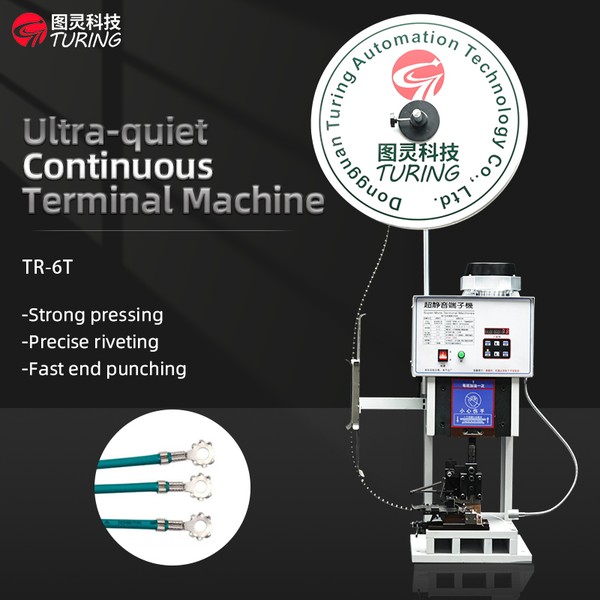
Every die swap costs production. Standardised quick-change tooling, preset crimp heights and batch sequencing cut setup from hours to minutes.
Read guide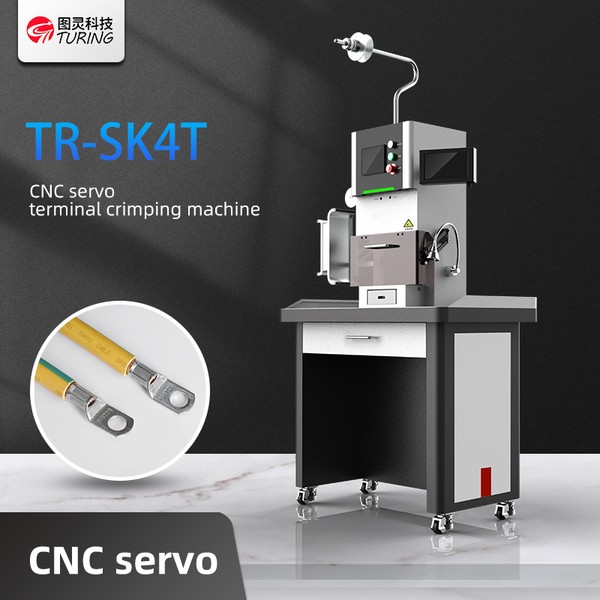
UL 486A and customer audits judge crimps by height, pull force and traceability. Learn what to measure, how often and which servo machines document it.
Read guide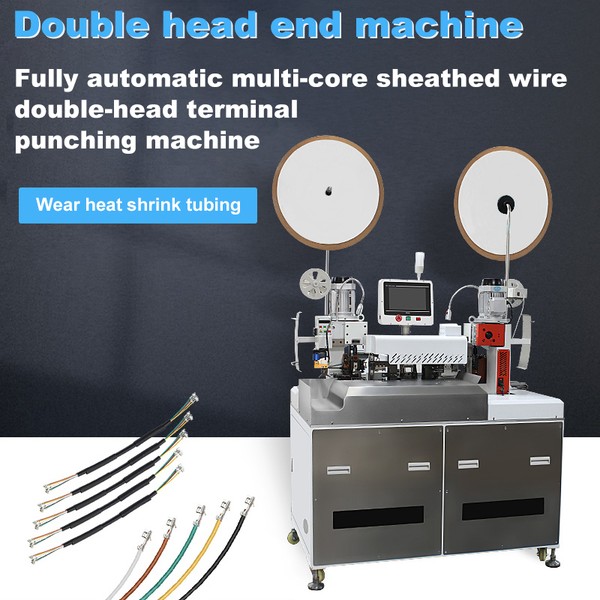
Model the real return of a crimping line: labour saved, scrap cut, output gained and changeover won. A framework you can run on your own numbers.
Read guide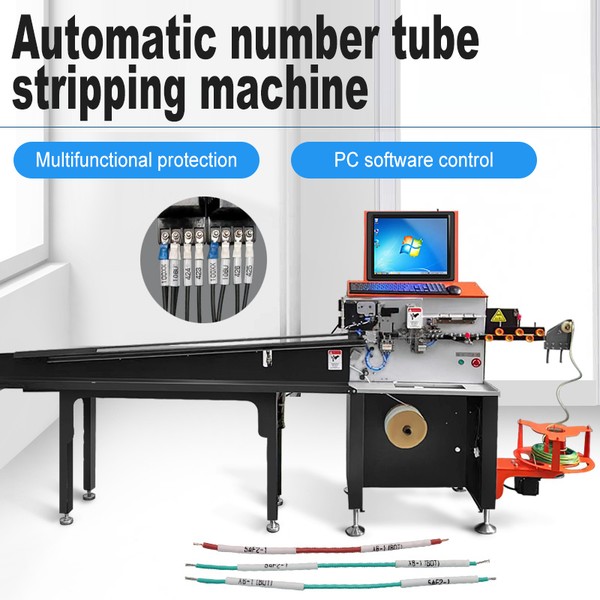
Automotive and appliance customers expect each lead to carry its identity. Number tubes, marker tubes and inline printing make traceability automatic.
Read guideComputer-controlled or pneumatic? Blade control, wire ranges and batch economics for clean, nick-free stripping.
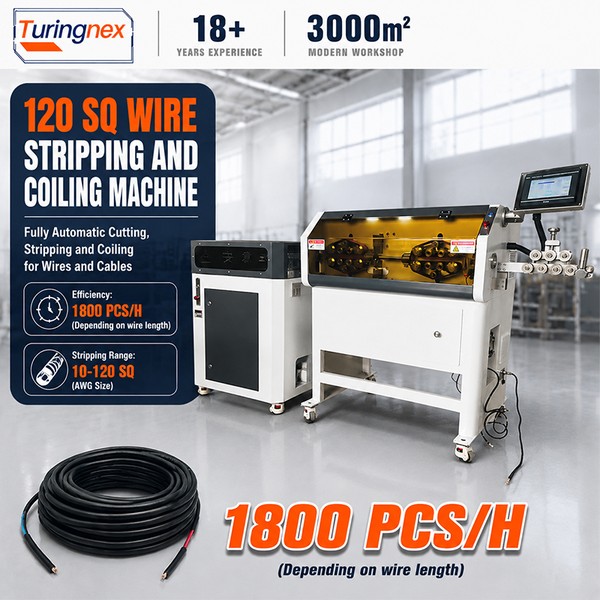
Pneumatic bench strippers, computer single- and two-end strippers, big-wire strip-and-coil: match the family to your wire range, batch and finish.
Read guide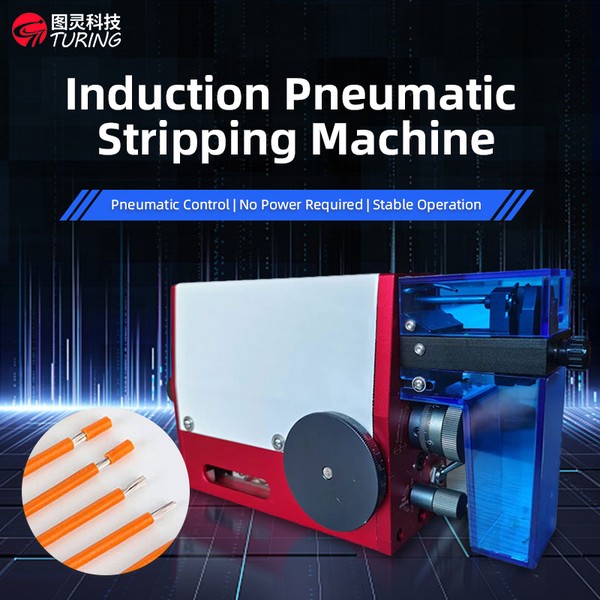
Nicked strands and half-stripped ends come from blade and depth errors, not bad wire. Practical settings for bench and computer strippers.
Read guide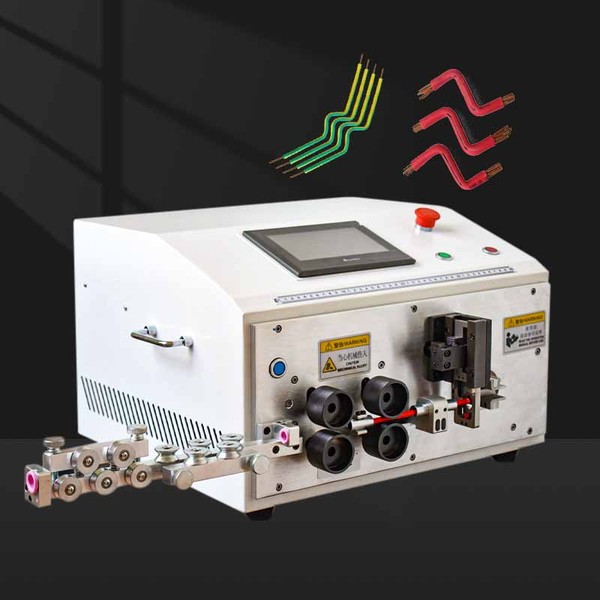
Pneumatic semi-auto or computer-controlled stripping? Compare blade control, wire ranges, batch economics and marking options to choose correctly.
Read guide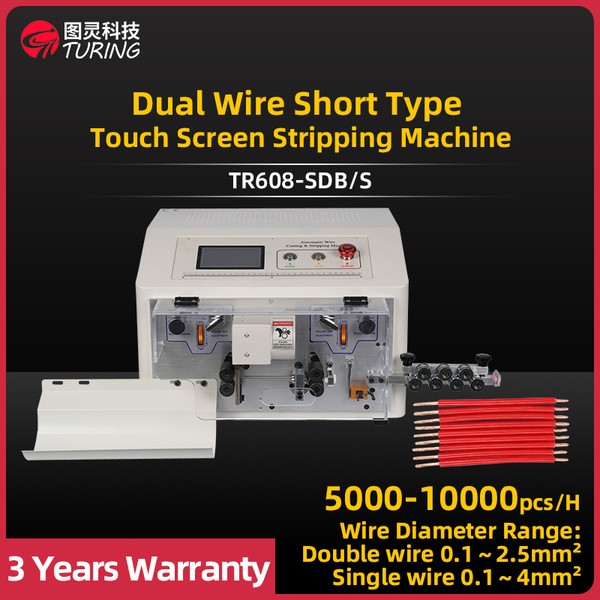
On high-volume 0.1-2.5 mm² electronic wire, the cheapest capacity increase is not a second machine — it is a machine that feeds two wires at once. This is what a double-wire head changes, what it costs you in wire range, and when a four-wire head is the better step.
Read guide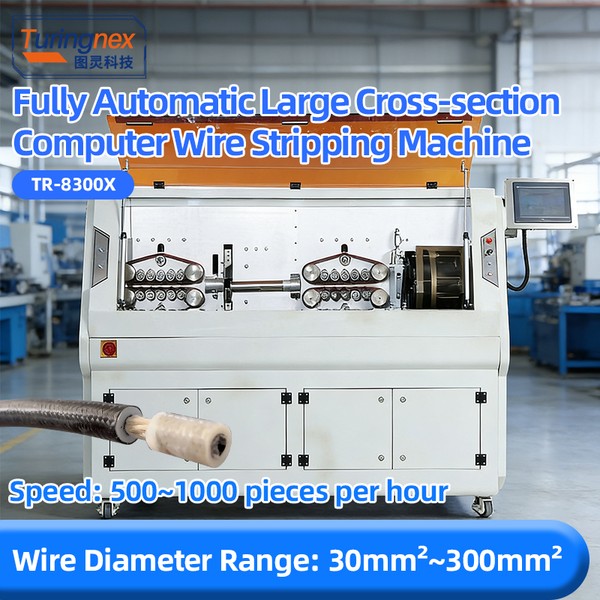
A V-blade closes on the cable from two sides, so the cut it makes is a wedge. On a single-layer PVC lead that is invisible. On a shielded new-energy cable with a foil wrap, a braid and an inner jacket, the same wedge shows up as a tapered end and a scored shield. A ring blade cuts around the circumference instead of into the side of the cable, which is why it is the standard head for multi-layer work.
Read guide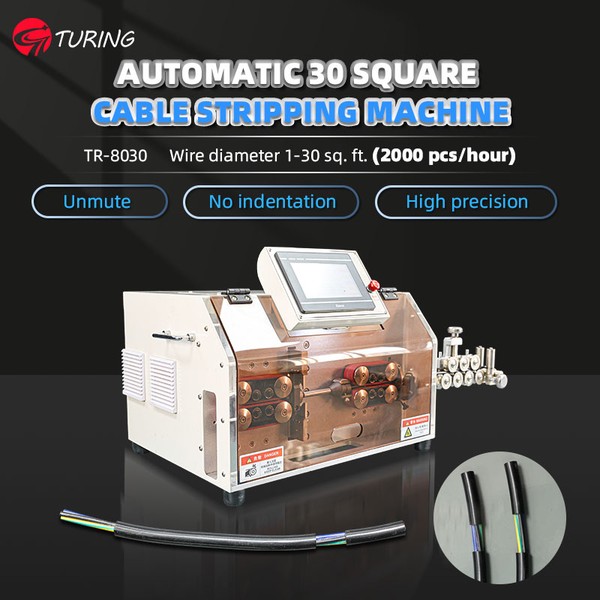
Mid-span stripping opens the jacket at points along the cable instead of only at the two ends. On a harness that is taped or clipped at intervals, that is what lets the tape be applied to bare conductor rather than over insulation. The specification question is not whether the machine can do it, but how many windows, at what spacing, and with what tolerance.
Read guide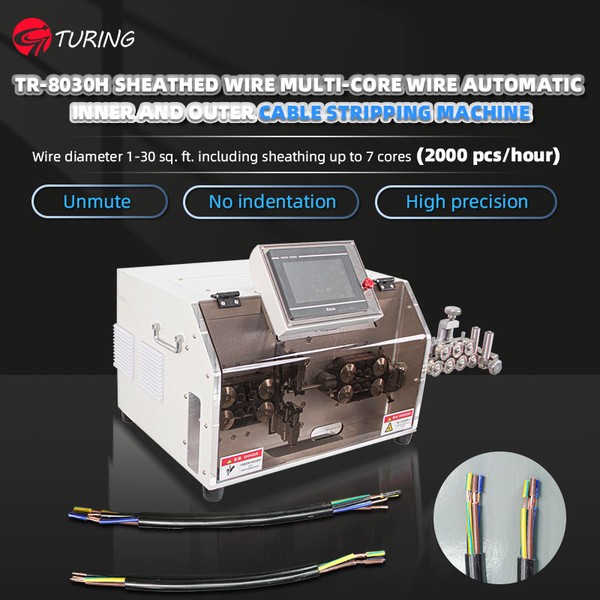
A sheathed cable has to be opened twice: once through the outer jacket, once through the inner. Doing it as two separate passes on two machines doubles the handling and adds a second chance to mark the conductor. An inner-and-outer machine does both in one pass — but only if the jacket can be scored rather than cut.
Read guide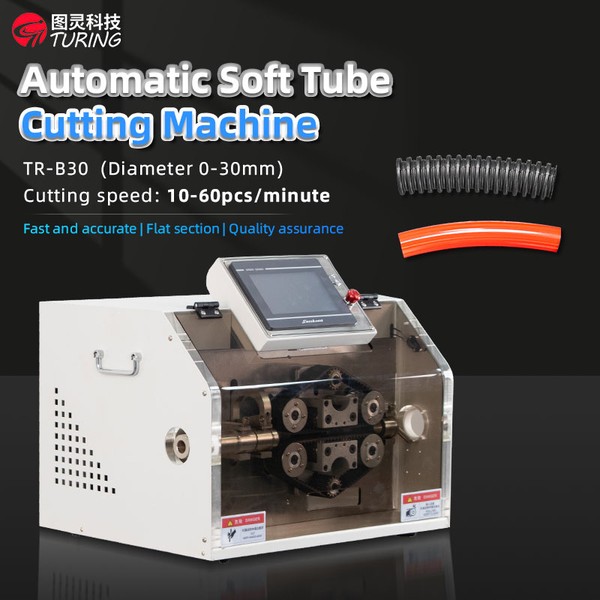
Tube cutting machines cut in one of two ways. A rotary head spins a blade around the tube, which gives a flat end but takes a lighter bite. A pneumatic cylinder drives a blade straight through, which gives force but deforms soft tube. Which one you want is set almost entirely by how hard the tube is.
Read guide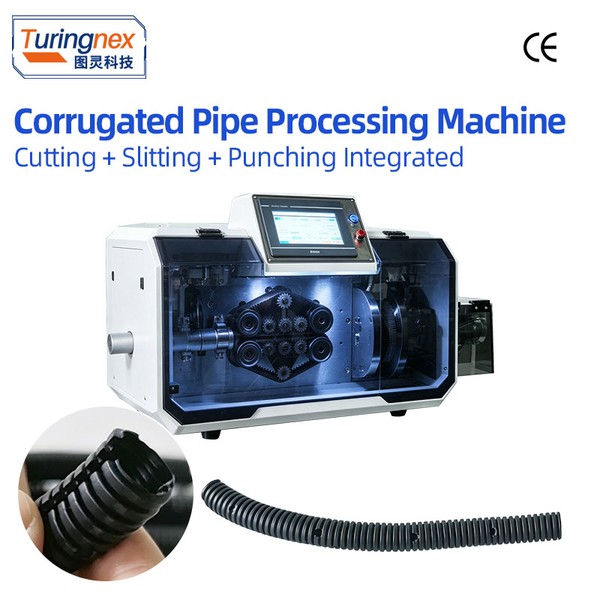
On smooth tube, cutting to length is a measurement problem. On corrugated tube it is a pattern problem: the same 300 mm can end on a crest, in a trough, or halfway up a wall. If the end has to land on a feature, the machine has to see the tube instead of just feeding it.
Read guideForce-controlled crimping for new-energy and high-voltage harnesses, with the process data EV customers expect.
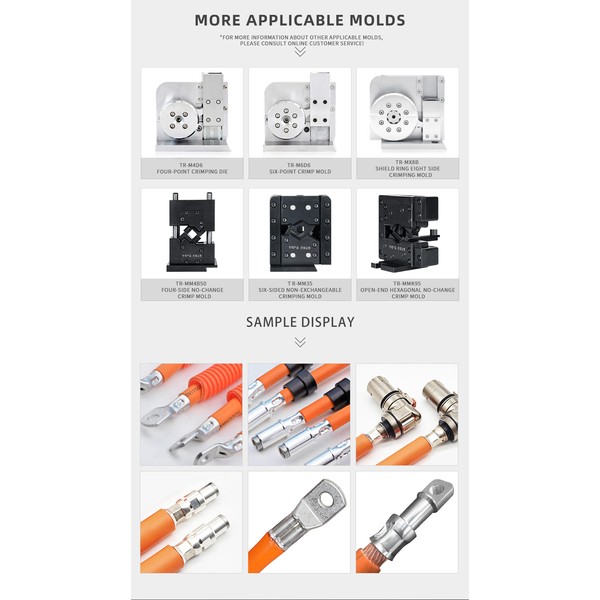
EV and high-voltage harnesses demand force-controlled, auditable crimping. Learn what servo machines must deliver — and what to verify before purchase.
Read guide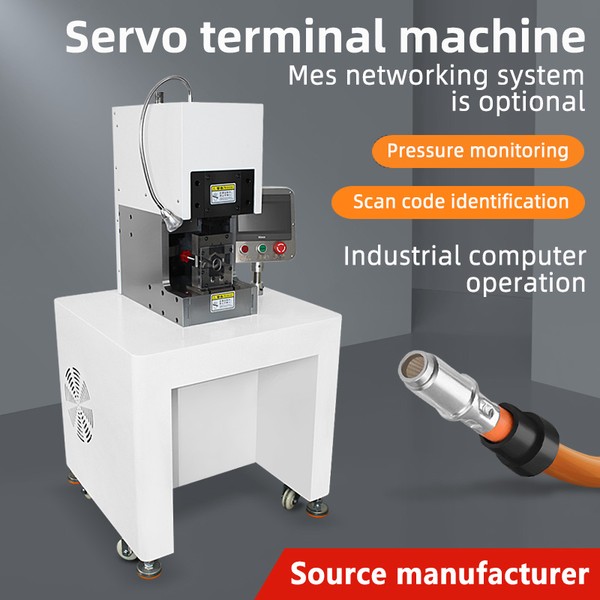
Pneumatic presses are cheap to buy; servo presses are cheap to run wrong-proof. Compare drive physics, force data, QC and payback for crimp quality.
Read guideInserting terminals into plugs, tubes and shells without damaging seals — and when to automate it.
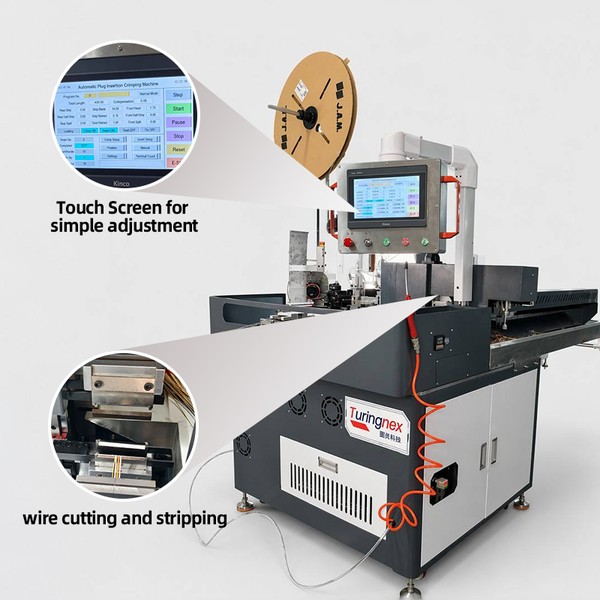
Sealed connectors add manual bottlenecks. Compare single-function insertion machines vs integrated crimp-insert lines for plugs, tubes and shells.
Read guide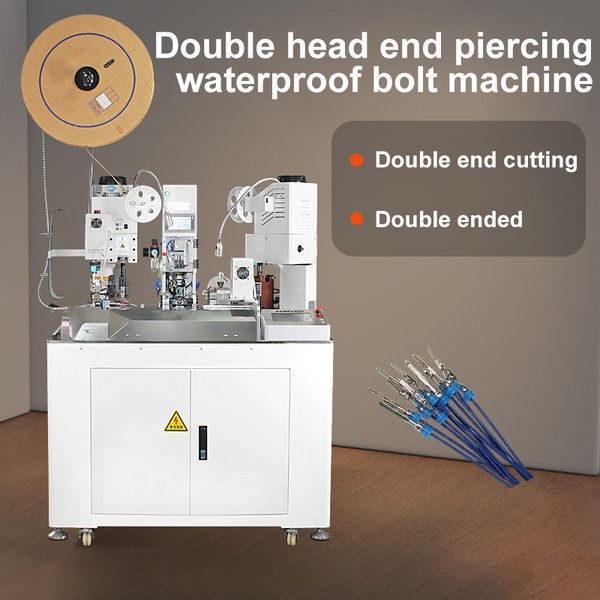
Waterproof seals and plastic shells fail in the insertion step, not the crimp. Learn the correct process order, die rules and the defects to inspect.
Read guideInsert-and-bake or combined lines? Sizing heat-shrink automation for tube position and shrink quality.
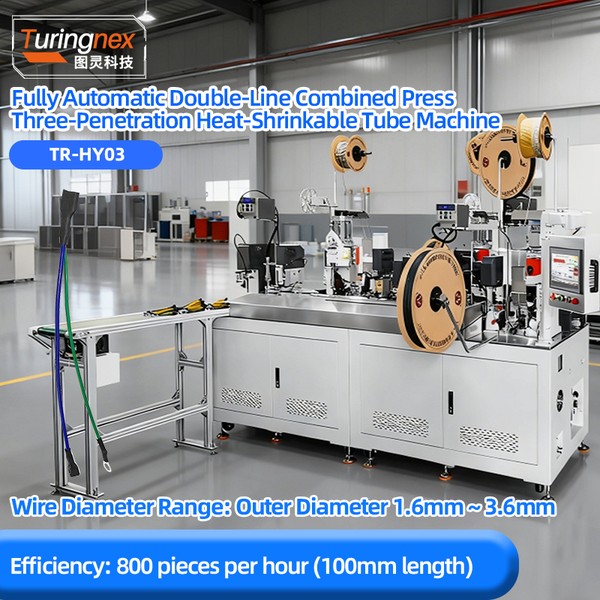
Inserting and baking heat-shrink tubes is a hidden bottleneck. Compare insert-and-bake machines vs combined lines and size the right setup.
Read guide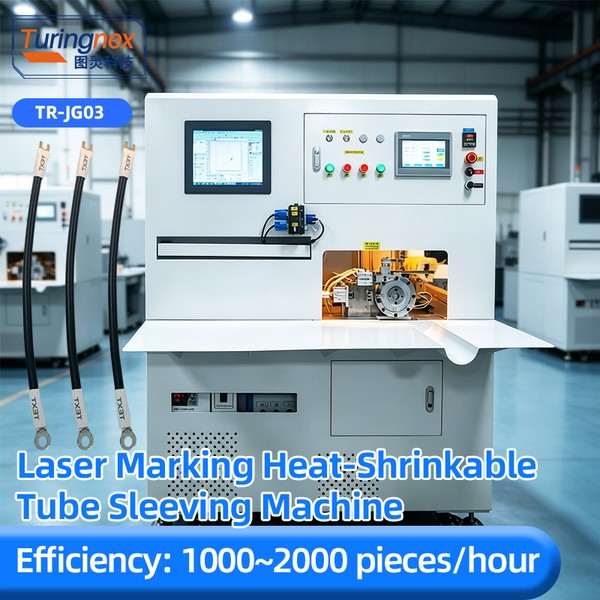
Shrink quality is set by temperature profile and dwell, not just tube size. Choose the baking stage by heating method, control and throughput.
Read guide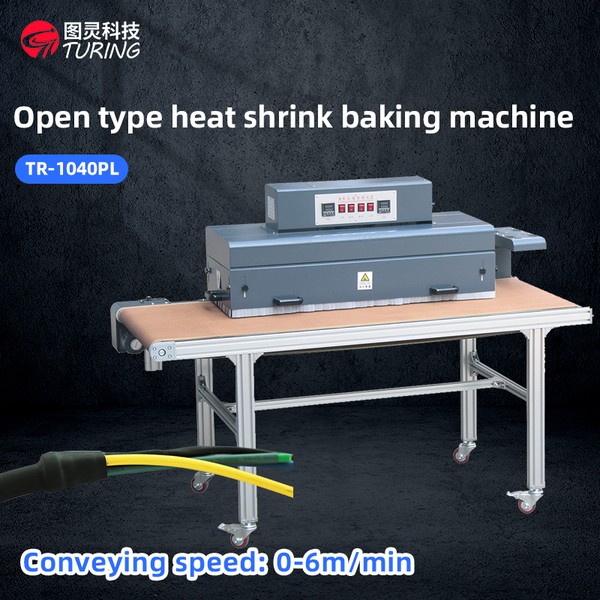
A 2-3 m harness cannot pass through a closed oven — the cable body tangles, drags on the belt and scorches while the operator tries to keep the terminal in the heating zone. Open-type ovens feed the workpiece so the ends extend outside the body. Here is when each design is the right one.
Read guide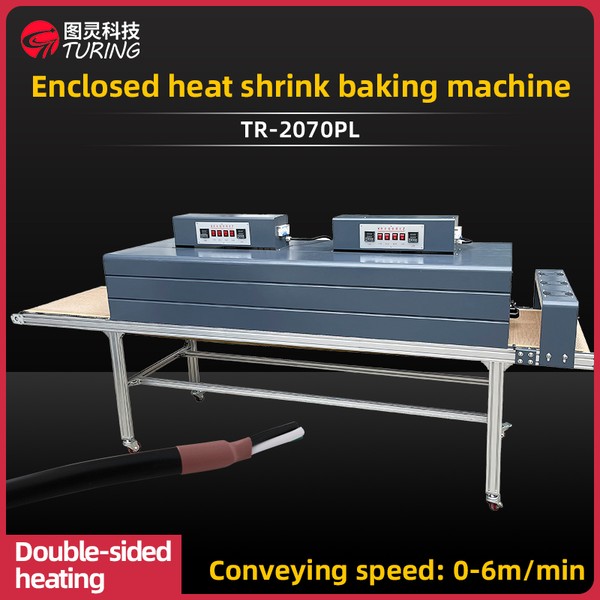
A longer oven is not a stronger oven. On heat-shrink equipment the load rating follows the conveyor type, not the chamber size — a 3 m oven rated 20 kg sits beside a 2 m model rated 100 kg. Here is how load, temperature zone count and power supply decide the correct machine for heavy parts.
Read guideFull wrap, single-point, copper tape or bundling — pick the process family your cable actually needs.
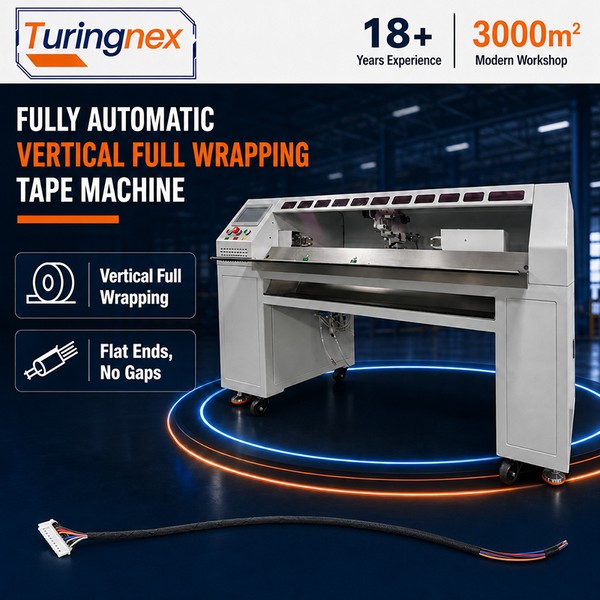
Full-wrap, single-point and bundling machines look similar but do different jobs. Match tape type, lay and volume to the right machine family.
Read guide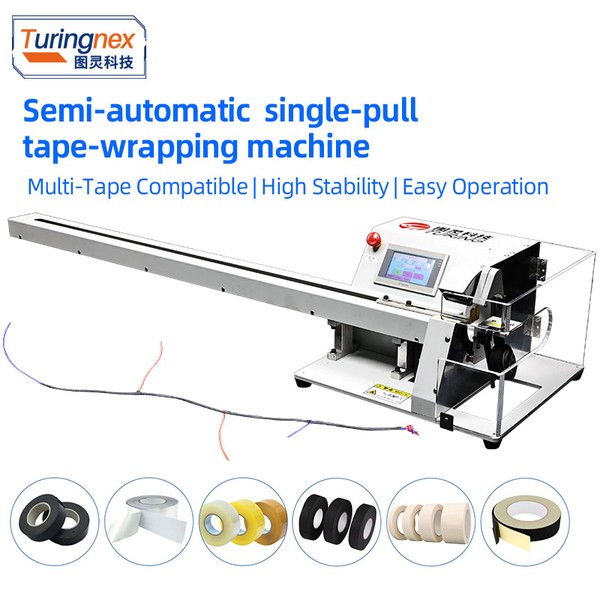
Half-lap spiral, full wrap or single-point? Tape lay, tension and overlap decide protection, flexibility and cost. Match the wrap to the cable's job.
Read guideA spiral wrap advances diagonally, so the last turn stops on a slope and leaves a triangular gap where the first and last turns meet. Vertical flat taping feeds the tape perpendicular to the wire axis instead. Here is what that changes on an inspected harness, and which models do which.
Read guide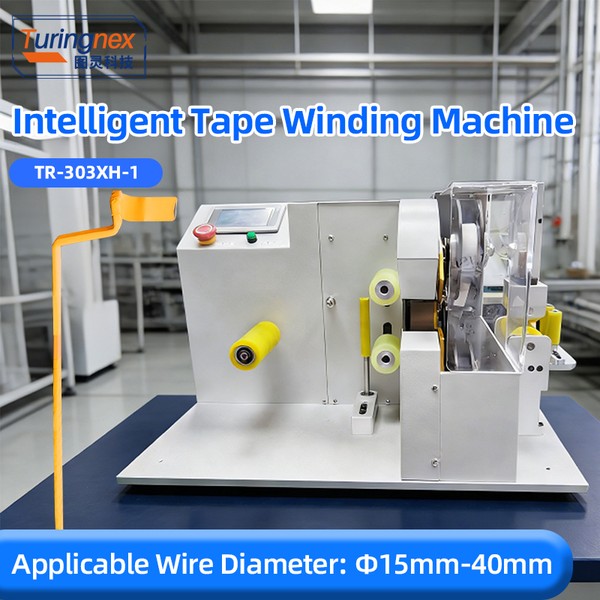
Mica, ceramic and acetate cloth tapes carry a release-paper backing. On a standard tape head that liner either tears, jams the feed, or ends up wound into the workpiece. A synchronous peeler and rewinder solves it — here is what to specify.
Read guide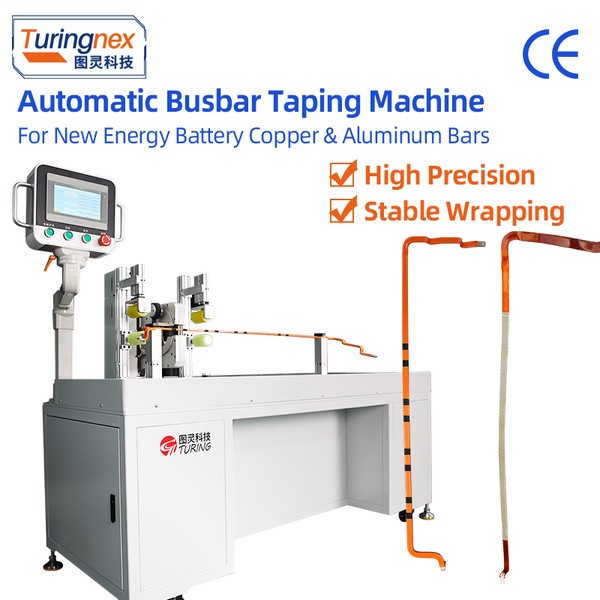
A 1.5-1.8 m copper busbar cannot be wrapped on a bench machine: the workpiece is longer than the working stroke. Long-stroke bidirectional spot winding addresses it, with positioning accuracy that holds to ±1 mm along the whole length.
Read guideStripping, cutting and coiling big conductors — working ranges, blade safety and coil handling that matter.
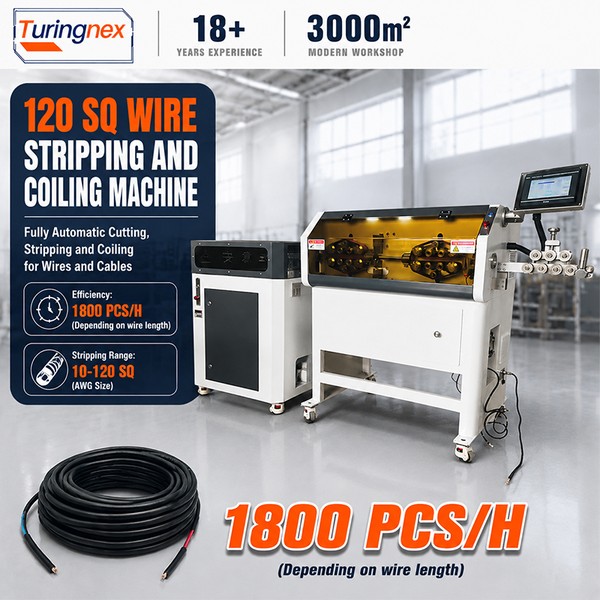
Big wire breaks small strippers. Learn the working range, blade and coiling requirements for 10–120 mm² conductors — and how to verify them.
Read guide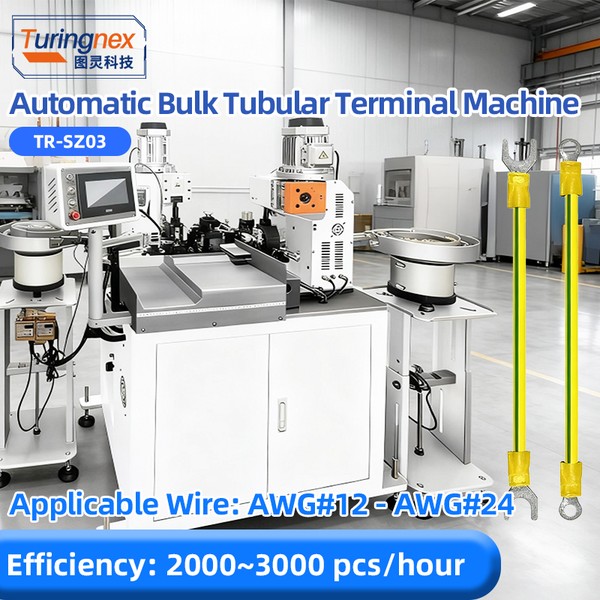
Big terminals need tonnage, not just force. Match press rating, die set and inspection method to conductor size for 25-120 mm² joints.
Read guideDipping-tin and solder-seal processes for soldered wire-to-terminal joints — when each fits and how to automate them.
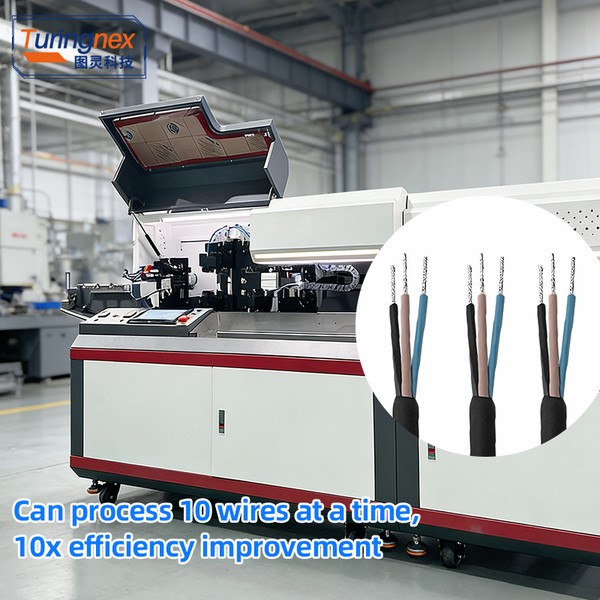
Dipping-tin ends stop oxidising and improve solder wetting — but only some shops need a machine. Learn the process, sizing and safety checks.
Read guide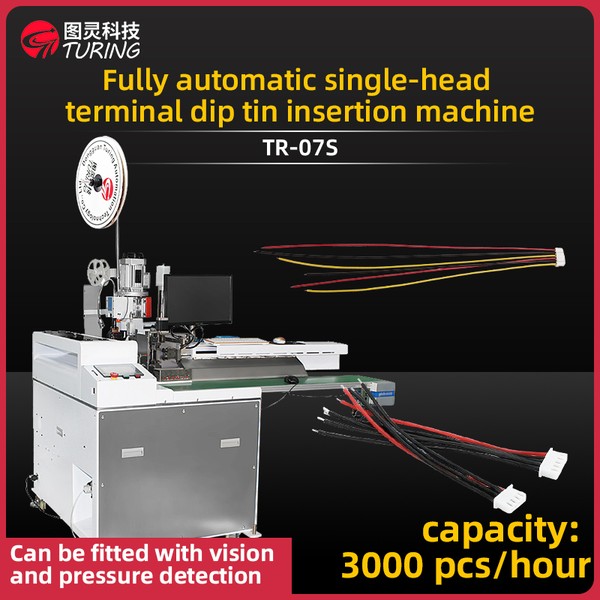
Soldered wire-to-terminal joints are spec for many waterproof leads. Compare tin-dipping lines with solder-seal preform crimping for cost and quality.
Read guideWelding, riveting and tinning automation for thermal protectors and NTC sensors — trends, process steps and machine choices.
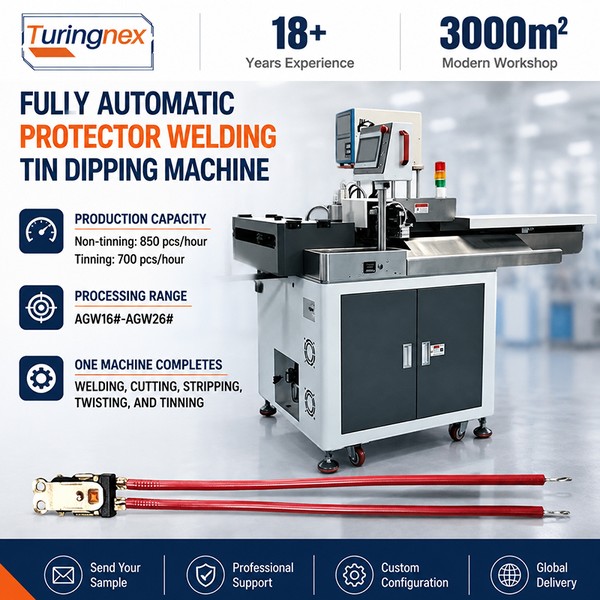
Thermal protectors are shrinking while audits tighten. Four trends are reshaping protector and NTC welding automation - and what to look for.
Read guide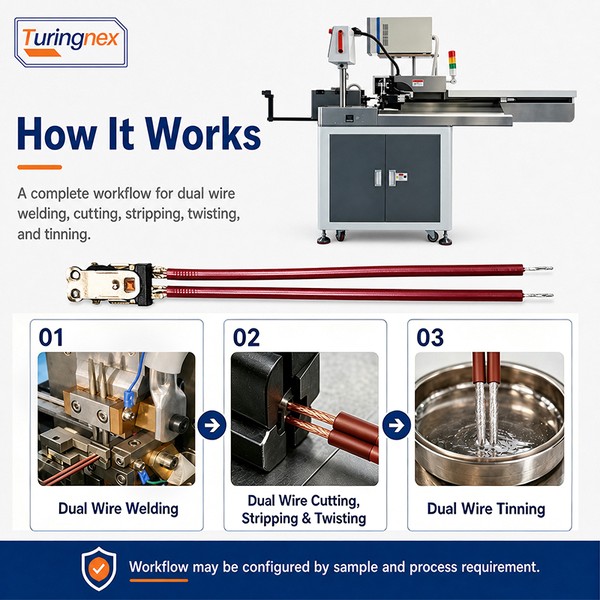
NTC sensors, thermal protectors and thermostats are welded differently. Match the machine to your part, volume and custom process needs.
Read guide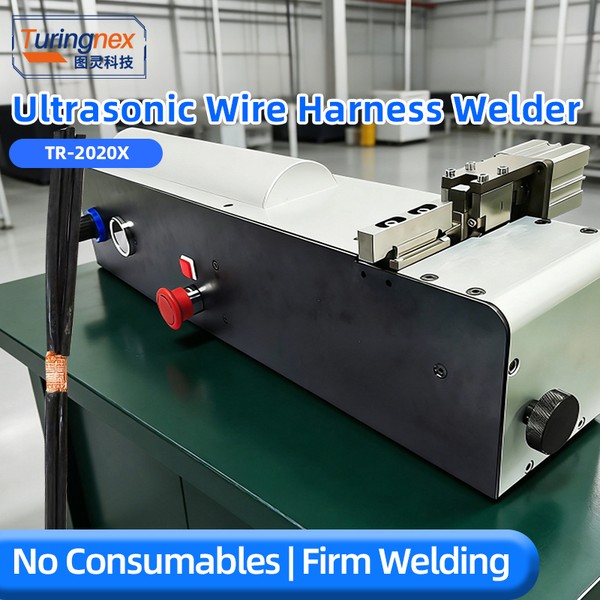
Thermal protector leads can be welded, crimped or soldered — different heat, resistance and cost per joint. Match the joint to the protector design and volume.
Read guideRound jacket cables: stripping the sheath, threading and baking heat-shrink tube, and inserting colour-sorted cores into shells — machine choices for each line strategy.
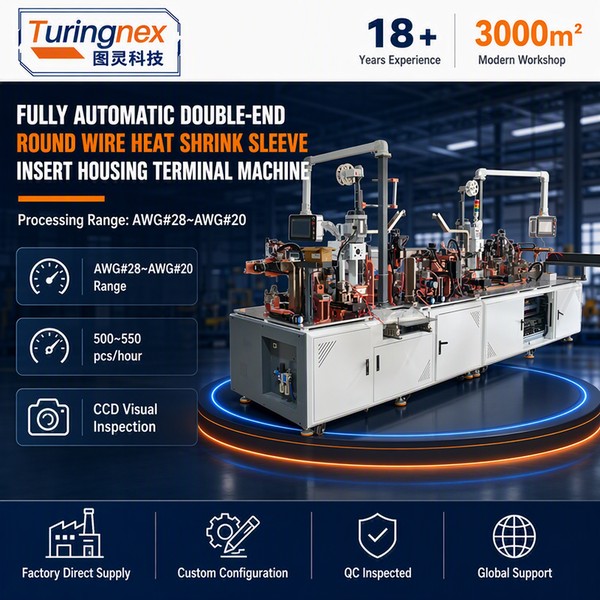
Jacket stripping, heat-shrink tube threading and baking, then colour-sorted shell insertion - three machines, three line strategies.
Read guide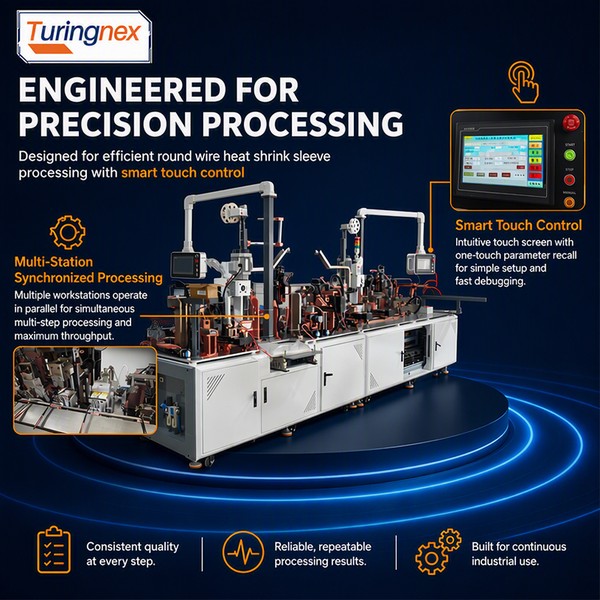
Round jacket wire processing upgrades in four steps - bench single-wire to one integrated cell. Pick the step your volume justifies.
Read guide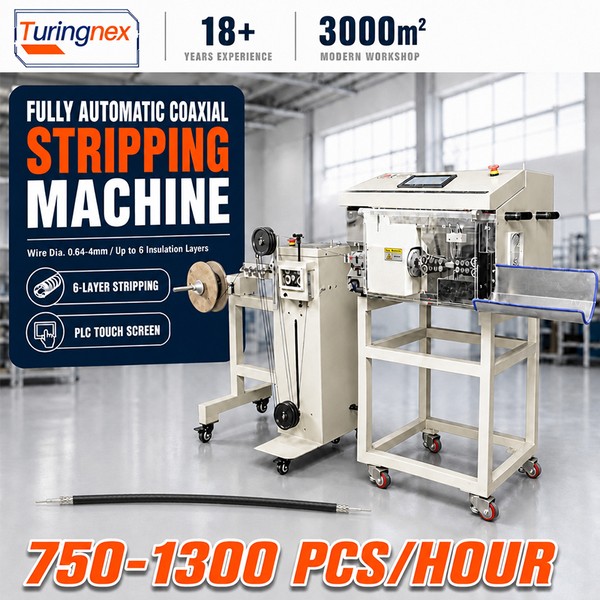
Both machine types strip coax to the same standard. The difference is who feeds the cable: a fully automatic machine pulls from a reel and cuts the length, a semi-automatic machine takes one prepared piece at a time. Choosing between them is a question about batch shape, not about strip quality.
Read guideBuying from a factory with confidence — RFQ checklists, acceptance steps and industry automation outlook.
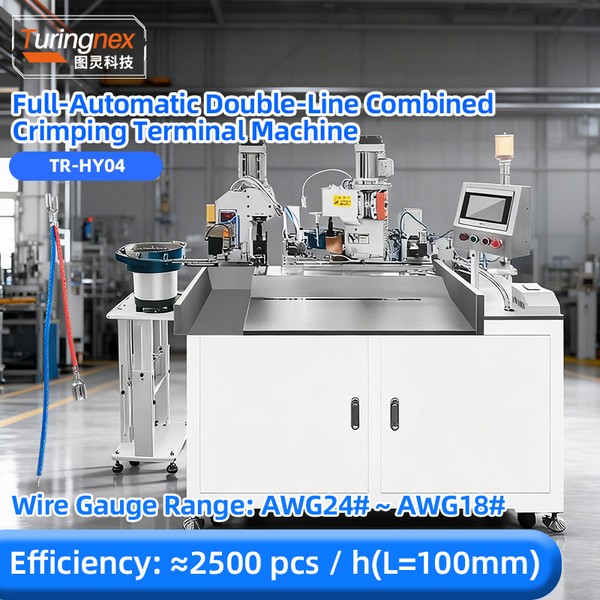
Feeding, dual-mode welding, servo force data and insertion integration are the four trends changing harness lines - what to expect from machines.
Read guide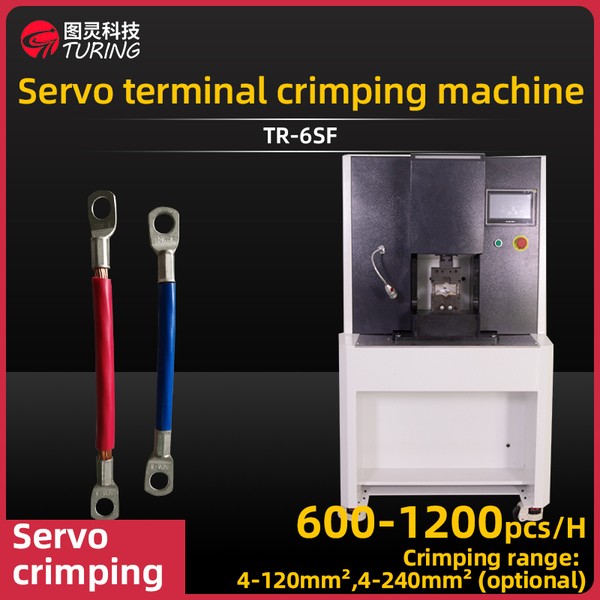
A field-tested checklist for buying wire processing machines from factories: spec sheet, sample test, payment, shipment and acceptance.
Read guideCapacity planning for wire harness: peak vs average demand, machine count, shifts and automation choices that keep delivery promises without idle capital.
Read guideUnscheduled stops cost more than the machine's price. Budget preventive upkeep, hold the right spares and set service expectations before you buy.
Read guide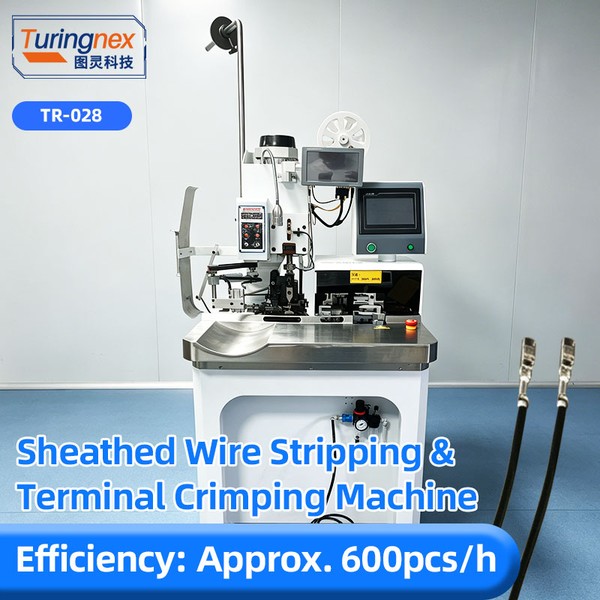
Operators are harder to find and keep. Which wire-processing steps to automate first, what a machine really replaces, and how to keep the human skill you need.
Read guide